Test Tubes: Overview, Function & Uses in Science
-
 Loading...
 - Vanina Maxime
- 06 Sep 2022
- 90 Views
- 0 Like
- 0 Comment
What is a Test Tube?
A scientist wearing a lab coat holding up a test tube after some major breakthrough is a classic scene in movies and television. Perhaps the movie scientist created a cure for a deadly disease or a solution that grants superpowers. Or perhaps an evil scientist created a formula that will transform every human being on the planet into a giant beetle. Although the test tube has had many exciting supernatural and pseudoscientific roles in movies, its use in the laboratory by scientists in real life is much more practical. So, what is a test tube? Test tubes are not aesthetic props for miraculous discoveries in laboratories, but they are nonetheless important tools used by microbiologists, biologists, chemists, biochemists, food scientists, laboratory technicians, medical researchers, and more. A test tube is defined as a small, long plastic cylinder with one open end used to store, mix, or hold liquids, bodily fluids, bacteria, or chemicals.
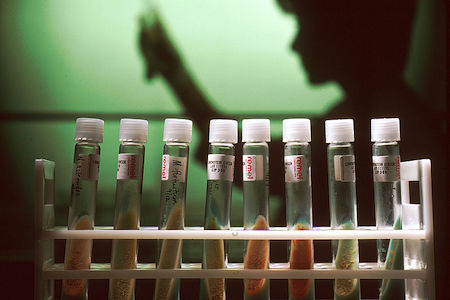
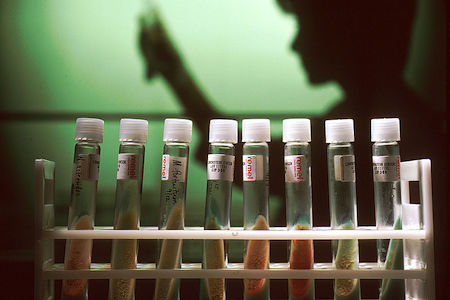
Test tube definition is a laboratory tool with various functions in the biological and chemical sciences. The test tubes in the featured image are growing bacteria.
Test Tube Function
Test tubes are used primarily for qualitative observations of biological, biochemical, or chemical reactions. They are not used for measuring liquids or solutions like graduated cylinders. Biologists, biochemists, chemists, microbiologists, and biomedical scientists use test tubes in different ways. So, what is a test tube used for? Test tube functions in the real world are diverse, but their most common uses in the laboratory are as containers to:
Grow or identify microorganisms
Hold bodily fluids or liquid solutions
Heat solutions
Use as mixing vessels for observing reactions
Test Tubes in the Biological Sciences
Biologists, biochemists, and microbiologists primarily use test tubes to mix samples, make qualitative observations of reactions, and perform genetic sequencing tests of humans, plants, fungi, parasites, animals, viruses, or bacteria. Microbiologists also use test tubes to culture, identify, and store microorganisms like bacteria or fungi. When microbiologists grow bacteria in glass test tubes, the tubes are capped loosely to allow some oxygen to get into the container. A few examples of how biologists or microbiologists use test tubes include:
1. Centrifuge and microcentrifuge tubes: These are capped plastic tubes with graduated markings and a conical bottom. They are used to mix or physically separate the contents of samples in a high-speed spinning device.
2. PCR tubes: Microcentrifuge tubes with snap caps that hold 0.2 mL or 0.5 mL of liquid are called PCR tubes, which are used for genetic sequencing tests.
3. Glass test tubes: Glass tubes are frequently used as containers for qualitative observations of chemical or biochemical reactions. When indicators are added to solutions or broth, they cause observable changes (like a color change) based on the presence or absence of certain chemicals.
4. Agar culture tubes: These are usually screw-capped glass tubes filled with plant-based gelatin called agar. They are used to grow, culture, and identify bacteria in a microbiology lab.
5. Broth culture tubes: These are usually screw-capped glass tubes filled with nutrient broth. They are also used to grow, culture, and identify bacteria.
6. PCR test tubes are very small, made of plastic, and are used for identifying something about an organism from its genetic material.

Test Tubes in the Chemical Sciences
Fields like chemistry, biochemistry, and the food sciences primarily use test tubes for mixing chemicals and observing chemical reactions. Tempered glass is preferred for chemical reactions because it is tolerant to heat and resistant to chemicals. Test tubes may be sealed with a glass or rubber cork rather than the plastic snap or screw caps common in the biological sciences. Read More...