The 10 Best Plank Variations Ranked From Easiest to Hardest
-
 Loading...
 - Donghai Huang
- 14 Jun 2022
- 272 Views
- 0 Like
- 0 Comment
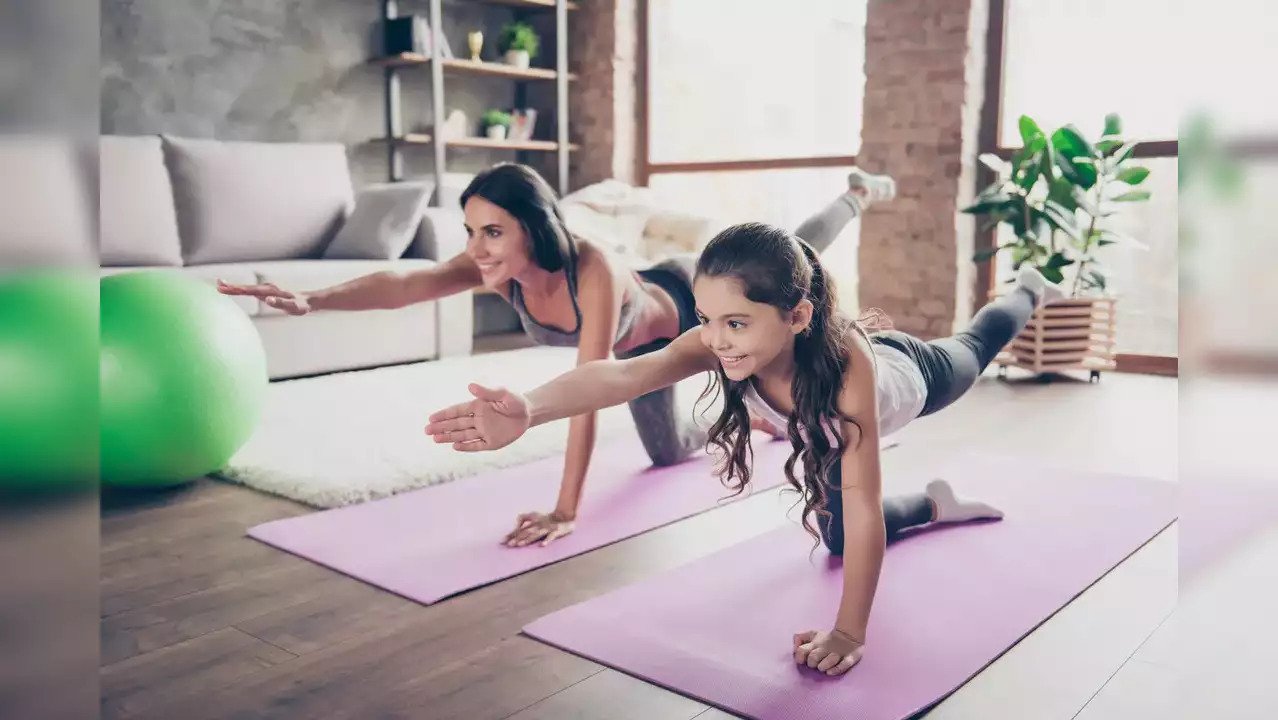
The next time you're up for a challenge, make your way down this list of planks, starting with the easiest variations and then moving on to the ones that will fire up every muscle in your body. You might not feel the burn at first, but trust me—once you make it to the plank pike, you won't dare call planks boring ever again.
First things first, there are a few form notes that will hold true no matter what kind of plank you're doing. To start, you want to keep your body in a nice straight line from your head to your heels. Keep your gaze down on the mat in front of you so your neck is in a nice neutral position. Keep your core engaged (think: belly button to spine) and your hips in line with your shoulders. Additionally, you want your arms to be aligned. If you're on your forearms, keep your elbows right in line with your shoulders and if you're on your hands keep your wrists right in line with your shoulders. Keep your arms strong but be careful not to lock your elbows. Finally, be careful not to slouch. Press into the ground so your weight is lifted up and out of your shoulder sockets. Keep these points in mind as you move through the following planks.
These are the 10 best plank variations, ranked from easiest to hardest
1. Straight-arm plank
The straight-arm plank is your foundation. Though it's a bit tougher on your arms than a forearm plank, it's a teensy bit easier on your core. During a straight-arm plank, your hands are stacked under your shoulders as you hold your body in a straight line from your head to your feet.
2. Forearm plank
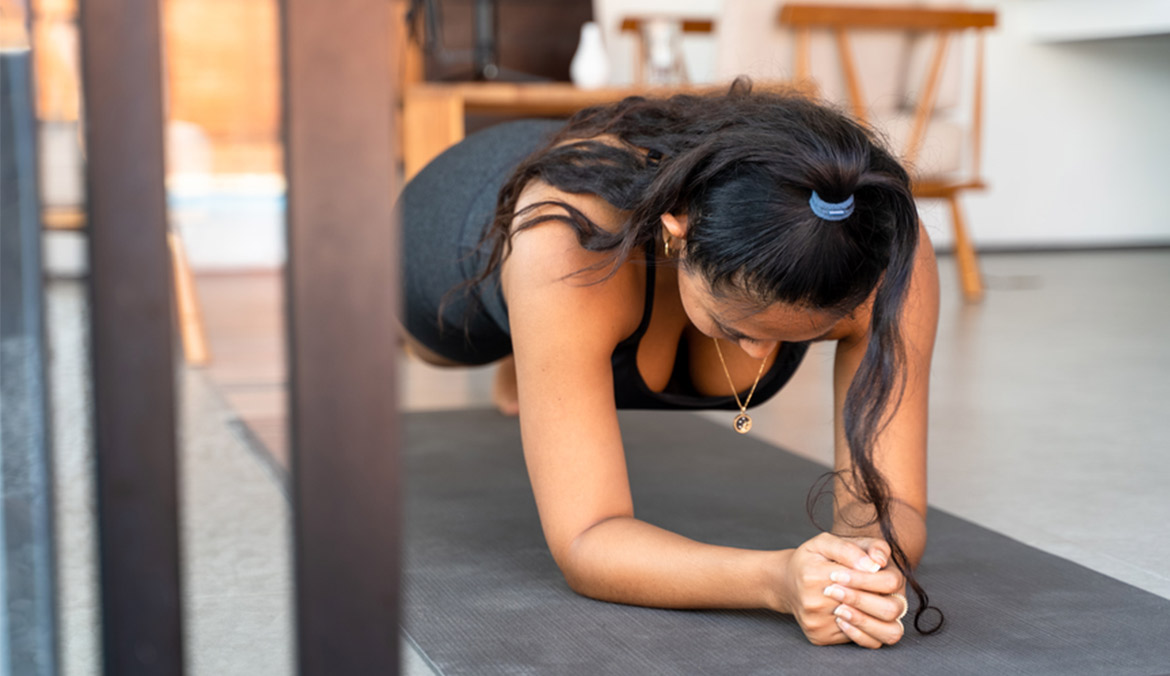
During a forearm plank, it's a bit more difficult to keep your hips in line with your shoulders, so you use your core a bit more. However, it also takes weight out of your wrists, which can make it more comfortable than a straight-arm plank. You'll want to keep your elbows right under your shoulders and make sure you're pushing up and out of your shoulder socket instead of sinking down into them.
3. Side plank
Instead of having the support of both of your arms, you add balance into the mix when you're holding a side plank. This can make the exercise feel even harder—and ignite an even greater burn!—than the traditional plank. From a kneeling position, shift your weight into one arm, keeping your wrist right under your shoulder. Your feet can either be stacked on top of each other for a greater balance challenge or staggered with your top foot in front of your bottom foot, with your front heel touching your back toe. If having both legs up is too much, you can drop your bottom knee to the ground. In either position, keep your hips up and in line with your shoulders instead of dropping them down to the ground.
4. Bear plank
Bear planks make your entire body roar—seriously. Unlike the bear crawl, where you're on all fours with your knees hovering above the floor as you travel across the room, the bear plank is stationary. Even though it's a tiny movement, the burn is immediate. Start on your hands and knees with your wrist right under your shoulders and your knees right under your hips. Press your palms into the mat as you lift your knees and let them hover an inch or so over the mat.
5. Reverse plank
This is a normal straight-arm plank, just reversed. While a traditional plank targets the front of your body, this version targets the back of your body too, making it even harder. Begin seated with your legs straight out in front of you and your feet flexed. Bring your arms to your side with your palms flat on the ground, fingertips spread wide and pointed straight ahead. Squeeze your glutes as you lift your hips up, opening your chest and drawing your shoulders down back away from your ears. Keep a soft bend in your knees to avoid locking them. Read More...