The diversity of Mà¶nchengladbach sports history in one book
-
 Loading...
 - Kimberly Morris
- 10 Feb 2022
- 408 Views
- 0 Like
- 0 Comment
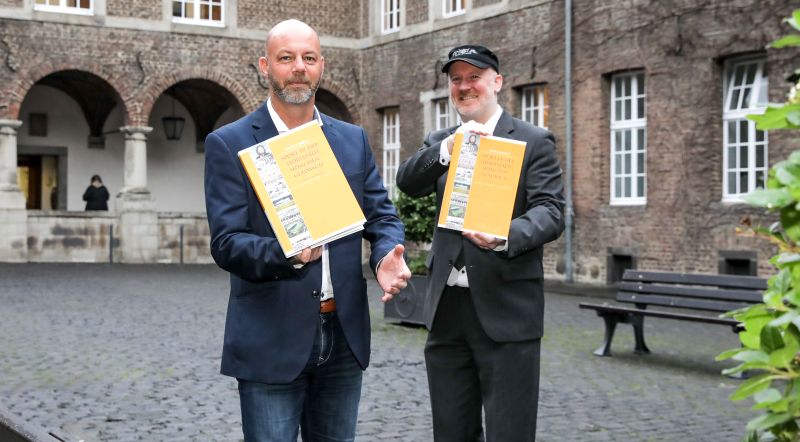
Stefan Lamertz addresses a chapter in Mönchengladbach’s history that has been largely neglected up to now. It is a summary of the development of sport in Mönchengladbach, which expressly does not claim to be complete, but gives an informative overview of the essential aspects of sporting events. “It all started about 10 years ago. I was still working for the Stadtsportbund in Mönchengladbach and had to look for something in the city archives for an anniversary. At that time, the former director Christian Wolfsberger suggested that I might as well write a book.”
Lamertz then tackled this bit by bit. This resulted in a book that, in addition to the historical context, also shows one thing in particular: Sport in Mönchengladbach has always been about diversity.
Starting with the gymnastics movement of Friedrich Ludwig Jahn, which primarily pursued political goals and which led to the founding of the first gymnastics clubs in Rheydt, M.Gladbach and Odenkirchen towards the end of the 1840s, the development of sport in the German Empire is presented in several chronologically arranged chapters the First World War and the Third Reich, after the Second World War and in the new city of Mönchengladbach, which has existed since 1975. Between the individual chapters, short inserts such as “Mönchengladbach’s development between 1814 and 1870” or “Mönchengladbach during and after the First World War” deal with the main historical events in order to embed the sporting events in the general development.
The current head of the city archive Dr.Dr. Helge Kleifeld describes that working on the book also had something sporty about it: “When Mr. Lamertz came to me, the work on the content was really well advanced. He had already managed a large part of the long distance. The last section is hard again. Then there are many more tasks that one is not directly aware of when one wants to publish a book. But he fought his way through the last strenuous meters and did it really well.” And the city archives were happy to support him with the publication.
In his analysis, Lamertz focuses primarily on the four main sports: football, track and field, swimming and handball. In accordance with the diverse Mönchengladbach sports landscape, sports such as table tennis, cycling, boxing, volleyball, billiards or the Asian sports judo and karate, which became popular around 1960, are also taken into account. The construction of sports facilities is also being considered, such as the Jahnhalle or the central pool – and also the abandonment of sports facilities such as the Volksgarten cycle track or the Beller Mühle outdoor pool in Odenkirchen. The mass sport movement counteracted the commercialization tendencies of the sport, for example the “Trimm dich” campaign.
Lamertz’ richly illustrated book is a treasure trove for all those interested in sports and sports politics in Mönchengladbach, as it contains a great deal of information in a small space that is otherwise not easily accessible: What do we already know about the formation of sports committees in Rheydt, M .Gladbach or Wickrath? Who is familiar with the names of the sports committee chairmen or the sports office heads? Who has data on the development of the Stadtsportbund? All this and much more can be read in this compact and clearly structured work, which is the result of years of research. Read More…