The future of Egyptology is in Egyptian hands

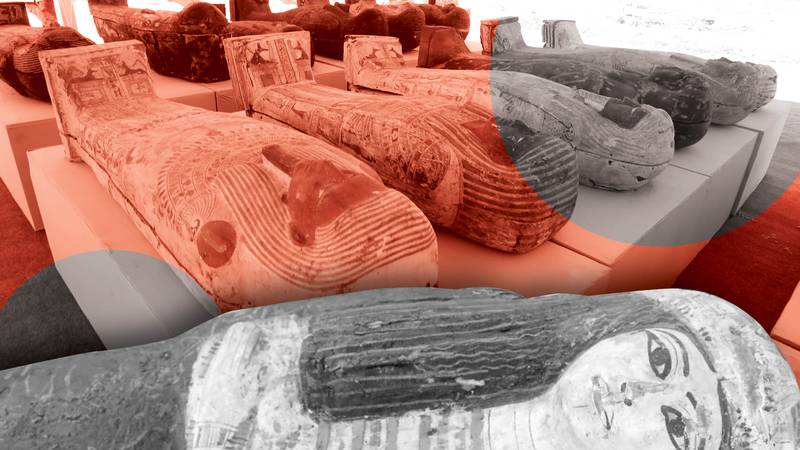
The major recent archaeological discoveries in Egypt, most notably a series of coffins discovered at Saqqara, just outside Cairo, in May, are evidence of the genius of this generation of Egyptian archaeologists, restorers and Egyptologists. It is fitting that the objects they are unearthing and studying are particularly remarkable. Each new discovery ― and there have been many recently ― sheds more light on how the ancient Egyptians lived and excelled in the sciences, including medicine, engineering, astronomy, arithmetic, pharmacology and mummification, which until now has been a baffling secret.
Discovering burial sites, of course, is nothing new for the country. Even the pharaohs themselves were at points excavating Egyptian antiquities from earlier periods. After all, the term “Ancient Egypt” encompasses a period of more than 3,000 years. And not all of the “excavations” during that time were friendly. For millennia thieves have targeted tombs. This is why the pharaohs were always looking for a safe place to bury their dead, and helps to explain the existence of epic sites such as Saqqara, which was used as a burial site from prehistoric times until the Islamic era.
But the unearthing and preservation of Egypt’s cultural heritage, fortunately, takes far more constructive forms today, thanks to the careful work of the country’s archaeologists, Egyptologists and historians. And keeping the discipline vibrant is in large part about training the right people and generating in-country expertise.
When the Egyptian archaeologist Zahi Hawass took over the Ministry of Antiquities in 2011, his main concern was just that: for Egyptian archaeologists to learn the art of excavation and restoration. He set up excavation schools and taught more than 500 Egyptian archaeologists the arts of research and excavation until they reached the same level of ability as foreign expertrs, even surpassing them.
The best evidence of this fact is today’s trove of recent discoveries. They have dazzled the world and were uncovered entirely by Egyptian hands. They include the aforementioned findings at Saqqara and the discovery by Dr Hawass of the tombs of workers who built the pyramids and the lost golden city in Luxor. The history of the city dates back to the reign of King Amenhotep III, 3,000 years ago. He also discovered the pyramid of Queen Nate in Saqqara and the Valley of the Golden Mummies in the Bahariya Oasis in the depths of the Western Desert.
When Mustafa Waziri became head of the Supreme Council of Antiquities, he immediately led missions to excavate Egyptian antiquities throughout the country and began working at the Saqqara necropolis, where many of the kings and queens of ancient Egypt, senior statesmen and priests were buried. Read More...


