The genome of a lost crop is explored
-
 Loading...
 - Jake Martin
- 20 Mar 2023
- 67 Views
- 0 Like
- 0 Comment
Scientists led by a geneticist at Université de Montréal have sequenced the genome of pitseed goosefeet, a northern relative of South American quinoa, with the potential to boost food diversity.
Climate change is disrupting agriculture around the globe, and as the weather becomes less predictable, farmers and policy-makers are scrambling to make sure that people not only have enough to eat, but also that they get the most nutritious foods available.
A team of Canadian scientists is exploring a way, grounded in centuries-old Indigenous cultivation practices, to boost the diversity of crops beyond the country's typical output of wheat, corn, canola and oats.
Led by Université de Montréal geneticist Mark Samuels, the researchers have succeeded in sequencing the genome of a wild plant called Chenopodium berlandieri – or pitseed goosefeet – that is a northern relative of Chenopodium quinoa, South American quinoa.
These days, health-conscious Canadians are eating more and more quinoa. It has several advantages over other crops: higher in protein and essential amino acids (especially lysine, which wheat and corn have much less of), and lower in sugars.
But there's a problem, at least from a Canadian standpoint.
Commonly grown in South America, quinoa is not well-adapted for cultivation in Canada, where the growing season is shorter and winters long. Although it's commercially grown in western Canada, it has been less successful in eastern Canada. Most of what we eat here is imported.
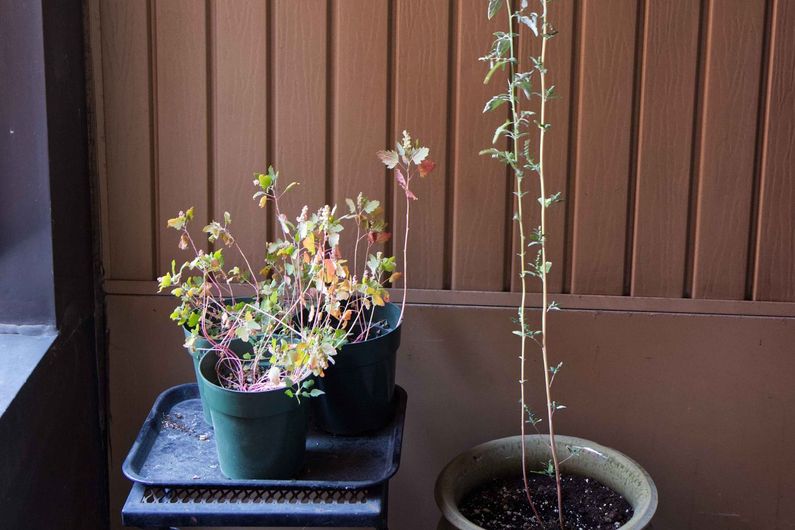
Enter quinoa's northern relative, C. berlandieri. It's commonly called pitseed goosefoot because its leaves look like goose feet and its seeds have small pits on their surface. (The Chenopodia are a large family of species; quinoa and pitseed goosefoot are just two.) Pitseed goosefoot was long cultivated and eaten by Indigenous peoples in North America, before the arrival of European colonists. It was like quinoa in South America, but colonization brought an end to its cultivation, whereas quinoa survived as a crop in the south. The two species are still sufficiently similar that they can freely interbreed.
As a native Canadian plant, pitseed goosefoot can potentially be used to improve adaptation of quinoa in Canada. "The classic way to use wild plant relatives to better adapt crops is to cross them, creating hybrids," Samuels said. "But hybrids lack the advantages of the parents, so they have to be re-crossed and re-crossed for many generations, which takes years, decades or even centuries." Read More…