'The Greedy Barbarian' is more Idi Amin than Museveni
-
 Loading...
 - Lule Musisi
- 26 Jan 2022
- 425 Views
- 0 Like
- 0 Comment
Ugandan writer Kakwenza Rukirabashaija was definitely not in the 2021 Christmas season spirit when he expressed his freedom of expression by going on a three-day Twitter tirade against long-serving (some may say self-serving) Ugandan President Yoweri Museveni.
And more so against his son Lt-Gen Muhoozi Kainerubaga, Commander of Uganda’s Land Forces, whom the writer described as “obese and obscene”, and who is seen in some quarters as the Ugandan strongman’s preferred successor.
Eventually the police, who have twice before arrested writer Rukirabashaija, took him just after Boxing Day, and — in direct violation of his Constitutional rights — kept him detained for a week, which Ugandan CID police spokesman Charlie Twiine blamed on the “festive season with [CID] workers away, and courts closed, leading to delay in processing him”.
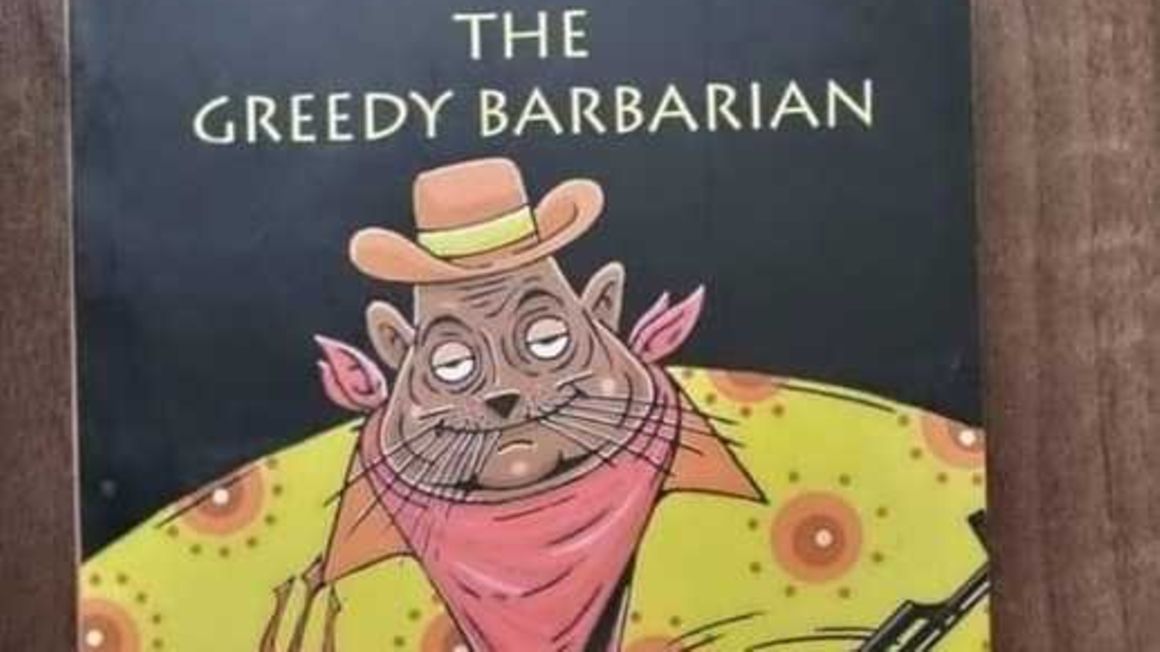
The first time Ugandan police arrested Rukirabashajia was in April of 2020, just after Covid-19 had struck Uganda’s shores. At the time, the author claimed it was over his self-published book The Greedy Barbarian.
This book reviewer was eager to read the current Ugandan best-seller.
Unfortunately, for the professional book critic, The Greedy Barbarian, satirical though it is, has too much “tell and not show”, where the protagonist is explained in word instead of demonstrated in art.
Sentences like “his cantankerous demeanour, vulgar and harsh, would haunt him all his life” are many and cumbersome, and the reader lumbers through this dense dictionary-word world of bombast throughout the book.
The line between the artful writer and the Twitter activist are blurred, at least in terms of literary style.
Verbal artillery
“Muhoozi bum-lickers! Dare attempt to bully me again and I show you fire,” Rukirabashaija tweeted just before his arrest. “I have more verbal artillery in my toolkit to bludgeon your empty heads and dirty mouths that spews hocus-pocus and balderdash!”
Unfortunately, if writing is a craft and a book the work of that craftsmanship, Rukirabashaija may have way too much verbal artillery in his writer’s toolkit, that then tends to bludgeon the reader (empty-headed or not) with big words. The Greedy Barbarian may equally be described as a hocus-pocus of a book in plot, whose writer has made a dash for the bold, but ended up in a world of Ballads of the Bad that end up in ribald.
The protagonist of the book, Kayibanda, born in fictional Muhemba (Rwanda) where his mother is a night harlot, is not even an anti-hero, but the outright antagonist of the novel.
Crossing over the border at six years of age on the back of his machete-maimed mother Bekunda, to Kalenga (Uganda), one can see how this could have started as a deeper story about the 1994 Rwanda Genocide against the Tutsi; but Rukirabashaija is not interested in any deeper historical analogies in his novel.
Kayibanda is truly a bad seed (from a rapist father) and the author has no interest in his character development in the book. Kayibanda’s is a linear trajectory of unadulterated evil that can come off as laughable to the seasoned reader. Read More…