'The Pain Gap': Book Review

Well, that would have been our thought as well. Who would think that women could die during childbirth in this era?
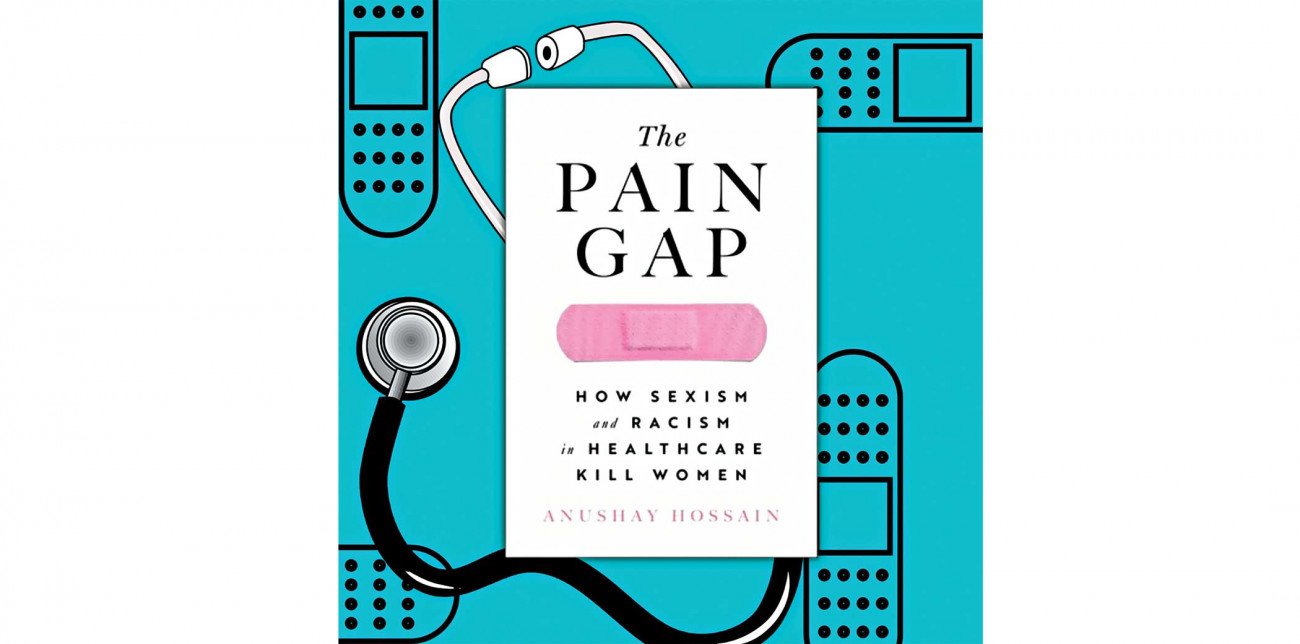
In The Pain Gap, Hossain tells us about her near-death experience while giving birth. After 30 hours of labour and three hours of pushing, her epidural had slipped and hence she had no anaesthesia.
While recounting these experiences, she also informs us how the word "hysteria" was first used by Hippocrates, father of medicine, the person in whose name doctors take oath before entering their profession. "The book is about the journey of learning to own my hysteria and rebrand it for the 21st century. It is the story of growing up , surrounded by a staggering maternal mortality rate," Anushay writes.
The nine chapters flow eloquently, starting from "The First Feminist I Ever Knew". The author talks about her mother,who shaped her to become what she is today, a women's rights and human rights activist. She is also a feminist writer, political analyst and host of a podcast. We get to know of Wasifa, who was a caregiver and cook for the author, who in the author's mind held a resemblance to Pablo Picasso's 'The Portrait of Francoise'. One has to Google the painting just to see what she looked like.
At a tender age Anushay was touched by Wasifa's death at childbirth, which may have shaped her interest in working in this field. In the chapter, she mentions that she had learnt a lot there as a lobbyist, such as how women were banned from workplaces and shrouded them in blue burkhas. She found a way to help the women by joining the Feminist Majority Foundation's Women and Girls' campaign and worked for organisations such as the Convention on the Elimination of All Forms of Violence Against Women and the International Violence Against Women Act. One of the most striking pieces of information we get from her book, which seems to be a vehement advocate of human rights and equality, in reality does not take women patients very seriously. During her own labour, when she repeatedly said she was in pain, the doctors refused to believe her only to find that her epidural had slipped.
Hossain reminds us how the situation is even worse for women of colour, especially Black women. Studies show that Black patients are 40 percent less likely to receive medication to ease acute pain and patients 25 percent likely. She points out that, even though women make up three quarters of healthcare workers, including 85 percent of nurses, and women of child bearing age make up 70 percent of frontline workers, pregnant women were not included in vaccine trials for the Covid-19 pandemic. This is an American perspective, we don't know what it is like in developing countries. Read More...