The quest to revive Oaxaca's centuries-old mountain trails one hike at a time
-
 Loading...
 - Grace Clark
- 23 Feb 2022
- 393 Views
- 0 Like
- 0 Comment
A field of bright green agave plants stretches across the hillside, dozens of expertly planted rows a quarter-mile long-standing in sharp contrast to the surrounding wild pine forest. The midday sun reveals some letters carved into the skin of one sharp agave branch and I lean in to get a better look. “Aquí estuvo Renada,” it says. “Renada was here.”
I wonder if she was a farmer, putting a knife to a branch, to pass the time. Or maybe, like me, Renada was a visitor, who was surprised to find herself deep in the Sierra Madre mountains of southern Mexico, so far removed from the resort circuit of the Riviera Maya and even the quiet beach towns of Oaxaca, on a historical hiking trail through the high country. While I refrained from adding my own name, I could understand the instinct to do something — anything — to mark the moment.
Oaxaca's signature food and drink do not disappoint
I’d anticipated an abundance of experiences in Oaxaca, but not this. For starters, I figured I’d mostly be interacting with agave in its liquid form, which, to be fair, I’d already overindulged in the night before. I surely hadn’t expected to be working off a mezcal haze out on the same trails once traversed by Zapotec traders and Spanish conquistadors. But at a certain point in any trip, it becomes time to stop expecting and start experiencing.
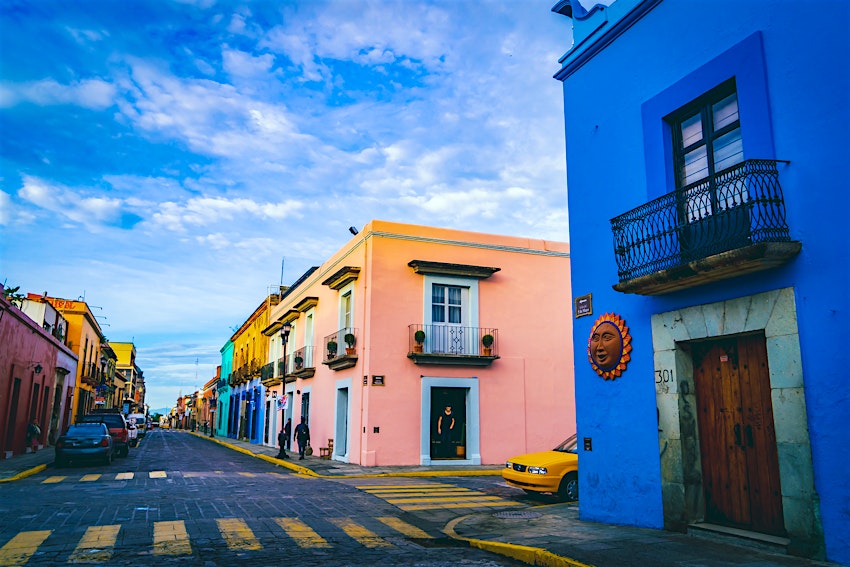
The state of Oaxaca is rich in coffee, agave and agritourism. This is what brought us here from our home in Colorado. My wife, Alisha, owns a small seed company and is passionate about food systems. She hoped to learn from the region’s growers. Along the way, like most visitors to Oaxaca, Alisha and I wanted to eat mole – the sauce made of rich chocolate and dried chiles often served over chicken or enchiladas – and to sample mezcal, a smoky liquor made from agave plants. Hoping to dive deeper than most visitors, we blocked out a few weeks and rented a small studio apartment a few blocks off the Zócalo square in the state’s capital, Oaxaca City.
Connecting with the land on a network of historic trails
Two weeks into our time in the city, Jair, a bartender at Convivio, a coworking space that doubles as a live venue in the evenings, told us about Coyote Aventuras, an adventure tourism company founded by local mountain bikers Fernando Barnetche and Carlos Hernandez. He explained that its biking and hiking tours aim to preserve a network of historic trails that connect Oaxaca’s remote villages, and in turn, protect a vital piece of the region’s history.
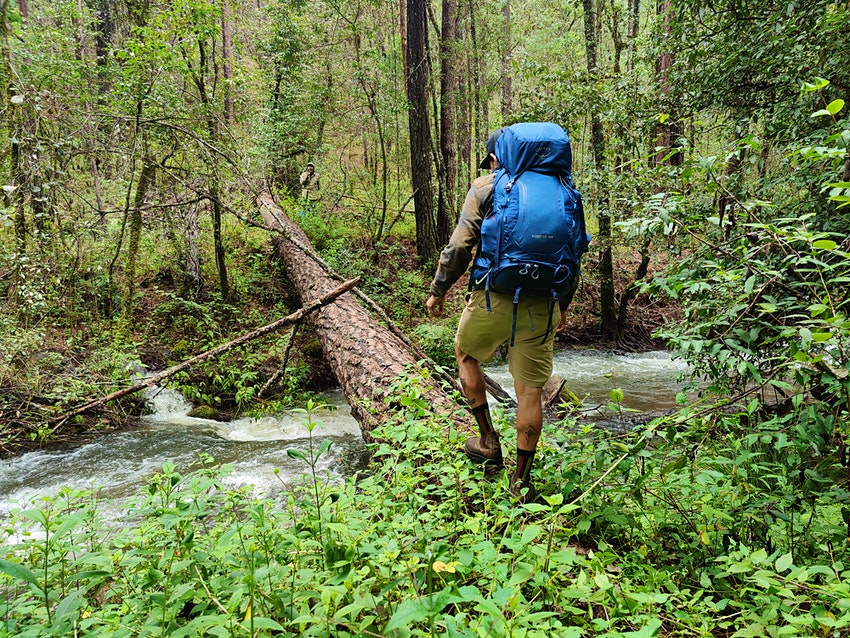
The following morning, groggy from the night before, Alisha and I walked to Coyote’s office on Ruta Independencia and booked a guided hiking tour. Two days later, we headed with a guide and two other travelers into the Sierra Madre mountains. Barnetche and his team add new trail mileage to their system on an ongoing basis, finding old paths that need continuous use in order to remain intact. They also identify business partners in local villages to provide meals, mezcal tastings and cultural experiences to travelers. Coyote currently runs tours on 180 miles of trail throughout Oaxaca’s high country. Despite the company’s efforts, Barnetche believes thousands of trails are yet to be uncovered.

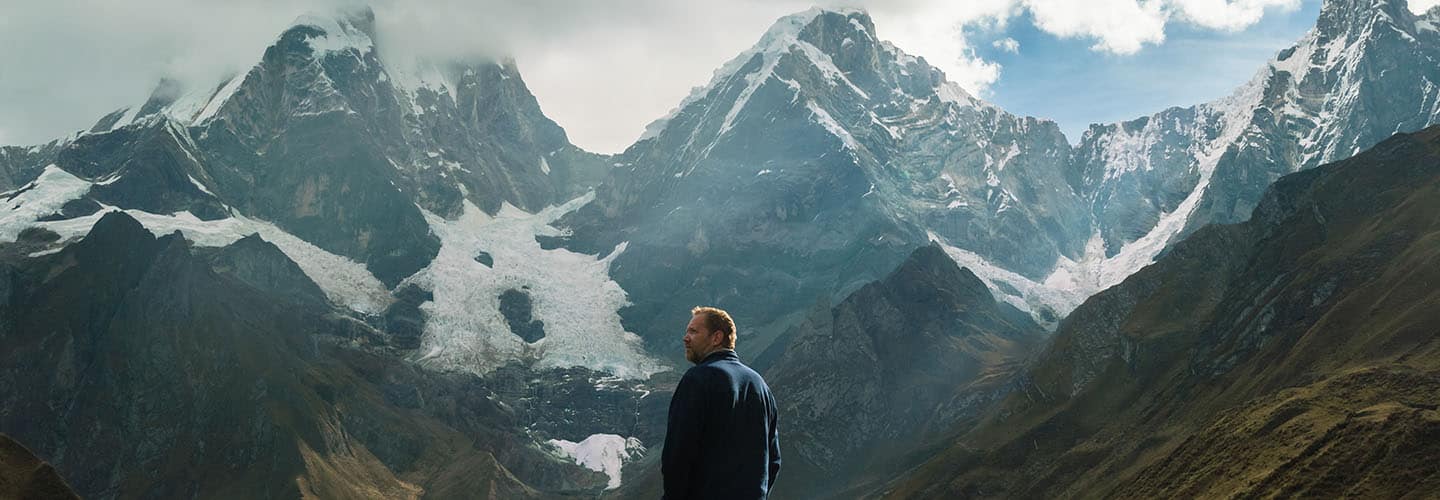
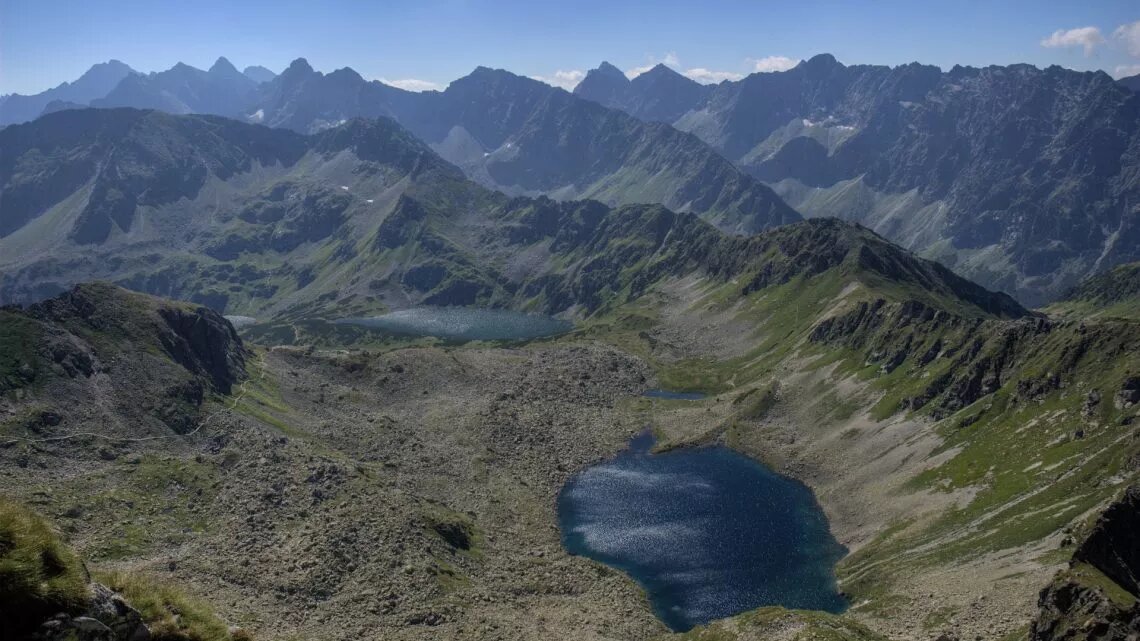
Eighty-five percent of the territory in the southern Mexican state of Oaxaca is rugged, mountainous terrain dotted by small villages. Three distinct ranges – the Sierra Madre del Sur, the Sierra Norte and the Sierra Atravesada – reach above 11,000 feet in elevation, separated by steep canyons and lush valleys home to more than 8000 native species of flora. For hundreds of years, these villages were connected only by rugged trails cut by animals and people moving slowly between them. Barnetche estimates that many of the trails have existed since at least the early 1700s and that others yet to be discovered are likely even older.
As I navigated a particularly tricky section of rock-strewn track, I marveled at the fact that I was walking along a path that may have existed in the time of Cosijopii I, the 16th-century Zapotec ruler of what was then known as the Kingdom of Zaachila. Including the Zapotec, Oaxaca is home to more than one dozen Indigenous nations. Spanish colonizers overtook the region in 1521, bringing with them enslaved people from Africa to work the land. This horrific run lasted 300 years until Mexican independence in 1810. Over that time, hundreds of thousands of Indigenous residents, many of whose ancestors inhabited the area as far back as 2000 BCE, were killed or displaced. It’s a story that many tourists to the region, especially those who spend the bulk of their time in Oaxaca City and popular beach destinations like Puerto Escondido, miss. Walking the very trails where this history unfolded can unlock a deeper understanding of place. Read More…