Things To Do In Spain
-
 Loading...
 - Nicolas Stewart
- 02 Jun 2022
- 262 Views
- 0 Like
- 0 Comment
Spain is a country of endless travel opportunities and experiences, with things to see and do for everyone. From the bright lights and beaches of Barcelona to a hidden interior of wide open spaces and dramatic scenery; from lazy days soaking up the sun and sampling the exciting cuisine, to partying the night away on Ibiza, or perhaps even in a Flamenco club! Below we’ve listed 13 of the most popular things to do in Spain (listed in no particular order) to kickstart the imagination for your next adventure.
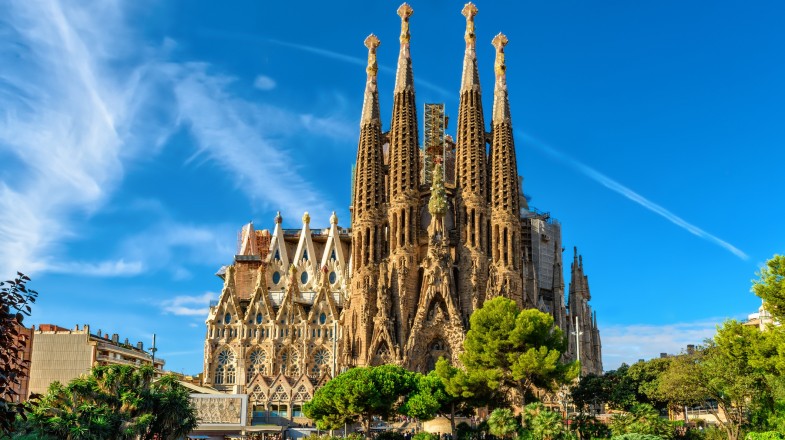
1. VISIT LA SAGRADA FAMILIA
Construction of this breathtaking cathedral, dedicated to the Holy Family, first began in 1882 and still continues to this day. Legend has it that if Gaudi’s masterpiece of design is ever completed, the world will end, which is perhaps why it’s taking so long to finish! No trip to Spain is complete without a visit here. The cathedral is open daily, though restrictions apply during mass times. Be sure to dress appropriately and remember that some parts of the cathedral could be closed as construction continues.
· Good to know: You can buy tickets for the cathedral online. A basic ticket costs around USD 19*, with more expensive options for audio guides, and the chance to go to the top of one of the cathedral’s towers, also available.
· Suggested tour: Skip-the-line Sagrada Tour
Insider's tip: Purchase skip-the-line tickets as the normal queue can get very long and better purchase in advance (around 3 to 5 days before your trip) so you can reserve a spot. It's good to visit this famous attraction when the sun is not so high up (around mid-morning or before sunset) so you can see its rays pass through the stained glass windows. You will be in awe of the beautiful colors glow inside the basilica because of the natural light. To learn more about its history, you can purchase an audio guide for a self-guided tour. — by Ed from Dubai Travel Blog
2. CONQUER THE CAMINITO DEL REY HIKE
El Caminito del Rey, also known as ‘the King’s little pathway’ is a walkway straddling the side of the El Chorro gorge near Ardales in the province of Malaga. This is not an experience for the faint-hearted! Adrenaline junkies can traverse the 3-kilometre walk along a 1-meter wide path, 100 meters above the gorge floor below. Originally built as a route for workers at the hydroelectric power plant nearby, it now attracts thrill seekers from around the world. The path was closed for four years, reopening in 2015, following several deaths. Now though, it is possible to traverse the Caminito far more safely, but the excitement remains. As far as points of interest in Spain go this must be amongst the most hair-raising!
· Good to know: Tickets for the walk can be reserved online and cost around USD 12*. Guided walks are available, and you will need to be physically fit with a good head for heights!
· Suggested tour: Caminito del Rey Day Tour from Costa del Sol
Insider's tip: Book a few days in advance to secure the desired time-slot. Best go early to avoid the midday Mediterranean sun and bring plenty of water! Watch videos of daredevils taking old pathway on YouTube to understand why this was one of the most dangerous paths in the world. If time permits, be sure to take a detour to the quaint town of Ronda that’s only an hour’s drive away. It has an 18th-century bridge spanning over a 120M deep gorge that could take anyone’s breath away! — by Winny Wu from Travel with Winny
3. COMPLETE THE CAMINO TRAIL
For those with an appetite for adventure, a hike along one of the numerous Camino pilgrimage trails to the city of Santiago de Compostela is a must. These ancient routes have been traversed by pilgrims for centuries. However, you don’t need to be religious to enjoy the sense of achievement and adventure that comes from following these long-distance footpaths across Northern Spain. Whether you walk for weeks and cover the entire route, or just take a few days to hike along some of the trails, you’ll find the challenge a rewarding one; after all, you will be following in the footsteps of thousands who have gone before. Just follow the white shells which mark the route!
· Good to know: There are numerous ways to walk the Camino. The most popular is the ‘Camino Frances’ which begins at St. Jean Pied de Port just across the border into France. It’s a good option for first-timers being well signposted, with plenty of accommodation en route.
Insider's tip: One of the best tips I can give before taking on the challenge that is the Camino, is to train. It's obviously difficult to train yourself to walk over a half marathon everyday for a month, but the more walking you can do before hand, the better position you'll find yourself in for success on the trail. That said, the Camino is a very 'come as you are' experience, and you can take as much time as you need; it's not a race, and no-one on the trail treats it as one. So even if you're not overly fit, if you've got time, you'll be fine. The only expectations you should travel with is that it will be challenging ... and that it will rain (so pack wet weather gear accordingly). — by Megan Jerrard from Mapping Megan
4. EAT TAPAS

Authentic Spanish tapas are a very different experience to the pale imitations one finds at home. This traditional way of serving food, a word which literally means ‘cover’ or ‘lid,’ allows you to sample numerous little dishes, perhaps alongside a glass or two of traditional sangria. Almost every bar and restaurant in Spain will serve tapas. Whether it be calamari, patatas bravas, or churros, order several plates each, and enjoy the experience of sharing food the Spanish way.
· Good to know: The Spanish like to eat late. If you go out expecting a meal around 7pm you’ll be disappointed. Instead, opt for a Spanish siesta and go out to eat with the locals when the restaurants are at their busiest around 10pm.
5. HIKE THE PICOS DE EUROPA
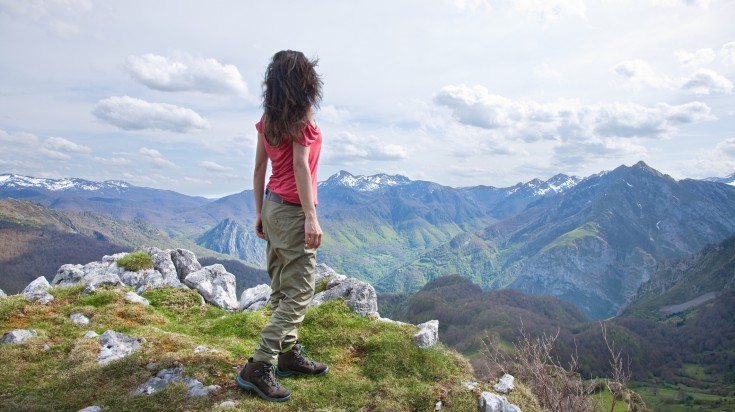
A holiday in Spain need not centre on the beach, or the historic landmarks. If getting out and about in the great outdoors is more your thing then walking in the Picos de Europa will be an ideal adventure. This mountain range lies around 20 km from Spain’s northern coast. Highlights not only include the mountains, but also some of the deepest caves in Europe including Torca del Cerro descending to a depth of 1589 meters!
· Good to know: You can also join organized trips into the caves. When you are done exploring, sample the famous Cabrales cheese which this region is so well known for.
· Suggested tour: Walking the Picos de Europa