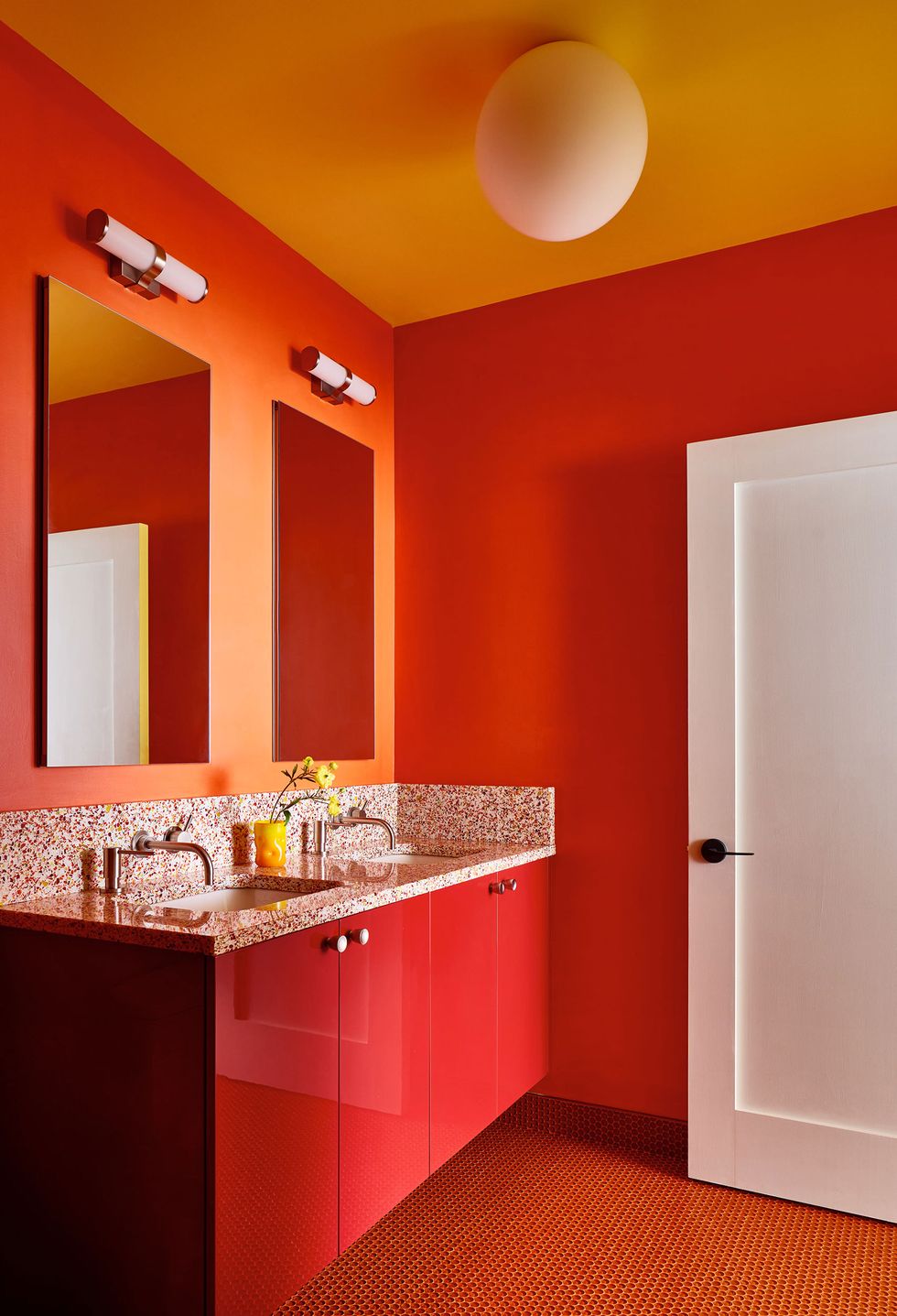
This woodstock home has every color of the rainbow
-
 Loading...
 - Aria Anderson
- 28 Oct 2022
- 67 Views
- 0 Like
- 0 Comment
For more than a century, New Yorkers from all walks of life have found respite from their bustling city lives in the upper reaches of the state, lured by the siren song of rolling mountains, rustling forests, and sparkling waters.
Such was the case for one adventurous city-dwelling couple who, when not climbing their respective corporate career ladders, spent weekends blazing trails through backcountry paths in the Adirondacks. By the mid-1990s, the pair longed for a more permanent outpost where they could spend weekends enjoying the wilderness with their young family. “The refuge that we found in the woods was just such a total escape from our city lives, and we really wanted to re-create that more permanently,” the wife remembers.

For 25 years, they found that away-from-it-all bliss in a rustic cottage just outside Woodstock, New York, surrounded by thousands of acres of Forever Wild forest and undulating Catskills topography. The home was charming, if architecturally wonky, and—in addition to a resident mouse or two—boasted a colorful history that included (as local lore held) stints as a 19th-century hunting shack, gangster bolt-hole, and hippie artists’ colony.
“Some neighbors told us it’s because this area of Woodstock is one of two or three places in the world where some kind of positive ions flow down into the valley and juice up the creative spirits,” the wife says.
Mystic mountain energy aside, it became clear—after more than two decades in the house—that their beloved little retreat was due for an upgrade. Enter Barry Price, a local architect who specializes in Passive House design, and Frank Webb and Kacie DeMaio, principal and senior designer, respectively, at the New York interiors firm White Webb. But expanding the house, addressing its difficult hillside site, unifying the existing structure’s hodgepodge of volumes, and bringing the building up to rigorous Passive House standards would be challenging—to put it mildly. “It was very typical of Woodstock houses in that it will start out as an old little house or cottage, and then they will just grow—but not always in a thoughtful way,” Price says. Read More...