Top 20 Most Popular Northern Italian Foods
-
 Loading...
 - Megan Miller
- 07 Feb 2022
- 418 Views
- 0 Like
- 0 Comment
It is a common misconception that Italian cuisine is entirely about pizza, rice, and pasta. Indeed, saying Italian cuisine is all about carb-based dishes is a bit like reading the first chapter of a book and then putting it down thinking you know the entire story.
And the proof of this definitely lies in the wonderfully-rich gastronomic repertoire of the northern Italian regions: Liguria, Emilia-Romagna, Piemonte, Val d’Aosta, Lombardy, Trentino-Alto Adige, Veneto, and Friuli-Venezia Giulia. The French southern perimeter, bordering Switzerland, Austria, and Slovenia, Italy inevitably showcases deep and varied influences from its neighboring countries, as well as the geography that shapes and determines these lands.
Due to the colder and more rigid climate compared to the sun-drenched South, dishes in the northern regions tend to be richer and heartier, privileging slow brazing and stewing techniques over frying and boiling; tomato sauces and olive oil are replaced by stock or wine and butter; and the quintessential Mediterranean herbs such as basil and oregano are replaced by sage and rosemary.
Moreover, the production of high-quality meat and cheeses is primarily due to the excellent cattle breeds largely present in the most northern regions.
But now let’s delve into each region and find out what speciality they have to offer!
Liguria
Rolling out in the north-west in a thin half-moon shape, Liguria is the most southern of the northern regions, not only geographically but specifically for its Mediterranean culinary culture.
1. Trofie al Pesto

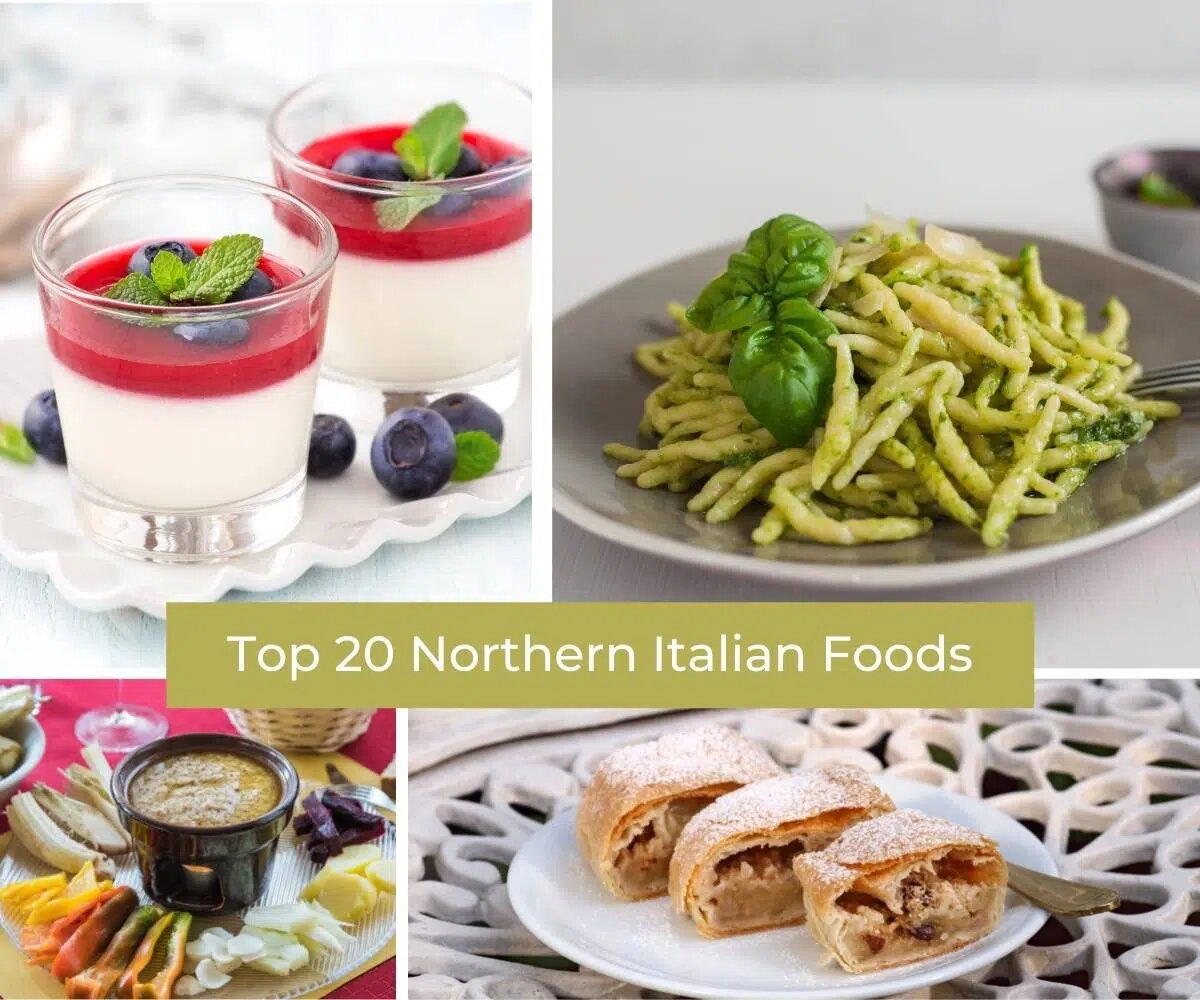
This is particularly exemplified by the use of pasta, olive oil, and basil in the traditional dish Trofie al Pesto. Trofie is a spiral-shaped type of pasta which is typically cooked al dente and almost exclusively eaten with freshly grounded pesto alla Genovese: a true symbol of Ligurian identity!
Emilia-Romagna
Classed as the second most southern region of Northern Italy for its wide use of Mediterranean ingredients, Emilia-Romagna is possibly the one region in Italy that holds most of the world-renowned Italian foods and dishes.
2. Ragù alla Bolognese

Originally from the town of Bologna, ragù alla Bolognese is a timeless symbol of hearty, nourishing, soul-satisfying cuisine. This slow-cooked meat-based tomato sauce, sometimes flavored with laurel and red wine, can require up to 3 hours of simmering! Ragù is typically savored during long Sunday lunches with tagliatelle or used to make the epic lasagne.
Piemonte
In the north-west of Italy, outlining a large portion of the southern French border, is Piemonte, a rural and industrial region with an authentic alpine identity.
The name of the region derives from the Latin Pedemontium (at the foot of the mountains), referring to its position at the foot of the majestic Alps, which have indeed influenced its cuisine with the large use of butter, lard, mountain-based cheeses, and truffles.
3. Tartufo di Alba

Indeed, Piemonte, and more precisely the town of Alba, is home to the most prestigious type of truffle that exists in Italy. The tuber magnatum pico is a species of white truffle with a pale golden outer layer and a spongy texture which stands out for its distinctively sharp, aromatic and earthy flavor.
Growing up to 9 cms in diameter, these precious culinary gems are a prestigious symbol of Italian haute cuisine. Whether grated over egg tagliatelle or blended into a creamy risotto, they enhance any simple and humble dish with a sophisticated taste.
Editor’s Note: The town of Alba is known to the culinary aficionados for Piazza Duomo, one the best, and most expensive restaurants in the world.
4. Bagna Cauda
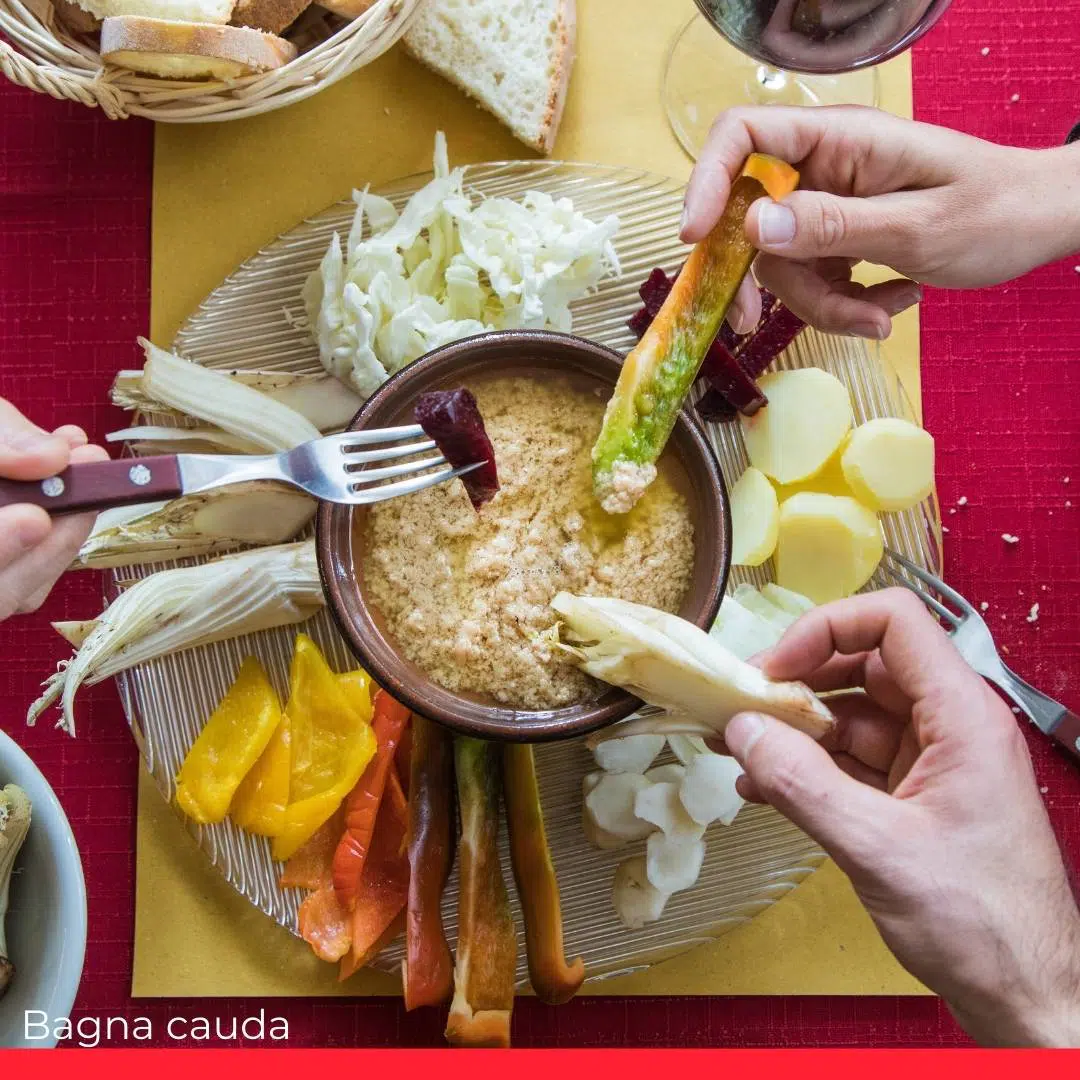
Bagna cauda is a traditional stew from Piemonte made with anchovies, garlic, and fresh seasonal vegetables. Other than being a symbol of traditional peasant food, Bagna cauda proudly symbolizes conviviality and friendship and, in fact, is often eaten with friends.
It is typically placed at the center of the table and served in terracotta pots, called dian, into which everyone dips their own pieces of bread. A delicious ritual to share in front of the fire on a cold winter’s night.
5. Panna Cotta

Panna cotta is one of the most renowned desserts in Italy. This simple and delicate pudding is simply made with cream, milk, sugar, and gelatin, which confers its typical wobbly texture.
Panna cotta was said to have been invented by a Hungarian woman in the Langhe area in Piemonte. Its simplicity and tender consistency make it one of the most popular desserts in the country, to be typically served with a raspberry coulis or a caramel sauce.
Valle d’Aosta
Tucked up north and encircled by the Alps is Valle d’Aosta: a tiny region with a strong linguistic and cultural identity that is one of the five autonomous regions in Italy. Due to its particular geomorphologic construction, its culinary culture has little in common with other regions, being rather a perfect symbol of pure Alpine cuisine.
6. Fonduta Valdostana

The first major landmark of its Alpine cuisine is undoubtedly represented by cheese fondue, prepared with the local Fontina cheese. Like many dishes in the Alpine cuisine, fonduta holds an important ritualistic value: it is typically served in a cast iron pot which is warmed by a candle and placed at the center of the table to be shared among friends – again, as a symbol of love and friendship.
7. Mocetta

Mocetta, or motsetta, is a traditional cold cut meat made from the meat from cows’ thighs which have been aged and preserved following incredibly ancient techniques.
Mocetta is seasoned with garlic, bay leaves, rosemary, and sage and then salted and left to rest in a cool place for about 90 days. Once ready, mocetta is sliced into very thin, weightless slices, and it’s traditionally eaten on black bread with butter and a drizzle of honey. Don’t forget to pair it with local red wine to maximize the wonderful outburst of taste! Read More…