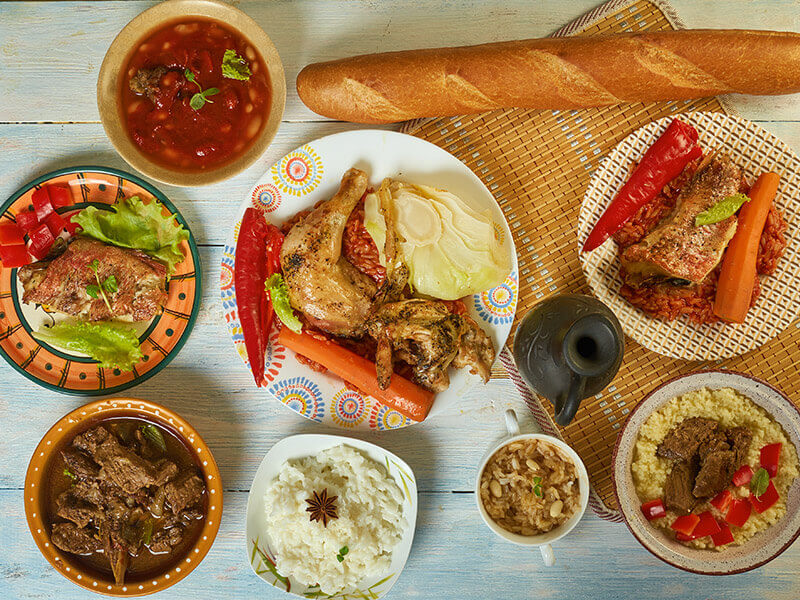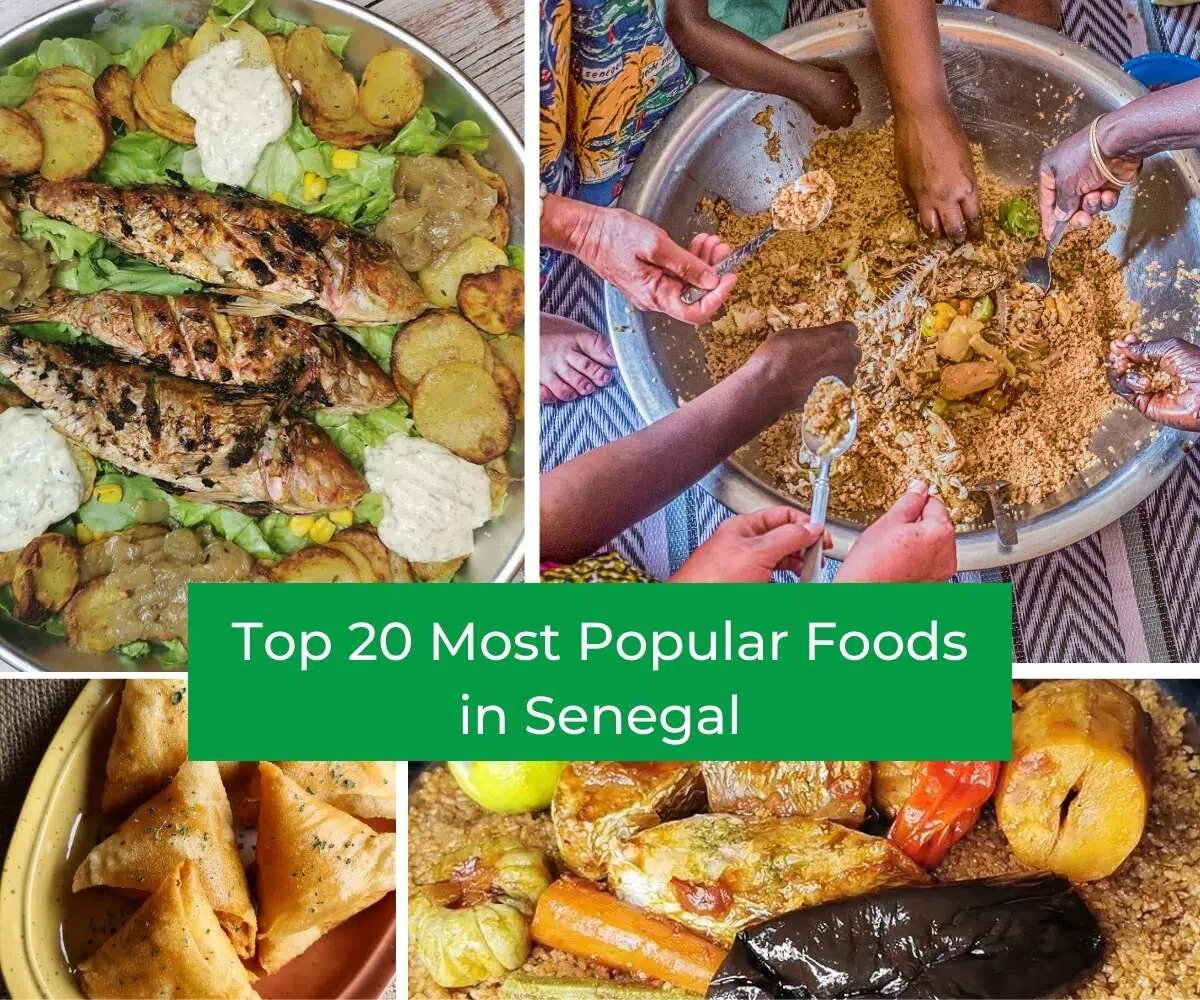
Top 20 Most Popular Senegalese Foods & Dishes
-
 Loading...
 - Clement Ntinyari
- 03 Feb 2022
- 447 Views
- 0 Like
- 0 Comment
Senegal is a country located in East Africa with a population of 17 million. It is a country rich in art and culture but also, and above all, in a vast and diverse gastronomy. It is a democratic country, with strong institutions, making the Republic of Senegal one of the most stable countries on the continent.
Welcoming, warm, and hospitable, it is a crossroads of ethnic groups and traditions: the land of the Wolofs, the Pulaar (pastors Peuls and Toucouleurs of the river Senegal valley), the Soninkes, the Diolas of the Casamance, the Séréres of the Sine, and the Mandingues, all contributing to the country’s cultural richness.
Senegal is so at one with itself that it has remained stable despite the economic situation in Africa, and welcomes everyone showing the utmost respect for visitors.
Senegalese Lunch and Dinner
1. Thiéboudieune: Fish and Rice

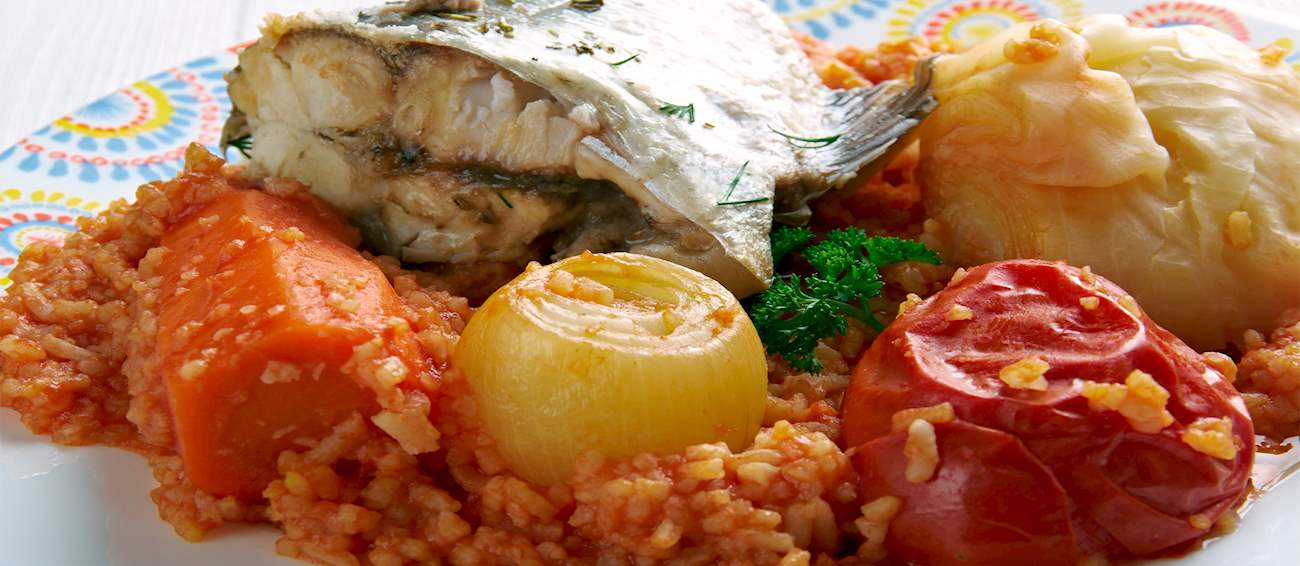
Thiéboudiene is the national dish of Senegal, a pure Senegalese product. Neighboring countries even call it djolof rice, djolof being one of the ancient kingdoms of Senegal.
It’s made of rice cooked with a tomato sauce and nokos, which is a mixture of spices and herbs such as parsley and lots of garlic. The rice is served with fish and many different vegetables, simmered in the tomato sauce used to cook the rice. But be careful, not any vegetable can go in this dish. Only carrot, cabbage, cassava, eggplant, okra, and turnip make it into this dish.
It’s sometimes accompanied by an onion sauce, call diaga, which has diced carrots, fish balls, and a spoon of tomato paste.
In Senegalese culture, thiéboudiene, as are the majority of the dishes, is served on a large plate with the whole family seated around grabbing their spoons ready to eat this delicious dish.
2. Thiebou Diola or “C’est Bon”

Yes, this meal has a French name. For those who speak French, you will know that “c’est bon” literally means “that’s good”. Senegal being a former French colony, its influence is felt even in the names given to our dishes.
However, the composition of this meal is anything but French. The dish was created by the Diolas, an ethnic group who live in the region of Ziguinchor in the south of Sénégal.
It’s based on white rice cooked with dried shrimp and various shellfish as clams or mussels. The grilled fish and rice is served with Moyo sauce, a combination of raw onion, red, green, and yellow sweet peppers and chili, all diced and seasoned with mustard, salt, pepper, and vinegar, and boiled and mashed okra seasoned with salt and pepper.
3. Soup Kandia: Okra and Palm Oil Sauce

Okra is kandia in Wolof and kandia soup is a stew of okra, palm oil, and white rice. A good kandia soup requires quality ingredients. Avoid using larger okra as they are usually dry. Medium-sized okra are better and easier to cook. Let’s not forget the fish. It must be a good fish with a lot of flesh and not too many bones.
The dish comes with souloukhou, a peanut butter sauce, which some people also add a few gombos.
While okra originated in African, it can also be found in South American, Guyanan, and even Haitian cuisine.
4. Yassa Guinar or Dieun

In Wolof, the most commonly spoken language, guinar means chicken and dieun mean fish. Yassa is probably the simplest dish to make. It’s base on rice and served with an onion sauce cook with nokos (nokos, as you can see, is pretty popular), mustard, and lots of lemons.
It can be served with braised or grilled fish or chicken, stuffed with nokos, again. Because it is so simple and the ingredients are easy to find, it is very popular with expatriate Senegalese.
5. Mafe

The origin of mafe is controversial. There’s quite a big debate about whether it came from Senegal or Mali, and both of which make claims to its origin. So to keep it simple, let’s just call it a Senegalo-Malian meal.
Mafe is a combination of white rice and a sauce made with peanut butter, meat, tomato paste, potato, and sweet potato simmered for a few hours. It’s is very simple to make because you just need to put all the ingredients together and wait.
You can find mafe in almost every west African country, not only Senegal and Mali. Read More…