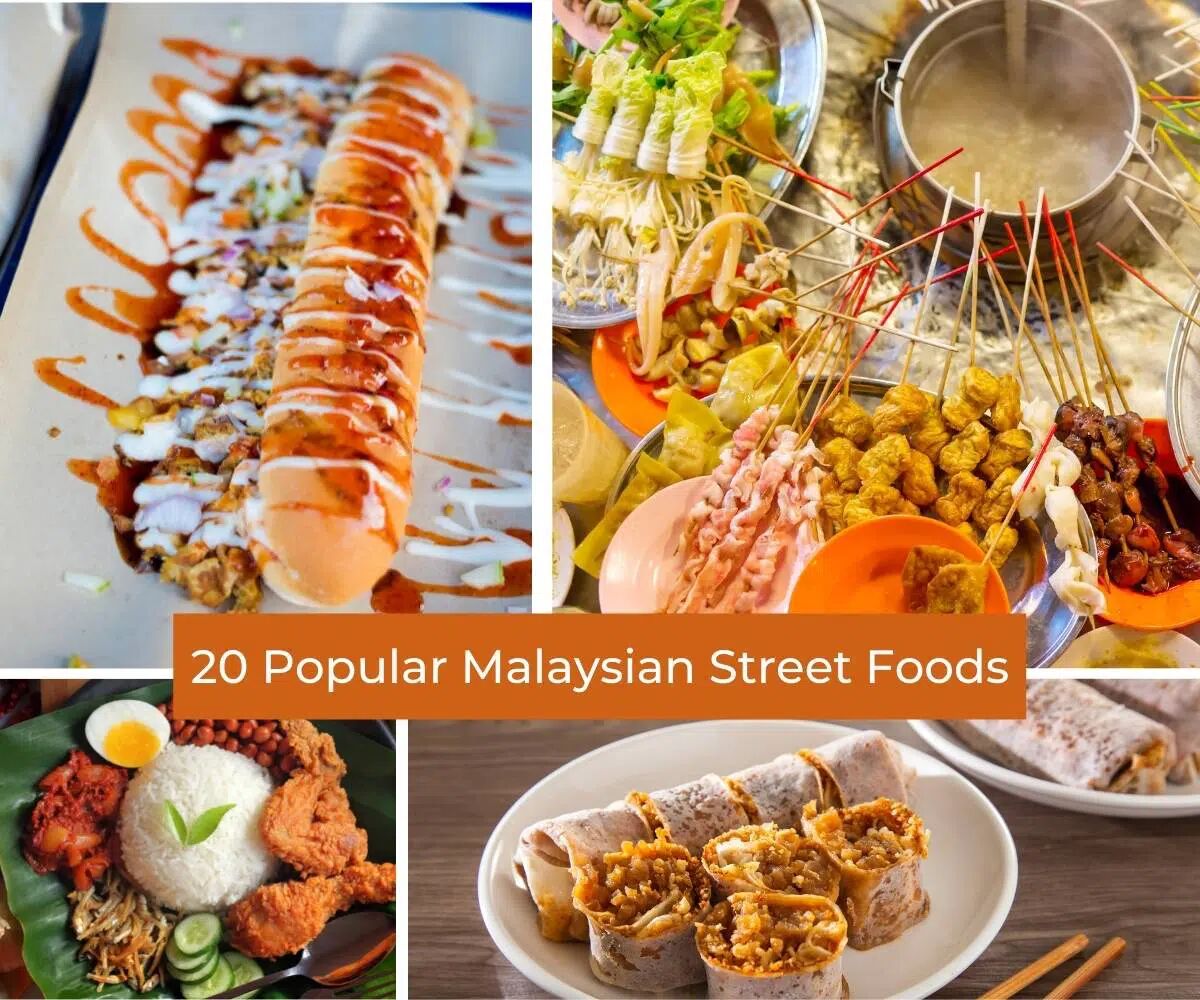
20 Popular Malaysian Street Foods

While streetside hawkers are still easily found – even in the skyscraper-studded heart of Kuala Lumpur, they wait for office workers to take the lift down for their lunch or coffee break – many hawkers have relocated to more comfortable and convenient settings.
Today, street food can be found at weekly outdoor markets (e.g. pasar malam), the ground floor of restaurants (typically shared by several hawkers), and air-conditioned food courts within both major and minor shopping malls. It is also not uncommon for successful hawkers to set up a restaurant (or even a chain of restaurants) after years of craft-perfecting, capital- and brand-building.
This means that there isn’t a clear line between “street food” and “restaurant food” in the Malaysian context. There are thus many popular Malaysian foods that clearly fall into the general definition of street food (foods prepared for immediate consumption without requiring a dedicated kitchen), even if many Malaysians aren’t necessarily eating them on the streets these days.
1. Nasi Lemak (Coconut Milk Rice)

It’s quite fitting that one of Malaysia’s most iconic dishes is a commonplace – yet treasured – street food. You can find more upscale versions of nasi lemak in many restaurants and trendy cafes these days. The latest reiteration to hit the market (and social media channels) is one that’s served with lobster.
But sometimes it’s better to go back to the basics. Imagine unwrapping a palm-sized, pyramid-shaped mould of rice that’s skillfully packaged in a cut of banana leaf for breakfast. The fragrant rice (cooked in coconut milk), half a boiled egg, cucumber slices, peanuts, fried anchovies, and sambal paste might not seem like a lot of food. But there’s more than enough energy (and flavor) in there to keep you going until lunch.
2. Lok-lok

Lok lok literally translates as “dip dip”. The idea here is to dip bamboo skewers of meat, seafood, meatballs, fish balls, sausages, and vegetables into your favorite sauces and soup broths. These sticks are usually tagged to indicate different prices. After you’re done, the number of sticks on your table are counted before you get your bill.
It’s a similar culinary experience to sitting down for a steamboat or hot pot (with a more budget-friendly price tag). With lok lok, however, all the cooking takes place at the back of the truck. Meanwhile, the eating typically takes place at night (preferably with a cool breeze and a nice view).
3. Char Kway Teow

Smoky in flavor and rich in aroma (and calories), this dish of stir-fried flat rice noodles used to be a staple meal for the toiling Chinese coolies of British Malaya.
The rice noodles are usually fried in crispy pork lard, seasoned with soy sauce, and topped with bean sprouts, prawns, egg, spring onions, cockles, and slices of Chinese sausage. It takes skill for a hawker to expertly cook the noodles in a large wok over a high flame without burning them at all.
4. Satay

While satay is believed to originate from the densely-populated island of Java, it has spread far and wide – well beyond Indonesia’s national borders and even beyond the region of Southeast Asia. It is a highly popular dish in Indonesia, Singapore, Bali, Thailand and even Oman.
The idea of satay is simple and timeless. A variety of meat (chicken, beef, goat, mutton, fish) is sliced and diced, and then skewered. Vegetarian alternatives like tofu can also be prepared in the same way, although these are harder to find. These are then grilled over a wood or charcoal fire, with the satay vendor expertly fanning the flames to ensure that each skewer is perfectly cooked.
Once cooked, satay is usually consumed with a sweet and mildly spicy dipping sauce (a combination of soy and mashed peanuts).
5. Rojak

There are two main types of rojak that are popularly consumed in Malaysia. The most popular type involves sliced fruit and vegetables: cucumber, turnip, bean sprouts, pineapple, jambu air (watery rose apple), guava, and unripe mangoes. Some versions also have slices of deep-fried tofu (taupok) and cut-up youtiao (Chinese fritters).
The tangy dressing (made of ground chili, crushed peanuts, and lime juice) brings all the flavors and textures together.

The second type (rojak mamak aka Indian rojak aka pasembur) is usually found on Muslim Indian stalls and in restaurants. This version is more savory and less sweet. It usually consists of tofu slices, prawn fritters, hard-boiled eggs, cucumber slices, bean sprouts, and potatoes. The dish is completed with a thick and mildly sweet-and-spicy chili sauce. Read More…