Top 5 Croatian Traditions
-
 Loading...
 - Gabriel Fortin
- 15 Aug 2024
- 55 Views
- 0 Like
- 0 Comment
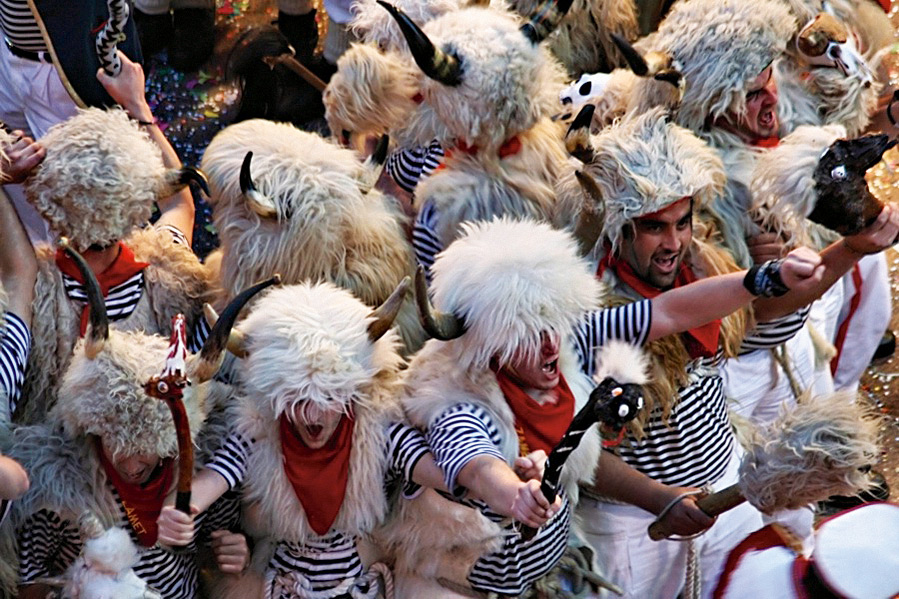
Croatia, a land of stunning natural beauty and a captivating blend of cultures, is a treasure trove of traditions that have been passed down through generations. From ancient rituals to vibrant festivals, the country's cultural heritage is a testament to the resilience and creativity of its people. As you venture through the charming coastal towns and picturesque countryside, you'll be enchanted by the myriad of customs that make Croatia truly unique.
In this article, we'll delve into the top 5 Croatian traditions that will immerse you in the heart of the country's captivating cultural identity. Get ready to be swept away by the rhythm of traditional dances, the flavors of time-honored cuisine, and the captivating stories that have shaped this remarkable nation.
1. Klapa Singing: The Harmonious Heartbeat of Croatia
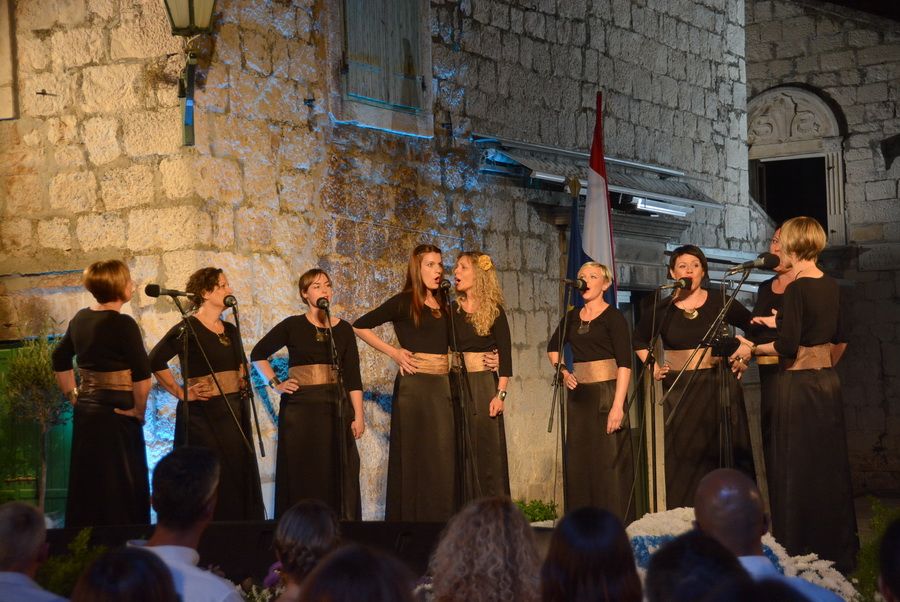
Croatia's coastal regions are renowned for their enchanting a cappella singing traditions, known as Klapa. These close-harmony vocal groups, typically consisting of four to six male singers, have been serenading audiences for centuries, weaving together rich, soulful melodies that evoke the very essence of the Adriatic.
Klapa singing is not just a musical performance; it's a deeply ingrained cultural practice that reflects the strong sense of community and camaraderie among Croatians. The intricate harmonies and emotive lyrics often pay tribute to the natural beauty of the coastline, the resilience of the seafaring lifestyle, and the enduring love for one's homeland.
Attending a Klapa performance is a truly immersive experience, as the singers effortlessly blend their voices, creating a mesmerizing tapestry of sound that resonates with the heart and soul. Whether you find yourself in a quaint coastal town or at a lively festival, be sure to indulge in the captivating melodies of Klapa singing – it's a tradition that will leave a lasting impression on your Croatian adventure.
2. Sinjska Alka
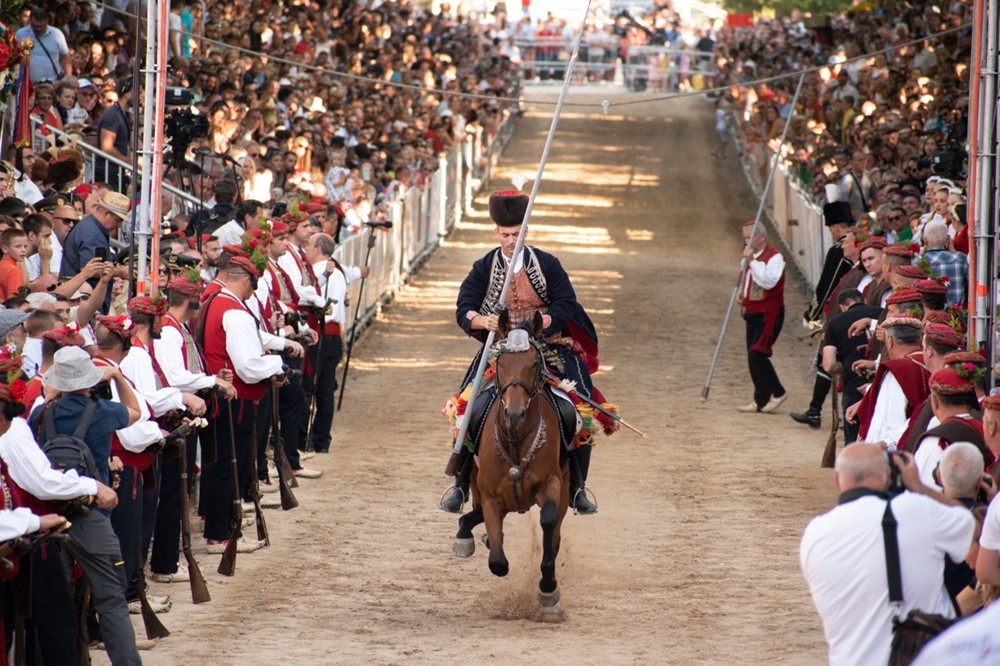
Sinjska Alka is a medieval jousting tournament that takes place in Sinj, Croatia, every August. It's a celebration of Croatian history and culture, and it's been held annually since 1715. The tournament is a reenactment of a medieval jousting competition, where knights on horseback charge at each other with lances. The objective is to knock off the opponent's ring, which is suspended from a rope. The ring is only 3 cm in diameter, making it a challenging target. The tournament features 12 knights, known as "alkari," who are dressed in traditional costumes and ride horses. They are chosen from the local population and must be skilled horsemen and lance handlers. The tournament takes place on a 160-meter-long course, where the knights ride their horses at full gallop. The course is lined with spectators, and the atmosphere is electric. The winner is the knight who knocks off the most rings during the tournament. The winner is awarded the title of "Vitez" (Knight) and receives a ceremonial sword and a prize.

3. Ljelje: The Captivating Ritual of Flower-Crowned Maidens
In the northern region of Croatia, the tradition of Ljelje, or Kraljice (Queens), stands as a captivating cultural phenomenon that has endured for centuries. This elaborate ritual involves young women, adorned in traditional costumes and flower-crowned headpieces, performing intricate dances and songs that celebrate the arrival of spring and the renewal of life.
The Ljelje procession is a sight to behold, as the flower-crowned maidens, accompanied by musicians and flag-bearers, weave through the streets, their movements and melodies evoking a sense of timeless mysticism. The ritual is steeped in symbolism, with the flowers representing fertility and the crown signifying the divine connection between the earthly and the celestial realms.
Witnessing the Ljelje tradition is a truly immersive experience, as the community comes together to honor their cultural heritage and welcome the changing of the seasons. The infectious energy and the sheer beauty of the performance make it a must-see for any traveler seeking to delve deeper into the rich tapestry of Croatian culture.
4. Bećarac: The Rhythmic Heartbeat of Slavonian Folk Music
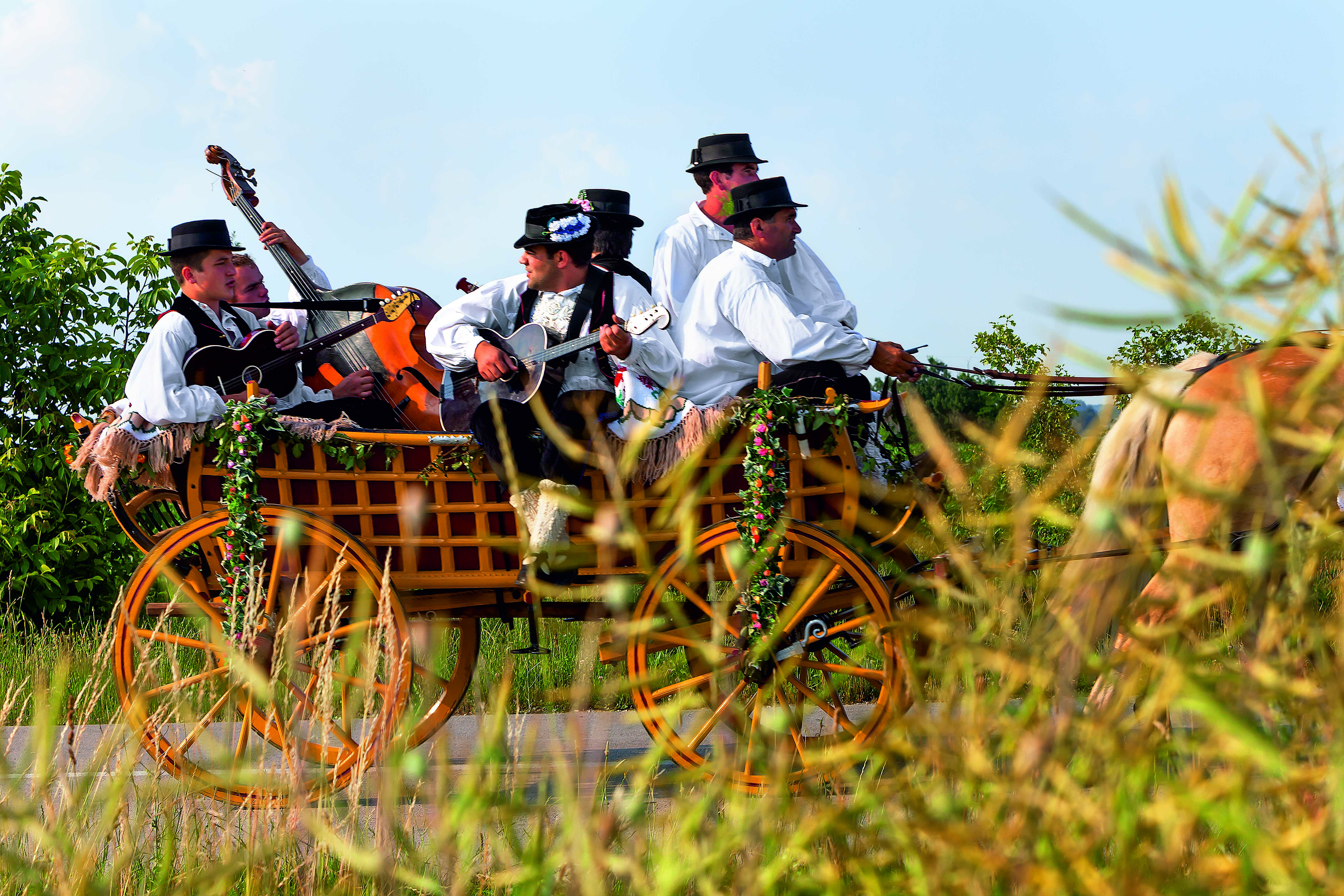
In the lush, rolling hills of Slavonia, the region's traditional folk music, known as Bećarac, echoes the vibrant spirit and resilience of the local people. This captivating genre, characterized by its infectious rhythms and playful, often humorous lyrics, has been a cherished part of Slavonian cultural identity for centuries.
Bećarac performances are a true feast for the senses, with musicians skillfully blending traditional instruments like the tamburica (a plucked string instrument) and the diple (a type of double-reed instrument) to create a mesmerizing soundscape. The music is often accompanied by energetic dancing, with couples and groups moving in perfect synchronicity, their movements reflecting the rhythmic pulse of the Bećarac.
As you immerse yourself in a Bećarac performance, you'll be struck by the raw, emotive power of the music, which can range from joyful and celebratory to deeply poignant and reflective. The lyrics, often improvised, touch on themes of love, loss, and the enduring spirit of the Slavonian people, making the experience a truly authentic and unforgettable glimpse into the heart of Croatian culture.

5. Međimurje Embroidery: A Tapestry of Vibrant Tradition
In the northern region of Međimurje, the art of traditional embroidery stands as a testament to the region's rich cultural heritage. Međimurje embroidery, characterized by its vibrant colors, intricate patterns, and meticulous craftsmanship, is a true masterpiece of textile art that has been passed down through generations of skilled artisans.
The intricate designs found in Međimurje embroidery often draw inspiration from the natural world, with motifs of flowers, leaves, and geometric patterns creating a captivating visual tapestry. The use of bold, contrasting colors, such as deep reds, vibrant blues, and earthy greens, lend a distinct vibrancy and energy to the finished pieces.
Međimurje embroidery can be found adorning a wide range of traditional garments and household items, from ceremonial costumes and festive tablecloths to decorative wall hangings and heirloom textiles. Each piece is a testament to the dedication and artistic prowess of the local craftspeople, who have dedicated countless hours to perfecting their skills and preserving this timeless tradition.
As you explore the charming towns and villages of Međimurje, be sure to seek out the work of these talented artisans, whose creations not only showcase the region's cultural heritage but also serve as a beautiful and lasting reminder of the enduring spirit of Croatian craftsmanship.
Conclusion
Croatia's rich cultural heritage is a tapestry woven with countless traditions, each one a testament to the resilience, creativity, and enduring spirit of the Croatian people. From the soulful harmonies of Klapa singing to the savory delights of Pršut, the captivating rituals of Ljelje to the rhythmic heartbeat of Bećarac, and the vibrant artistry of Međimurje embroidery, these cultural gems offer a glimpse into the heart and soul of this remarkable country.
As you immerse yourself in these traditions, you'll not only deepen your appreciation for Croatia's cultural heritage but also forge a deeper connection with the land and its people.


