Turkish election victory for Erdogan leaves nation divided
-
 Loading...
 - Avril Moulin
- 29 May 2023
- 72 Views
- 0 Like
- 0 Comment
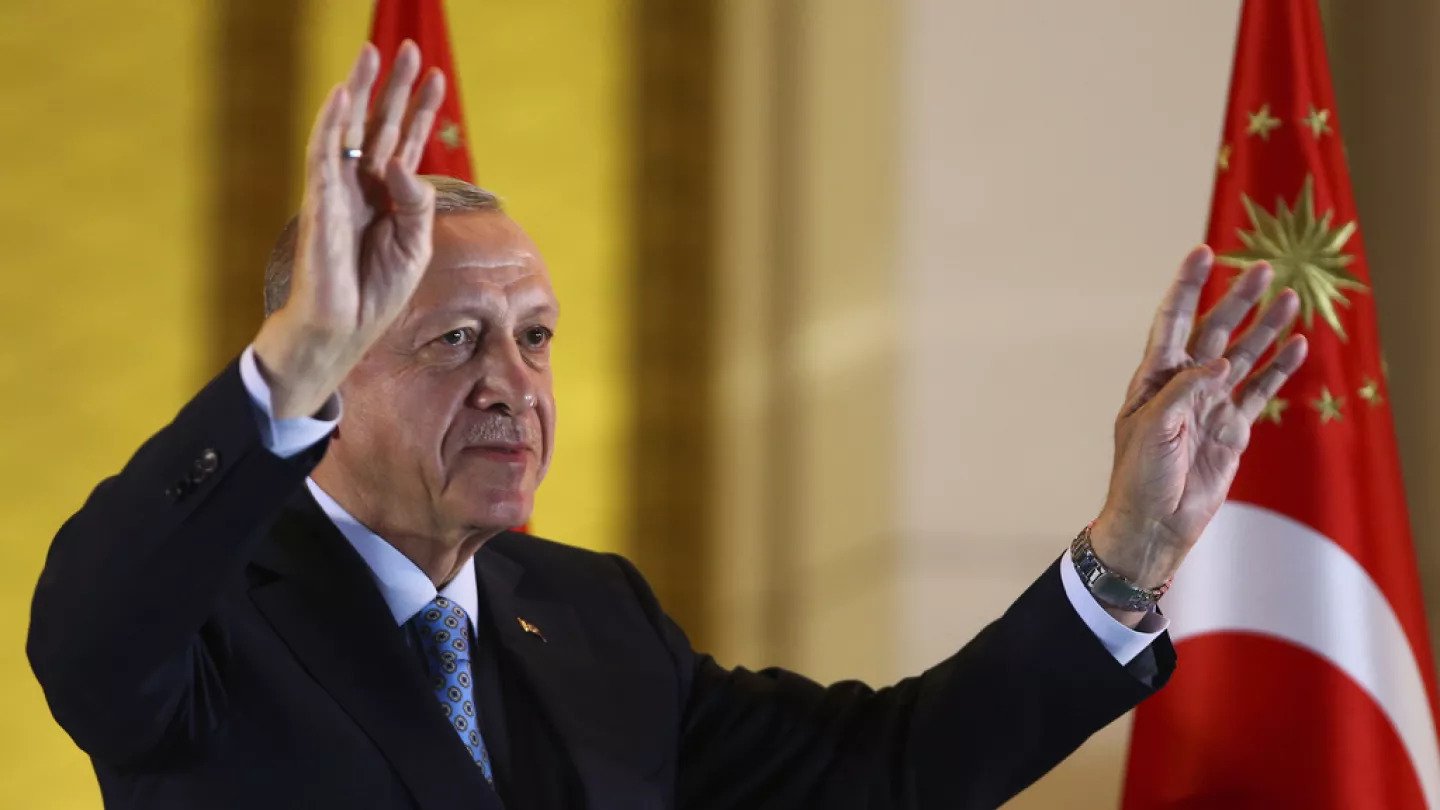
Recep Tayyip Erdogan's supporters are rejoicing after the victory of Turkey's long-standing president in Sunday's election, securing another term of five years in power. Addressing the jubilant crowds outside his grand palace on the outskirts of Ankara, he proclaimed, "The entire population of 85 million emerged victorious." However, his call for unity appeared hollow as he derided his opponent Kemal Kilicdaroglu, and launched verbal attacks on a jailed Kurdish leader and the LGBT community.
The opposition leader denounced the election as "the most unjust in recent years." Kilicdaroglu asserted that the president's political party had utilized all the resources of the state against him, yet he refrained from explicitly admitting defeat. Based on nearly complete unofficial results, President Erdogan secured slightly over 52% of the vote. Nevertheless, almost half of the electorate in this deeply divided country did not support his authoritarian vision for Turkey.
In the end, Kilicdaroglu proved to be no match for the well-organized Erdogan campaign, even though he forced the president into a runoff second round, the first occurrence since the direct election of the post in 2014. However, Kilicdaroglu failed to significantly narrow the gap in the first round, trailing by over two million votes.
The president capitalized on his victory, delivering an initial speech to his supporters from atop a bus in Istanbul, Turkey's largest city. Later, under the cover of darkness, he addressed an adoring crowd from the balcony of his palace, estimating their numbers at 320,000. Erdogan triumphantly declared it one of the most momentous elections in Turkish history, taunting his opponent's defeat with the chant "Bye, bye, Kemal," which was echoed by his supporters in Ankara.
Erdogan scornfully dismissed the increase in the number of parliamentary seats obtained by the main opposition party in the preceding vote two weeks prior. According to him, the actual number was 129, as the party had allocated several seats to its allies. He also condemned the opposition alliance's pro-LGBT policies, highlighting the contrast with his own emphasis on families.
The lead-up to the election had grown increasingly acrimonious, and in a late Sunday incident, an official from the opposition Good Party was fatally stabbed in front of a party office in the northern coastal town of Ordu. The motive for the killing of Erhan Kurt remained unclear, but a senior opposition official attributed it to youths celebrating the election results. Although the final results had yet to be confirmed, the Supreme Election Council left no doubt as to who emerged as the winner.
Opening the palace complex to the public was highly unusual, but so was the outcome of the election, extending Erdogan's tenure to a quarter-century. Supporters from across Ankara gathered to savor the victory, with Islamic chants resonating and Turkish flags being laid on the grass for prayer. For a night, Turkey's economic crisis was forgotten. Seyhan, a supporter, dismissed concerns, stating, "Nobody is going hungry. We are delighted with his economic policies. He will perform even better in the next five years." Nevertheless, the president acknowledged that combating inflation was the country's most pressing issue.
The crucial question remains whether Erdogan is willing to take the necessary measures to address the issue. With inflation hovering around 44% on an annual basis, it affects the lives of everyone. The cost of food, rent, and everyday goods has skyrocketed, exacerbated by Erdogan's refusal to adhere to conventional economic policies and raise interest rates. The Turkish lira has reached record lows against the dollar, and the central bank has struggled to meet the surging demand for foreign currency. Selva Demiralp, an economics professor at Istanbul's Koc University, warns that if the low-interest-rate policy continues as signaled by Erdogan, stricter capital controls may be the only alternative.
Economic concerns seemed distant for Erdogan supporters, who expressed pride in his influential position in the world and his tough stance against "terrorists," referring to Kurdish militants. The president accused his opponent of aligning with terrorists and criticized him for pledging to release a former co-leader of Turkey's second-largest opposition party, the pro-Kurdish HDP. Despite the European Court of Human Rights ordering his release, Selahattin Demirtas has remained imprisoned since 2016. Erdogan declared that as long as he remained in power, Demirtas would remain behind bars. Additionally, he vowed to prioritize the reconstruction of areas affected by twin earthquakes in February and facilitate the "voluntary" return of one million Syrian refugees.
Large crowds flocked to Istanbul's Taksim Square, with many visitors coming from the Middle East and the Gulf, including Palestinians from Jordan, who wrapped themselves in Turkish flags. Alaa Nassar, a Tunisian visitor, asserted that Erdogan not only improved his own country but also provided support to Arabs and the Muslim world. Despite the celebrations, the prospect of unity in this polarized nation seems more elusive than ever.
Since the failed coup attempt in 2016, Erdogan has eliminated the position of prime minister and consolidated extensive powers, a move his opponent promised to reverse. A voter outside a polling station in Ankara expressed a desire to end the brain drain that began with the post-coup purge. However, there is a risk that it may now worsen. The defeated opposition in Turkey must regroup in preparation for the local elections in 2024.
Ekrem Imamoglu, the mayor of Istanbul and a prominent figure among opposition supporters, appealed to them not to lose hope and emphasized the need for change. In a video message on social media, he subtly hinted that the opposition required new leadership. He reminded them that he had previously won in Istanbul, while another opposition figure emerged victorious in Ankara just nine months after their previous presidential election defeat. "We cannot expect different results by repeating the same actions," he proclaimed.