Two bodies found in northern Chile were buried alive
-
 Loading...
 - Thomas Bourgeois
- 07 Jun 2023
- 80 Views
- 0 Like
- 0 Comment
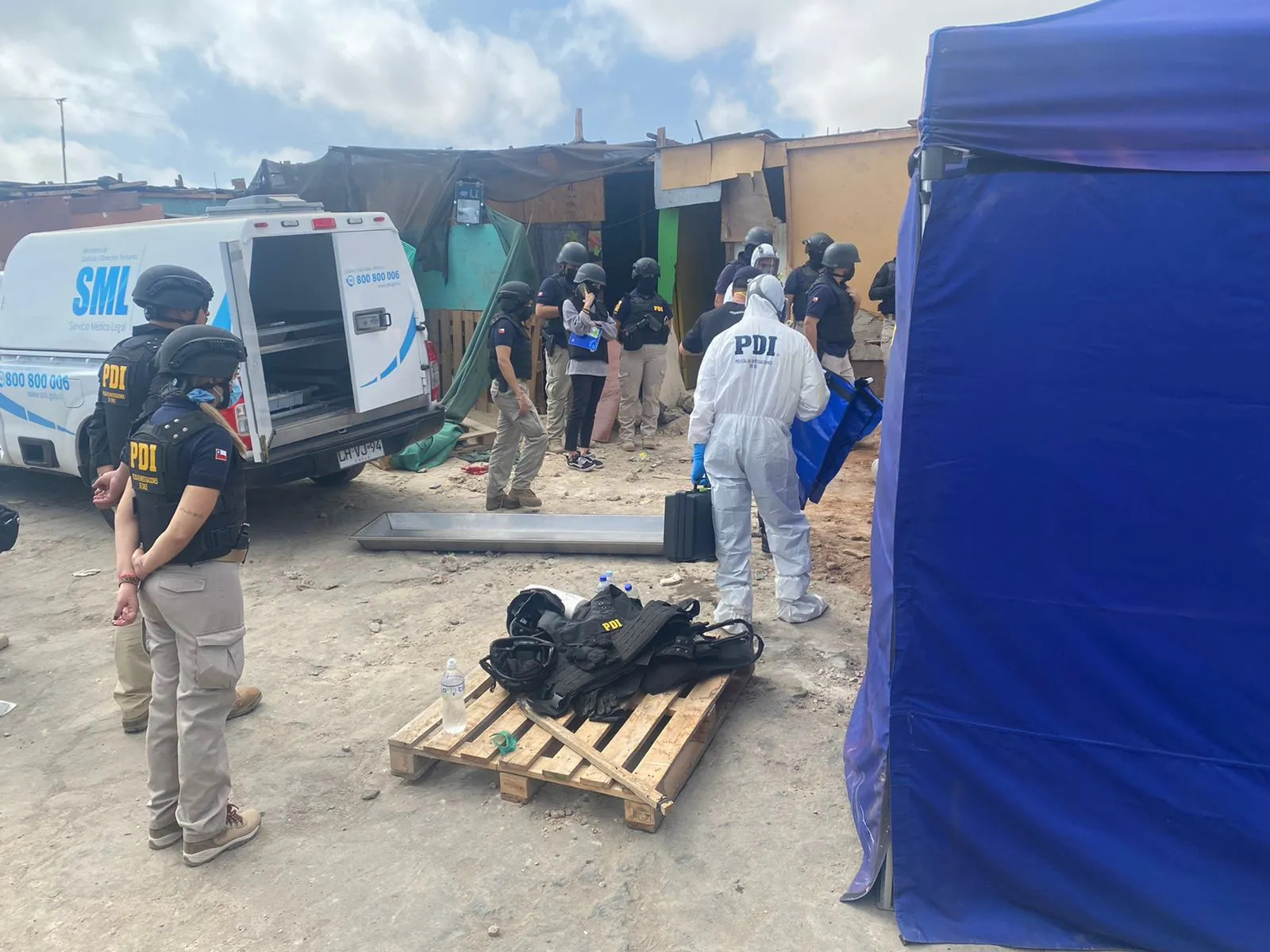
The Chilean justice system has determined that two foreign individuals found dead in northern Chile were victims of being buried alive, according to recent revelations amid the ongoing security crisis in the South American nation. The Chilean Prosecutor's Office disclosed that the bodies were discovered twelve days ago in Cerro Chuño, an arid region located in Arica and Parinacota, which is situated in the extreme north of the country and shares a border with Peru.
According to the judicial institution, the human remains belonged to two individuals who were wrapped in a nylon bag and died as a result of asphyxiation caused by obstruction after being buried alive at a depth of one and a half meters. Their bodies were subsequently covered with a layer of concrete. The Arica Prosecutor's Office Criminal Analysis Unit has charged members of the Los Gallegos clan, the local branch of the Venezuelan criminal organization known as Tren de Aragua, with the heinous double crime.
Subprefect Álvaro Astroza, the head of the Arica Homicide Squad of the Chilean Investigative Police, confirmed that the two victims were Venezuelan citizens. He stated, "We are currently in the process of verifying their identities, but we have some leads based on information provided by acquaintances who recognize their physical characteristics and tattoos. We are also conducting scientific identification through DNA analysis with the assistance of their relatives."
Throughout the first half of this year, security has remained the predominant issue on the political and social agenda in Chile. The killing of Carabinero Daniel Palma on April 6, the third police officer to lose his life in a single month, compelled the government to propose a series of initiatives and measures aimed at addressing the security concerns within the nation.
In 2022, a total of 934 homicides were recorded in Chile, resulting in a rate of 4.7 murders per 100,000 inhabitants, as reported by the Center for Crime Studies and Analysis (CEAD) under the Chilean Government's Undersecretariat for Crime Prevention. While this figure is relatively lower than the regional average, it represents a notable increase of 34.33 percent compared to the previous year and a staggering surge of 67.8 percent over the span of a decade.