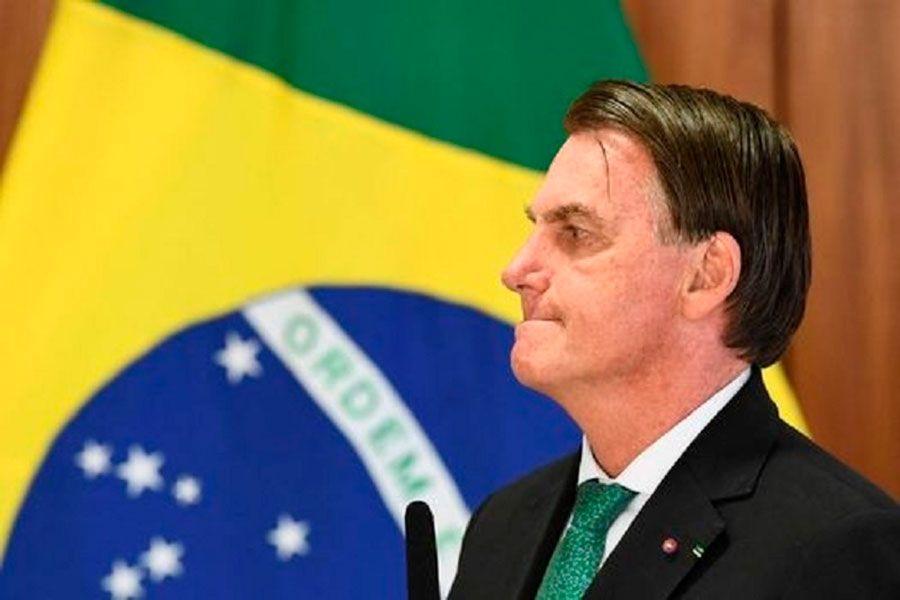
Ukraine: Bolsonaro offers humanitarian help but Brazil shall remain neutral
-
 Loading...
 - Madison Pearce
- 03 Mar 2022
- 380 Views
- 0 Like
- 0 Comment
Bolsonaro also ruled out any possible talks with Ukrainian leader Volodimir Zelenski.
”We will consider the possibility of Ukrainians coming to Brazil through a humanitarian visa, which is the easiest way, we will not have problems (...) they will be well received,“ Bolsonaro said Monday.
The President also highlighted Ukrainians were predominantly Christian and said he had discussed the humanitarian visa alternative with Foreign Minister Carlos Franca, who ”told me that he will take the necessary measures.“
Brazil was planning to send two Air Force KC-390 cargo planes to pick up Brazilian evacuees. But he stressed his country was heavily dependent on Russian fertilizers to keep its agribusiness going.
Brazil’s stance has been heavily criticized by Ukraine's UN Ambassador Yevheniia Filipenko: ”There is no room for neutrality in the face of the current situation, we all need to stand up in defense of our basic values,“ the diplomat said. Governments ”must make a decision to stand on the right side of history,“ Filipenko went on. ”If we fail now no one will be safe on this planet, neither here nor in Latin America, it is about our security that we are talking about.”
But words will not change Bolsonaro’s stance; nor will global financial sanctions against Russia, which has been banned from the SWIFT global banking platform.
“In practice, excluding [Russia] from this system, which is the largest communication system between banks and financial institutions, would make it difficult to send and receive money from Russia,” Brazilian magazine Veja explained.
“Located in Brussels, SWIFT is governed by Belgian law and used by over 11,000 financial institutions in over 200 countries,” added the magazine before delving into expert analysis.
“We have a history of small countries that have not given in to economic sanctions,” said Renata Amaral, an international trade consultant and professor at the American University quoted by Veja. “I don't think it would change the course of their actions, but it would have consequences,” she said.
“Although the exclusion of SWIFT has significant impacts, there are alternatives for countries that have not raised direct barriers to Russia to send and receive” money, said Veja, before making it clear Brazil was, in fact, one of those countries.
“There are ways to avoid SWIFT, such as paying the company you are doing business with into your Geneva account. Second, how the value arrives in Russia is not [through] the most transparent [channels], like tax havens. This process is not necessarily more expensive, but more laborious,” Amaral explained Veja. Read More…