US exports anti-Muslim hatred to Europe, Asia: Scholar
-
 Loading...
 - Catherine Clement
- 15 Mar 2023
- 74 Views
- 0 Like
- 0 Comment
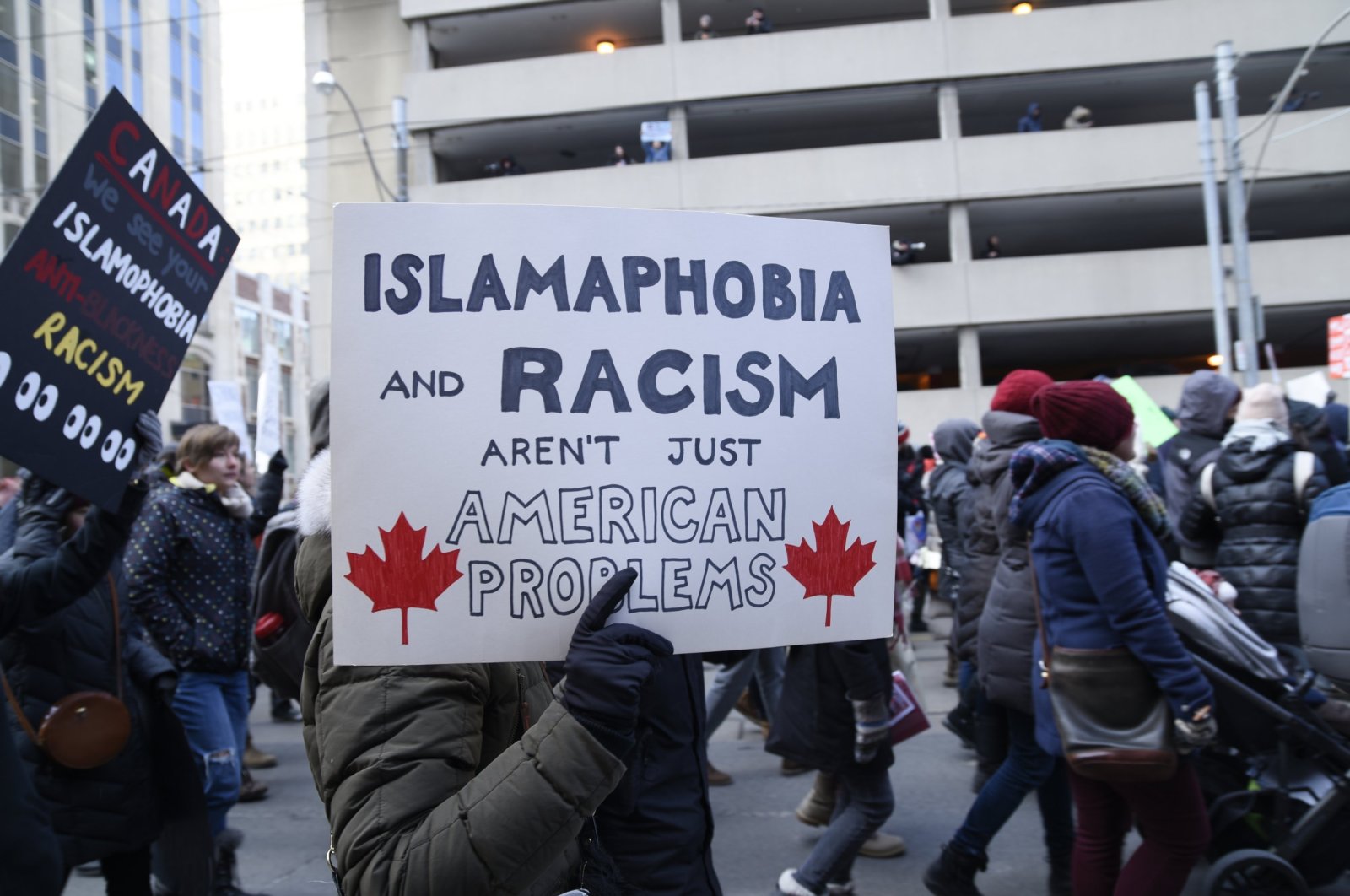
The U.S. plays a role in "exporting" anti-Muslim hatred in Asia and Europe, amid a surge of the issue in those regions, U.S.-based Professor Khaled Beydoun told Anadolu Agency (AA) on Tuesday.
"The U.S. has exported Islamophobia to Asia, Africa, Europe, the Middle East, and beyond, in a destructive way," Beydoun said.
The professor at the Wayne State University School of Law also said the U.S. administration laid out a new framework for the Muslim identity with the rhetoric of "war on terror" after the Sept. 11 attacks, as March 15 International Day for the Elimination of Islamophobia draws close.
"The more Muslims appeared more like Muslims, the more they were suspected of being involved in terrorism," he said.
"The United States provided a new language of counter-terrorism. In addition to that, there was a new legal and policing architecture that came into play that the United States sort of engineered, and governments across the world adopted. Specifically governments that had a vested interest in persecuting Muslims adopted this new American language, and adopted this new American policing paradigm to crack down on their own Muslim populations."
Pointing out that the "war on terror" campaign of the U.S. is effective in a wide area from Asia to Europe, Beydoun said, "Before 9/11, Uighurs living in China were not defined as terrorists, extremists, or those affiliated with transnational terrorist networks."
"Uighurs were more often described as 'separatists, subversive, rogue, and criminal,' but this new American language of terrorism has equipped the Chinese government with unlimited power to neutralize Uighurs as if they were terrorists. The same applies to India, Myanmar, Sweden, France, U.K., and the whole world," he said. Read More…