Doubts raised over Merkel compromise on border controls
-
 Loading...
 - Monike Theodote
- 03 Jul 2021
- 854 Views
- 0 Like
- 0 Comment
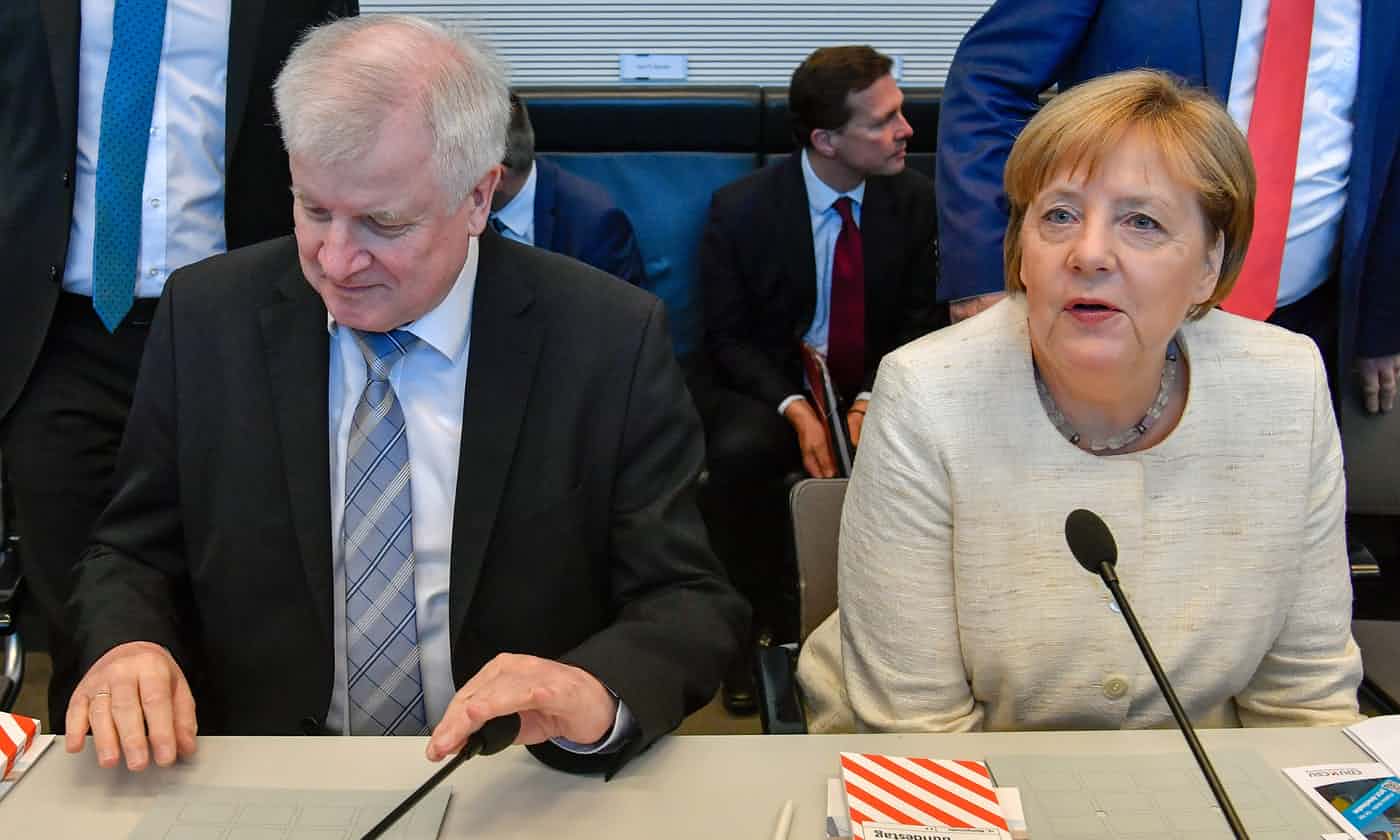
A plan for a new border regime in southern Germany, struck on Monday night by Angela Merkel and her hardline interior minister to defuse a bitter row in the coalition government, is coming under heavy scrutiny.
The border deal, hailed by the German chancellor as a “good compromise”, foresees setting up so-called transit centres on the country’s southern border, where asylum seekers who have already been registered in other EU countries will be held until they can be sent back to those countries.
Like “airside” areas at international airports, the centres would be located on German soil in geographical but not legal terms, making it easier to deport people held in them.
The interior minister, Horst Seehofer, had threatened to resign over the issue of immigration on Sunday night, but the deal has allowed Merkel to avert a fallout between her Christian Democratic Union (CDU) and its sister party in Bavaria, the Christian Social Union (CSU).
However, critics say the scheme is at worst unworkable and at best merely moves the political crisis to another part of the coalition.
The transit centre scheme was proposed in 2015 by a CSU politician, Stephan Mayer, but was rejected in the strongest terms by the Social Democratic party (SPD), then and now a junior partner in Merkel’s grand coalition government.
Three years on, the centre-left SPD, wary of fresh elections, may feel less inclined to provoke a new crisis, but it could again reject the proposal at a meeting with members of Merkel’s bloc in Berlin on Tuesday. The party leader, Andrea Nahles, said on Tuesday morning that she opposed the term “transit centres”.
The proposal could also shift the political crisis south to Austria, where the government said it could take its own measures to protect its borders.
The compromise deal between Merkel and Seehofer suggests refugees arriving at the Austrian-Bavarian border who were first registered in EU states that now refuse to take them back, such as Hungary, should be sent back to Austria.
A position paper by the Austrian chancellor, Sebastian Kurz, and his deputy, Heinz-Christian Strache, of the far-right Freedom party, quoted in Austrian media on Tuesday, said: “Should this agreement form the position of the German government, then we will see ourselves forced to take actions to avoid disadvantages for Austria and its population.”
Later Kurz told journalists in Strasbourg that any domestic measures introduced by Germany would have a knock-on effect. “It could well mean that Austria too would need to react that,” he said.
Seehofer said on Tuesday he had already discussed a possible solution with Kurz.
Meanwhile, migration experts have criticised the border arrangement proposed by Merkel and Seehofer. “The German government has truly made a mountain out of a molehill,” said Gerald Knaus, the architect of the 2015 migration deal between the European Union and Turkey.
“Seehofer is promising his voters in Bavaria that the same Dublin system [for asylum applications] that hasn’t worked for 20 years is suddenly going to run smoothly because of new transit centres in Bavaria,” Knaus told the Guardian. “Why, no one knows.”
Knaus, the director of the thinktank ESM, said the deal struck by the German government could have the unintended consequence of increasing migration into Germany, if for example the Greek government used the new agreement to unite families with people who had already arrived in Germany, while in return taking back some asylum seekers who have been fingerprinted in Greece.
In addition, Knaus said, the emphasis on transit centres would mean Bavaria bearing most of the administrative burden of registering and processing refugees and migrants who arrive in Germany.