USA Sends Back More Than 900 Stolen Artifacts to Mali
-
 Loading...
 - Abigail Ndirangu
- 10 Jan 2022
- 430 Views
- 0 Like
- 0 Comment
Per a statement, the cache of presumably looted goods first roused suspicion in March 2009, when authorities intercepted an illegal shipment at the Port of Houston on Texas’ Gulf Coast. Listed as replicas, the artifacts initially appeared to be authentic ceremonial and mortuary objects, writes Zachary Small for the New York Times.
Immigration and Customs Enforcement (ICE) and Homeland Security Investigations (HSI) confiscated the items and enlisted Susan McIntosh, an expert in anthropology and West African art at Rice University, to investigate their origins. McIntosh released a June 2009 report declaring the works authentic, reports Wallace Ludel for the Art Newspaper.
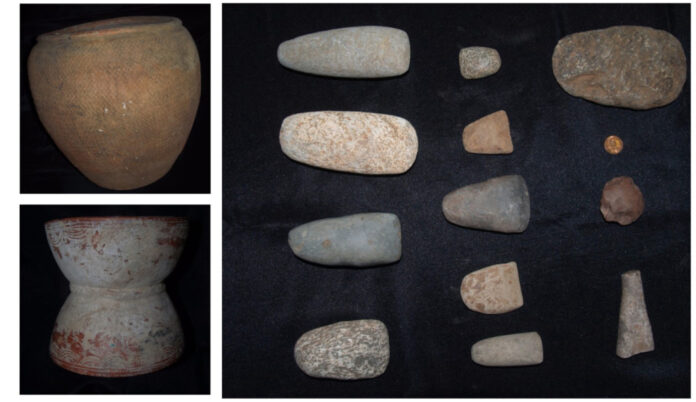
Among the artifacts returned were 913 ground and flax stones and ax heads dated to the Neolithic period. The trove also included six large funerary urns dated to between 900 and 1700 C.E.; a high-necked polychrome pot dated to between 1100 and 1400 C.E.; and a red slip double cup vessel marked with the impressions of a comb and dated to between 800 and 1500 C.E.
“No one has the right to loot or destroy … heritage and history,” says HSI special agent Mark Dawson in the statement. He adds that the government agency will continue to “aggressively target anyone who pilfers the priceless cultural treasures of a nation and work tirelessly to return them to their people for future generations to enjoy.”
U.S. authorities first returned a handful of the stolen objects to Mali in 2011 and 2012, reports Alex Greenberger for ARTNews. The two countries share a long-standing legal agreement regarding the protection of Mali’s cultural property.
Ratified in 2007, the agreement aims to prevent illegal trafficking of items from Mali’s culturally rich but vulnerable regions. These areas include the Cliff of Bandiagara (also known as the Land of the Dogons), an ethnically diverse locale with striking plateaus and cliffside towns; the city of Djenné, a former hub of Islamic scholarship renowned for its earthen Sudanese architecture and grand mosque; and the historic city of Timbuktu, the onetime home of the famously wealthy medieval emperor MÅ«sÄ I of Mali, also known as Mansa Musa.
European powers such as France and Britain colonized most of West Africa in the late 1800s, looting many of the region’s culturally significant sites. More recently, powerful militias and terrorist organizations in Mali, which achieved independence from France in 1960, have wreaked havoc on the country’s cultural heritage. The violence has threatened irreplaceable artifacts, including fragile medieval Arabic manuscripts, as Joshua Hammer reported for Smithsonian magazine in 2014. Read More...