Venice gets political: how the art world's biggest stage has become a focal point for Ukrainian protests
-
 Loading...
 - Melissa Ajello
- 19 May 2022
- 290 Views
- 0 Like
- 0 Comment
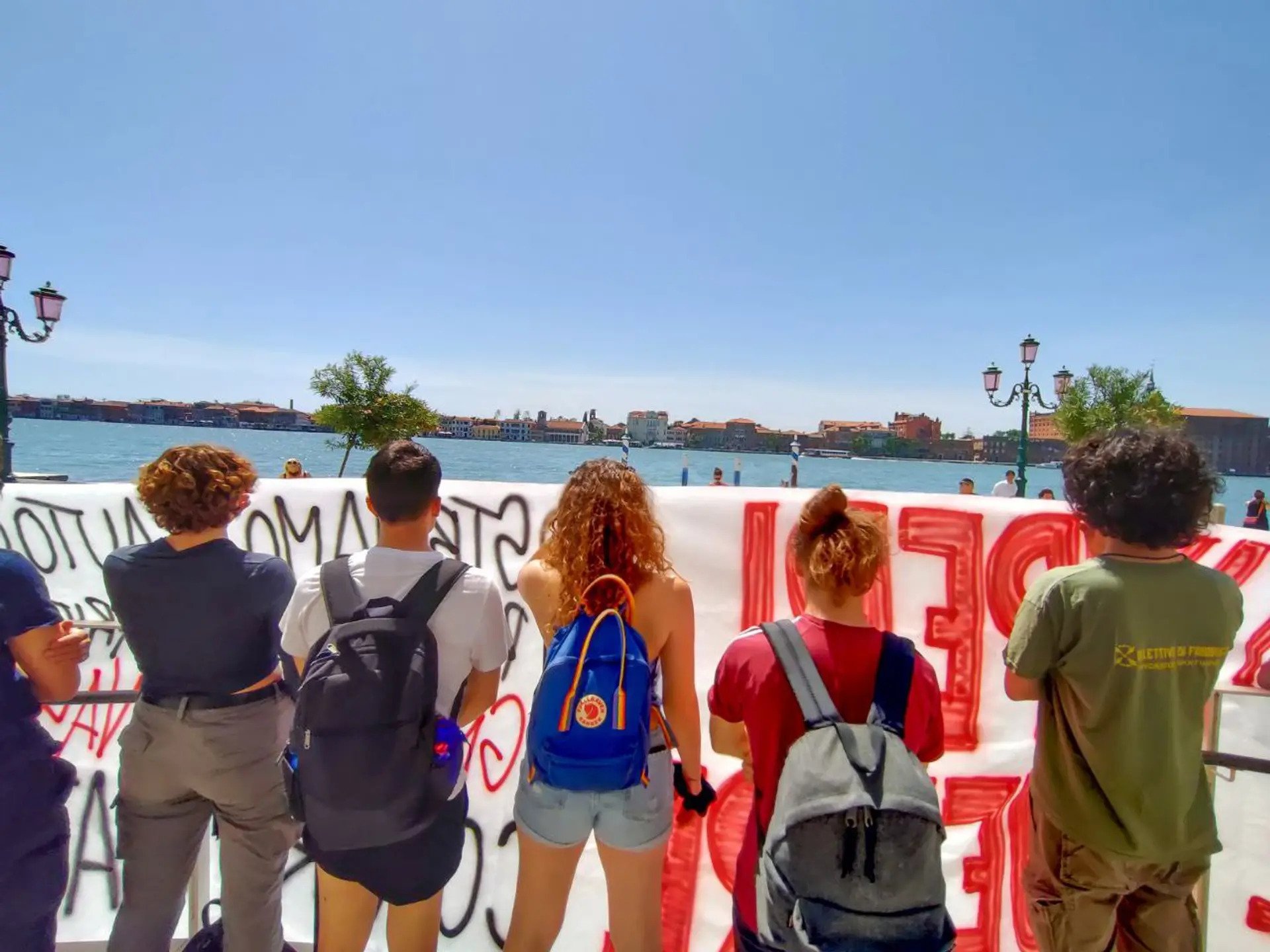
The art space in Venice owned by the Russian businessman Leonid Mikhelson was occupied over the weekend by protestors demonstrating against Russia's invasion of Ukraine. Global Project, the activist group behind the protest, hung banners on Mikhelson's V-A-C Foundation building (Palazzo Zattere) which stated: "Let's expropriate Russian oligarchs for peace and climate justice." Mikhelson is board chairman of Novatek, the second largest gas company in Russia.
Global Project says in a statement online: "The importance of Russian gas for the economic sustainability of the war reveals the hypocrisy and inadequacy of the European Union, which has not even included Leonid Mikhelson among the tycoons subject to sanctions."

The group adds: "At the local level, it demonstrates the inconsistency of the city authorities, who assigned Palazzo Zattere to the V-A-C Foundation in 2014 with an 18-year contract against an investment of €4m by Mikhelson which they did not evaluate... not even after the resignation of the artistic director Francesco Manacorda who resigned in the aftermath of the war." The authorities could not be reached for comment; the V-A-C Foundation did not respond to a request for comment. A statement on the foundation website says that all activities at Palazzo Zattere are temporarily suspended.
The war meanwhile prompted a flurry of events at the opening of the Venice Biennale last month, focusing the art world’s attention on the conflict that began on 24 February claiming thousands of lives and resulting in the greatest humanitarian crisis in Europe since the Second World War.
The Russian artist Vadim Zakharo launched a protest outside the Russian pavilion in the Giardini declaring that “the murder of women, children, [and] people of Ukraine is a disgrace to Russia”. The Ukrainian actor Aleksey Yudnikovperformed meanwhile with a Putin mask on his crotch outside the Russian pavilion.
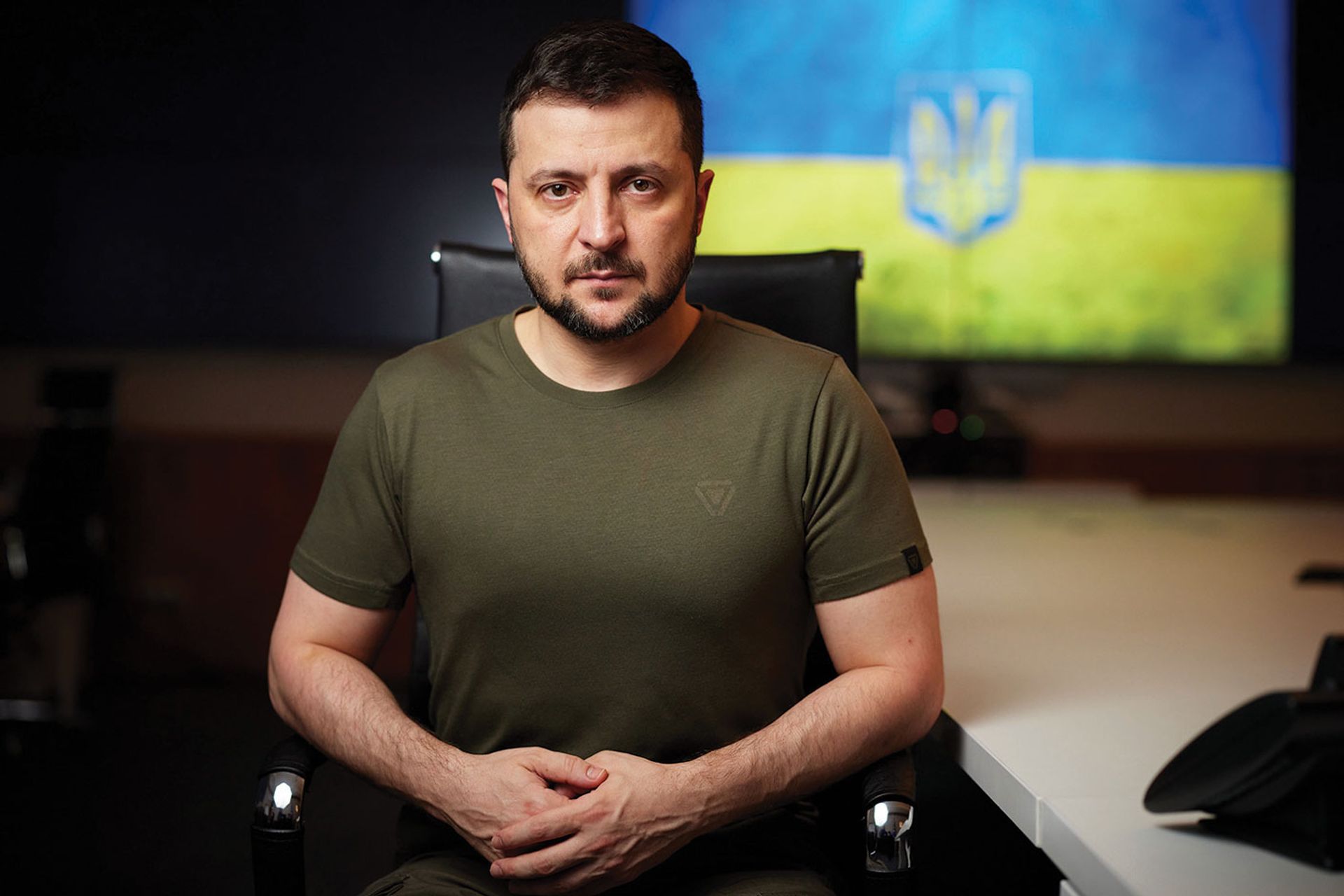
Unexpectedly, President Volodymyr Zelensky of Ukraine made an appearance, live-streaming a speech to a packed room at the opening of the exhibition This is Ukraine: Defending Freedom(Scuola Grande della Misericordia, until 7 August).
The show, described as reasserting “Ukraine’s cultural resilience”, is organised by the PinchukArtCentre and the Victor Pinchuk Foundation—named after the eponymous Ukrainian billionaire—in partnership with the Office of the President of Ukraine and Ministry of Culture and Information Policy of Ukraine. “I am sure the exhibition will allow people to feel what it means for Ukraine to defend freedom,” Zelensky said. The president’s wife, Olena Zelenska, also sent a message for the exhibition opening, read by Yaroslav Melnyk, the Ukrainian ambassador to Italy. “Every painting is under threat: art is mortal, like everyone else,” Zelenska said, ending her address with the statement: “We in Ukraine live with the hope. So let there be art! And Ukraine will definitely win!”
Zelensky’s address was also screened at a special benefit event, which raised €1.2m. But the support must continue, said Björn Geldhof, the PinchukArtCentre’s artistic director. “There is a real risk that this attention disappears; we need sustainable support. There was a short burst [of support] in 2014 [when Russia invaded and then annexed the Crimean Peninsula] that was a failure. We now need to include not only Ukrainian culture but also many other post-Soviet nations in the conversation, from academic discourse to exhibitions and via acquisition policies, so that the narrative built around these countries is not dominated by Russia but looked at from a different perspective. This would counteract a colonial attitude from Russia.”
Some critics also raised concerns about the absence of support on the ground in Venice for Ukraine. “Where is the massive banner that ought to be visible from St Mark’s Square to the Lido? I’ve seen more Ukrainian flags in my corner of south London,” wrote Laura Cumming in the Observer But the art world cannot just “move on” for several reasons, says the Ukrainian-US curator Konstantin Akinsha.
“Many people don’t understand that returning to ‘business as usual’ is no longer possible. Russia passed the point of no return, and the art world is just one of many positions on the list of collateral damage. There will be no museum loans in the foreseeable future: no Shchukin [collection] Matisses or Hermitage Rembrandts,” he says.
“Auction houses can [say] farewell to their Russian departments; of course, Malevich and Kandinsky will survive, but their new category will be Modern and contemporary sales. The market will be short of millions of dollars, and overblown prices for everything Russian will explode like a soap bubble. There will be no contemporary art in Russia either because it is classified by Putin as subversive activity,” Akinsha adds.
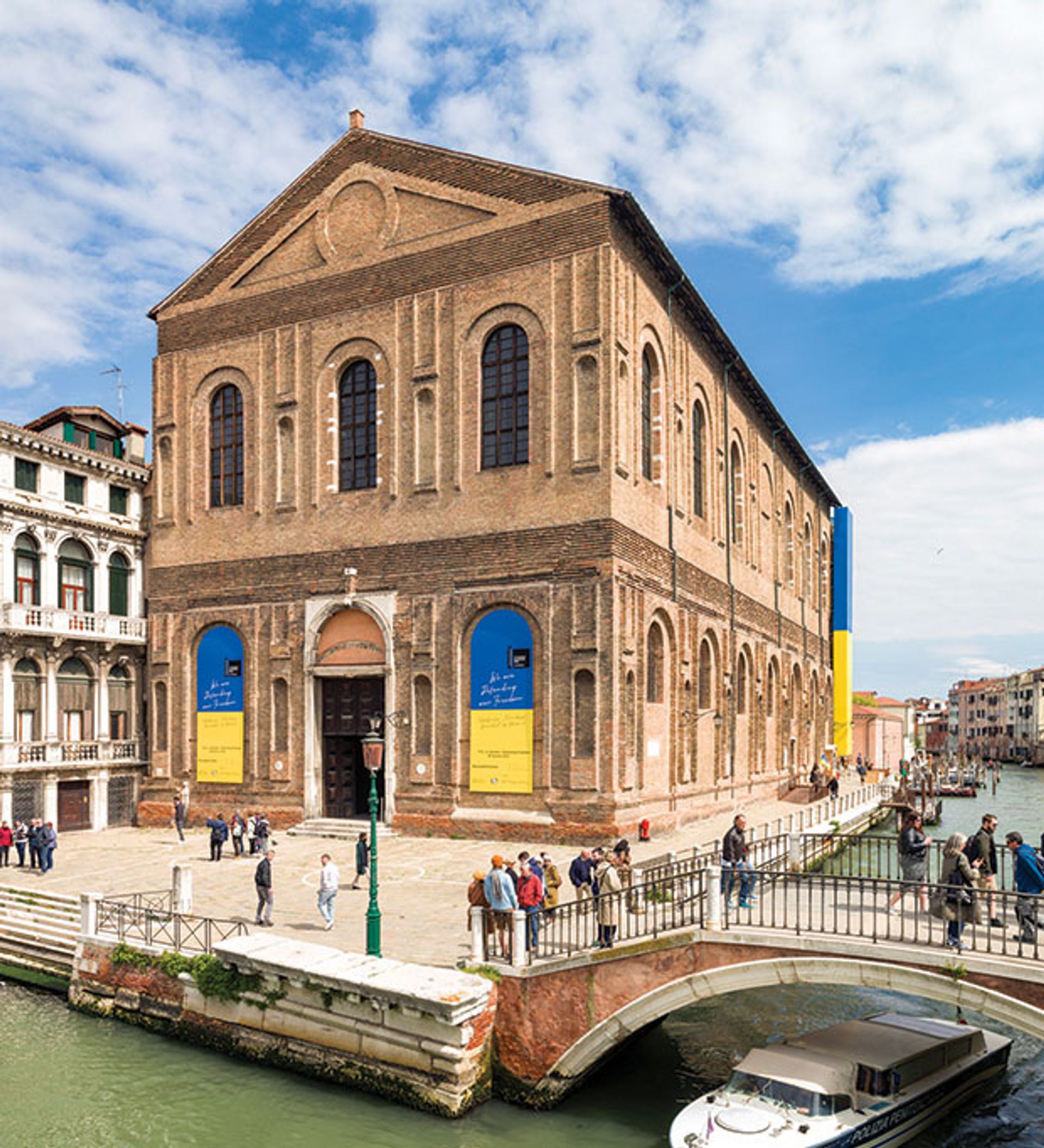
In his opening address, Victor Pinchuk explained that his foundation was all set to show the latest iteration of the biannual $100,000 Future Generation Art Prize in Venice. “But when Russia invaded Ukraine, we immediately cancelled it. We understand that war has different fronts: first of all militarily, but also on political, diplomatic, economic [levels]. The cultural front is very important,” he said, adding that there had been “genocide against the Ukrainian people”.
Pinchuk told The Art Newspaper that he plans to “show a victory exhibition” in the future at his art centre in Kyiv. Geldhof says that the centre will keep running. “We have an obligation to continue our work both inside and outside Ukraine.”
In 2016 Pinchuk wrote a controversial piece for the Wall Street Journal saying that, “while we maintain our position that Crimea is part of Ukraine and must be returned, Crimea must not get in the way of a deal that ends the war in the east on an equitable basis”, adding that “Ukraine must make painful compromises for peace.” In response, Geldhof says: “[Pinchuk] has given so much for his country. Sometimes he made uncomfortable suggestions but 2016 and 2022 are very different times. Referencing only that article today is unfair.”
This is Ukraine: Defending Freedom includes a wide range of artists, from Damien Hirst to Marina Abramović and the late Ukrainian folk artist Maria Prymachenko (1909-97), whose name came to the fore in February when a museum housing her works was destroyed during the Russian invasion. Geldhof says about the selection: “The question is always: What can you show, not who can you show, in times of war. It was very important to not have exclusive war narratives but a more complex conversation about the impact of the war in a longer and deeper sense for Ukraine—what does it mean regarding the way Ukraine will develop its historical narrative? What does it mean for the country’s future?”
The poignant diary entries of the photographer Yevgenia Belorusets lay out the realities of war for the residents of Kyiv, with harrowing descriptions of the shooting of women and children (and even animals at the zoo) interspersed with day-to-day activities, like cleaning her apartment or listening to musicians play in the street. Lesia Khomenko’s majestic series of paintings of volunteer soldiers serving alongside her husband, Max in the Army,bring home the reach of the war, as civilians take up arms to defend their country.
The exhibition also includes Ukrainian heritage pieces. “Putin has said Ukraine does not have a culture but we do not have to prove anything. Bringing some of these treasures was very important. Getting them out was not easy and only possible because of the support of the Ministry of Culture and especially the President’s office,” Geldhof says. Read More...