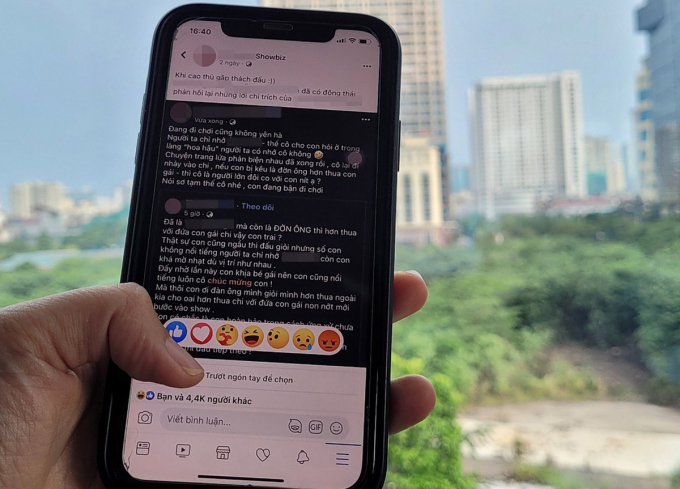
Vietnam may regulate social media commenting

Vietnam is considering a significant regulatory change that would restrict social media commenting to only verified accounts as part of an effort to combat the spread of fake news. The proposal, introduced by Lam Dinh Thang, director of the Ho Chi Minh City Department of Information and Communications, suggests that users must provide their real names, phone numbers, and email addresses to verify their accounts. The long-term goal, according to Thang, could be to ban unverified accounts altogether.
During a meeting with the Ho Chi Minh City People’s Council, Thang emphasized that the current regulations surrounding social media information management are insufficient and lack enforceable mechanisms. He argued that immediate changes should focus on prohibiting unverified accounts from commenting, with the requirement extended to trans-border social media accounts, which would also need to comply with Vietnamese law.
The Ministry of Information and Communications has echoed these sentiments in a draft decree on managing Internet services. The ministry's proposal calls for stricter verification processes, requiring social media platforms—both domestic and international—to verify user identities with real names and phone numbers before allowing them to post content, comment, or livestream. Additionally, platforms would be obligated to share user identities with authorities upon request.
Thang highlighted the challenge of controlling fake news, noting that much of it spreads via trans-border services like YouTube, Facebook, and TikTok, which are immensely popular in Vietnam. While local violations can be addressed, eliminating fake news on these international platforms remains problematic. Thang pointed out that even when Vietnamese authorities request the removal of misleading content, these platforms often find ways to circumvent compliance.
To address these challenges, the Ho Chi Minh City information department has been working closely with local police to combat cybercrime. Last year, the department referred 28 cases to authorities, with 18 more cases reported this year. The department has also recommended that the Ministry of Information and Communications take action against 30 social media accounts suspected of violations.
This proposal reflects Vietnam's broader strategy to tighten control over digital spaces and ensure the accuracy of information circulating online. If implemented, these measures could significantly alter how social media operates in the country, especially concerning user anonymity and freedom of expression.