Vietnam Plans to Implement Compulsory Identity Verification for Social Media Users

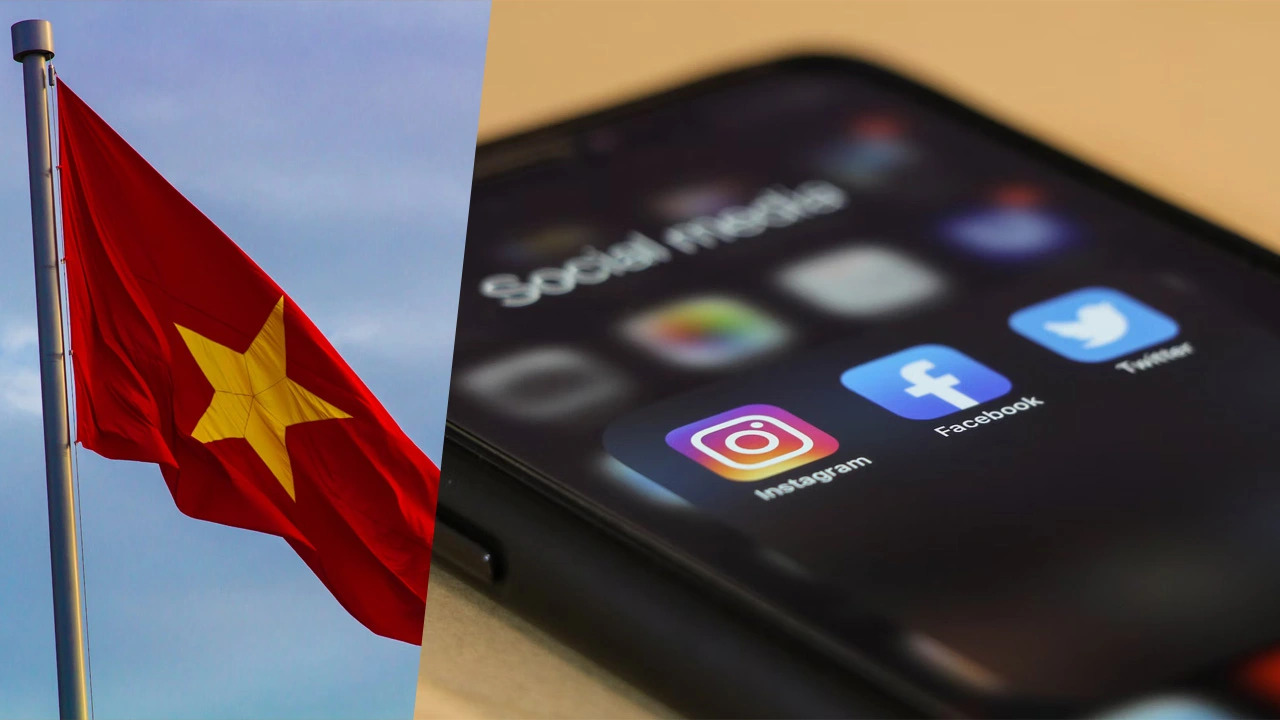
The Vietnamese government is gearing up to enforce mandatory identity verification for individuals using popular social media platforms such as Facebook and TikTok. The rationale behind this move is to combat online scams and various forms of cybercrime that have become prevalent in the country.
According to a report released on Monday by the Ministry of Information's Authority of Broadcasting and Electronic Information, an amendment will be introduced to the Telecommunications Law later this year. This amendment will require platforms like Facebook and TikTok to ensure that users provide their authentic identities when registering an account, both for individuals and groups.
Deputy Information Minister Nguyen Thanh Lam, as cited by state media and reported by Reuters, highlighted the challenge faced by authorities in identifying and apprehending individuals who violate the law by using cross-border applications. Lam stated, "Unverified accounts, whether on local or foreign platforms such as Facebook, TikTok, or YouTube, will be subjected to consequences."
While the need to combat cybercrime and online fraud, an issue Vietnam faces at a higher rate compared to other Asian countries according to the Global Anti Scam Alliance, serves as a legitimate justification, it is difficult to separate this measure from potential political motivations. This requirement will effectively eliminate the anonymity that social media users have enjoyed, which has allowed them to freely express criticisms of the ruling Communist Party of Vietnam (CPV). In Vietnam, "criminal activities" include the production and dissemination of "anti-state propaganda," a broad category that prohibits even mild critiques of CPV governance.
In recent years, the Vietnamese government has increasingly prosecuted social media users and dissidents for their online speech. This trend comes as no surprise, considering that Vietnam boasts one of the largest national social media user bases globally, ranking seventh in terms of Facebook users and sixth for TikTok users. As activists, dissidents, human rights advocates, and other independent thinkers utilize these platforms for communication and potential political mobilization, CPV authorities are taking steps to exert control over them.
The government's crackdown has been facilitated by the establishment of a legal framework aimed at subjecting major foreign tech companies to strict state control and regulating the flow of information online. In 2018, Vietnam passed a cybersecurity law that compels Facebook and Google to remove posts deemed threatening to national security within 24 hours of receiving a government request. Additionally, foreign tech firms are required to set up representative offices in Vietnam and store users' data within the country. Furthermore, new regulations are being prepared to restrict the ability of certain social media accounts to post news-related content.
Ultimately, the elimination of online anonymity will further impede freedom of speech in Vietnam, creating a situation where all online communication can potentially be monitored by the party-state. While this measure may curb scams and other illicit online activities, it comes at the cost of compromising online freedom.