Warsaw Scientists Develop Laser to Detect Pollution, Illness… and Aliens
-
 Loading...
 - Ariana Carde
- 08 Jul 2024
- 61 Views
- 0 Like
- 0 Comment
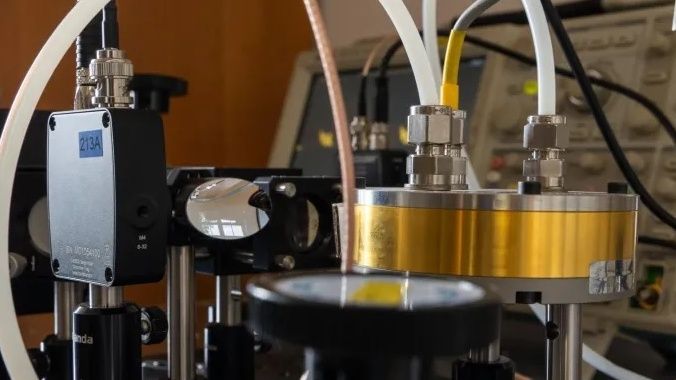
In a groundbreaking development, scientists at the Military University of Technology in Warsaw have created an innovative laser methane sensor. This advanced device is not only poised to revolutionize environmental pollution monitoring but also holds the potential to search for alien life forms.
The Science Behind the Sensor
Optical Radiation Absorption
The laser methane sensor operates based on the absorption of optical radiation in the long-wave infrared spectrum. This technology enables the device to measure trace concentrations of methane, a critical by-product of decomposed organic matter.
Advantages of the Sensor
Col. Dr. Jacek Wojtas from the university explains that the sensor offers “fast measurements, large dynamic ranges, and high selectivity.” The sensor’s design incorporates differential measurement procedures, eliminating the need for periodic calibrations and replacement of worn parts. Additionally, thanks to the latest advancements in optoelectronic technologies, the sensor is compact and energy-efficient.
Applications in Space Exploration
Exploring Planetary Atmospheres
The sensor's ability to measure methane with high precision makes it ideal for space exploration. Its capability to penetrate layers of aerosols and dust with longer wavelengths allows it to detect methane in the atmospheres of other planets, such as Mars. The presence of methane could indicate evidence of other life forms, making this sensor a valuable tool in the search for extraterrestrial life.
Potential Discoveries
Detecting methane on other planets could provide significant insights into the existence of life beyond Earth. The sensor’s precision and efficiency could play a crucial role in future space missions aimed at exploring planetary atmospheres.
Environmental Pollution Monitoring
Importance of Methane Detection
Methane is a key component of natural gas, used as a fuel source for electricity generation and heating. It is also the second most common greenhouse gas after carbon dioxide, contributing to over one-third of today's anthropogenic climate warming. Accurate measurement of methane levels is essential for addressing environmental pollution and climate change.
Sensor Reliability and Versatility
The sensor’s reliability in measuring methane makes it an important tool for calculating pollutant levels accurately. Its versatility extends to measuring fuel purity and locating pipeline leaks, further highlighting its potential in various industrial applications.
Medical Applications
Diagnosing Illnesses
Beyond environmental and space applications, the laser methane sensor holds promise in the medical field. Methane is also exhaled by humans, and the sensor can diagnose certain illnesses and diseases by analyzing a person’s breath. This capability opens up new avenues for non-invasive medical diagnostics, offering a simple and efficient method to detect health conditions.
The development of the laser methane sensor by scientists at the Military University of Technology in Warsaw represents a significant advancement in various fields. Its ability to detect methane with high precision and efficiency positions it as a vital tool for environmental pollution monitoring, space exploration, and medical diagnostics. As the sensor continues to evolve, it holds the potential to make substantial contributions to science and technology, benefiting both Earth and future space missions.