What is it like raising guide dogs? Volunteers offer thought-provoking answers
-
 Loading...
 - Ervin Sera
- 25 May 2023
- 77 Views
- 1 Like
- 0 Comment
Cameron Northwood thoroughly enjoys accompanying his dog, Zani, to various places, including the mall, boisterous hockey games, city bus rides, and grocery shopping trips. Zani, an adorable eight-month-old black Labrador retriever, is currently in the process of adapting to unfamiliar and noisy environments in Calgary. Serving as a guide dog in training, Zani is under the care of Northwood, a dedicated volunteer puppy raiser at the Canadian National Institute for the Blind (CNIB). This marks Northwood's second time participating in the CNIB Guide Dog program with his family.
Prior to bringing Zani into their home, Northwood engaged in a lengthy discussion with his children. He emphasized the importance of commitment, explaining that if they chose to raise the puppy, they would need to stick to their decision. Once the family was resolute in their choice, they applied to the CNIB and were pleasantly surprised to receive a Labrador puppy.
Northwood fondly reflects on their daily experiences, describing them as thrilling adventures filled with joy. He recalls the humorous incident when their previous guide dog, in the early stages of training, disliked wearing her vest. This led to a comical situation at the grocery store, where she accidentally knocked down several cans while attempting to find comfort.
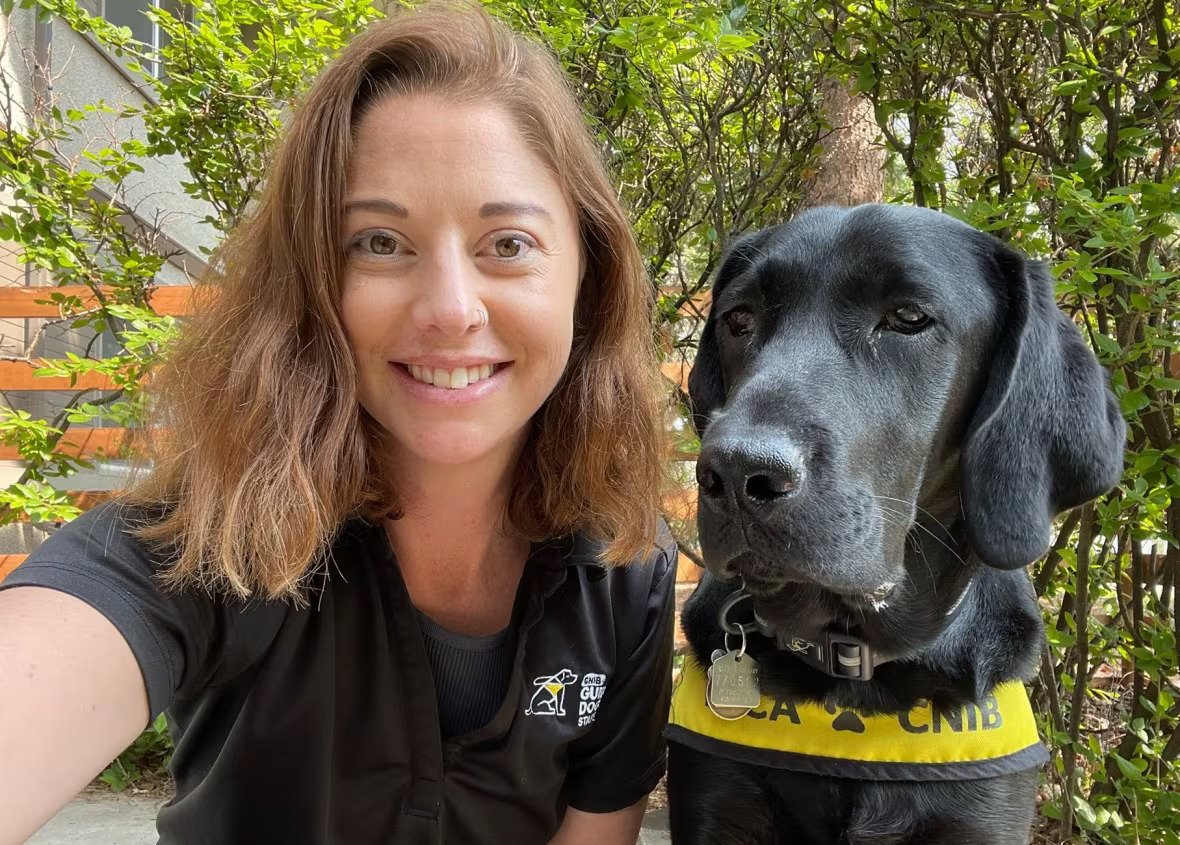
Meanwhile, Kezia Gray, a puppy development trainer affiliated with CNIB Guide Dogs, is also involved in raising a black Labrador puppy destined to become a guide dog. Gray expresses confidence in her pup, named Sharon, stating that she is progressing well and will make them proud.
Volunteers at CNIB Guide Dogs can choose from four different options based on their comfort level. They have the opportunity to raise a puppy for a year or provide a temporary home for six months. Alternatively, dog lovers can volunteer to care for six-month-old dogs until they are ready to enter formal training or offer short-term fostering.
One of the remarkable aspects of this volunteer program is that prior experience is not a requirement. Gray explains that the sole prerequisite is having a suitable home capable of accommodating a dog, regardless of whether individuals possess previous dog training experience.

She mentioned that CNIB covers expenses related to food, veterinary care, and training. However, volunteers should have some flexibility in their schedules to accommodate individual and group training sessions. Northwood has gained valuable insights from observing Zani's growth and understands the requirements for raising CNIB Guide Dogs. He provided an example: if Zani needs to relieve herself, he ensures that she is comfortable doing so in various locations, not just on grass. "You can't simply open the door and let them out," explained Northwood. "They need to adapt to different environments.
Additionally, someone receiving a guide dog might live or work in a downtown area." An immensely gratifying experience Overall, Northwood expressed that raising a guide dog is an extremely fulfilling experience because you witness its progress and development over time. "I can't speak highly enough of it," Northwood added. Although both Northwood and Gray acknowledge that it will be challenging to part ways with their guide dogs, they find solace in knowing that their pets will someday transform someone's life. "Many of our volunteers compare it to sending a child off to college," Gray commented.
She also mentioned that the team maintains regular contact with all the puppy raisers, providing them with updates on the dogs' progress. Northwood shared that the knowledge of his dog making a positive impact on someone in need helps him through the difficult moments. "But I would be dishonest if I said that I'm not saddened by their departure," he admitted.