Why is barre so hard? 4 reasons 1kg feels so damn heavy in class
-
 Loading...
 - Elise Blanchet
- 05 Jul 2022
- 116 Views
- 0 Like
- 0 Comment
If I told you that I finished a workout with every single muscle in my body burning, from my wrists to the tiny tissues in the front of my hips, what would you think I had done? Maybe something hot and sweaty like Crossfit or an intensely weighted HIIT class.
But actually, I was in a bright, white room with just a mat, a ball and a pair of 1kg weights. I had been destroyed by barre – and not for the first time.
For some reason, it’s so easy to forget how hard the workout style is and get slapped with a huge, aching reality check every time you turn up. This time around, I’d booked in after a quick scroll through ClassPass, wanting something that was a little more gentle than my usual gym session but still made me feel strong.
I thought about the mat and the small weights but forgot about the pulsing and pain – and was immediately reminded of how un-gentle barre really is the second I gripped a rubber ball between my thighs and was told to squeeze.
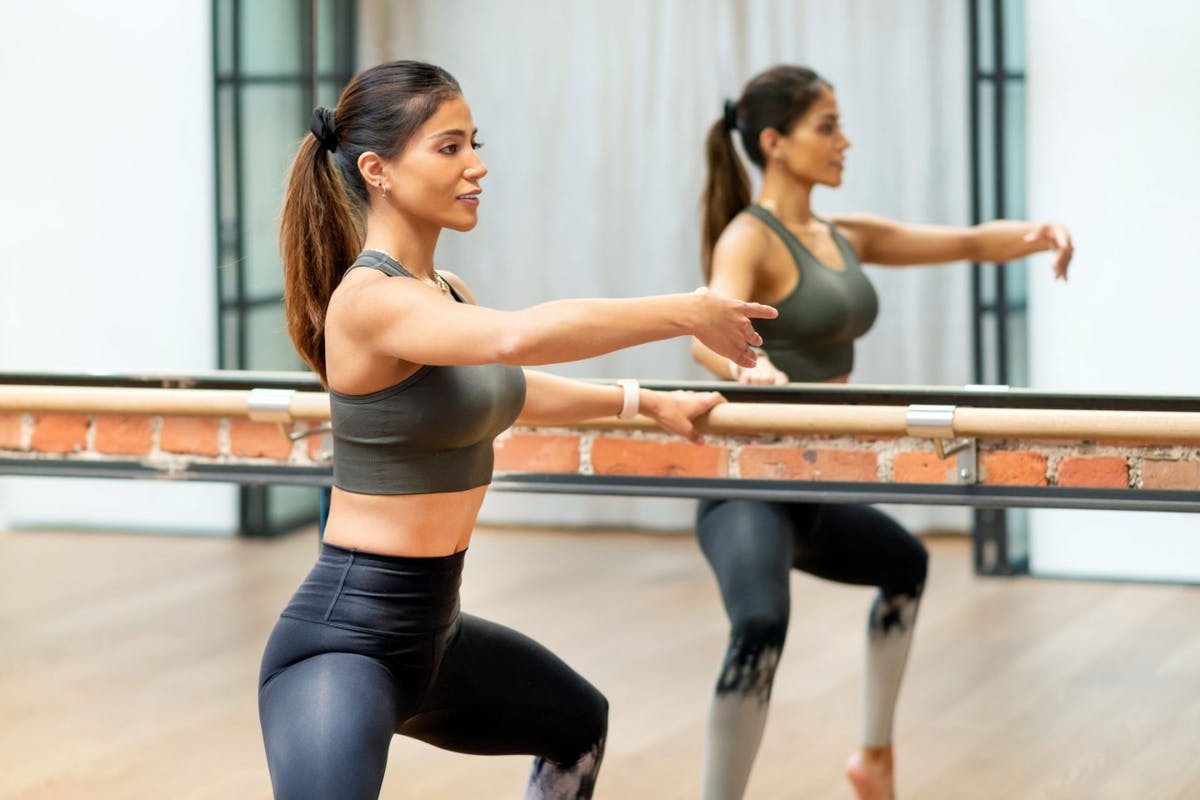
For those who don’t know what I’m talking about, barre is like a pilates-ballet fusion. “It’s characterised by lots of repetitions of small movements, pulses and holds both at the ballet barre and on the mat,” explains Clare Walters, master trainer and barre teacher at Third Space.
Think movements like pliés and shoulder raises but with added resistance and never-ending core control. “Barre has a reputation for being less intense because it’s bodyweight based and it’s low impact – you won’t find any burpees or thrusters in the class. But it’s challenging in a very different way. With the movements being small and the volume of repetitions being so high, it’s a big muscular endurance workout and elicits a deep burn in the muscles,” says Walters.

Look, I get that barre works on the principle of high volume and time under tension. You might, for instance, do over a minute worth of clam shells, followed by the same amount of time doing clam shell pulses in order to keep the muscles moving for a long period of time. But as a seasoned exerciser who regularly lifts her own body weight in the gym, my arms suddenly become incapable of lifting a single kilo in barre. So what else is going on other than endurance that makes it so painful?
According to Walters, it’s because barre taps into parts of our bodies that other popular forms of training neglect:
ACCESSORY WORK
“Unless someone has a specific focus on accessory work when lifting or complements their training with disciplines like pilates, the smaller muscle groups tend to be overlooked,” says Walters. “That means a bodyweight clamshell can be much harder than a heavy hip thrust.” Read More...