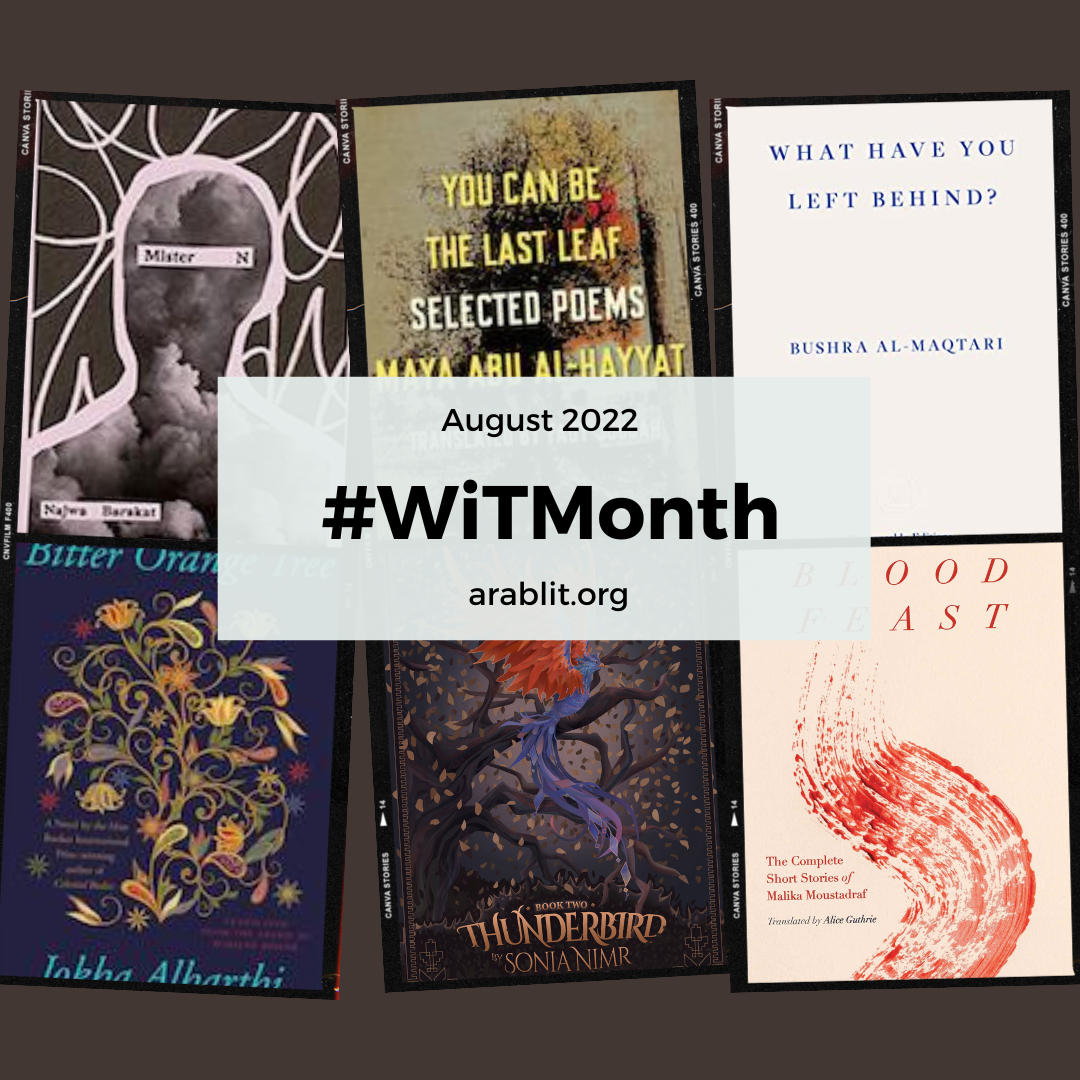
Women in Translation: 10 New Books for 2022
-
 Loading...
 - Hamia Messaoudi
- 09 Aug 2022
- 97 Views
- 0 Like
- 0 Comment
Women in Translation Month, an August celebration founded by the book blogger Meytal Radzinski in 2014, sits at the intersection of two visibility-raising efforts. The first, spearheaded by the Three Percent blog, highlights how few literary works in the United States are translations. The second, started by VIDA: Women in Literary Arts, tracks women writers’ representation in English-language magazines, newspapers, and journals.
Surveys suggest that the majority of literary translators are women. However, research by Women in Translation Month organizers demonstrates that the books being translated into English are largely by men. Around 30 percent of new translations to English from across world languages are works written by women, while 70 percent are by men, Radzinski has found. This further affects how women writers in translation are reviewed or covered in the media, recognized by award committees, promoted in bookstores, sent out to reviews, and, Radzinski writes, ultimately reach (or don’t reach) readers.
Translations from Arabic to English have generally followed the 70/30 split. Of the 35 translations we were expecting for 2022, 12 were by women. However, this may also be reflective of general publishing trends in Arabic, where only five of the 16 books longlisted for the 2022 International Prize for Arabic Fiction, for instance, were written by women.
There is often a belief that more works by women are translated from Arabic to English than are works by men. In a 2010 essay, Abeer Esber wrote that “Unfortunately, women in Arab countries are currently finding it easier, for all the wrong reasons, to find a publisher for their books.” In Peter Clark’s “Arabic Literature Unveiled: Challenges of Translation,” published in 2000, he said that he became interested in the work of Syrian author ‘Abd al-Salam al-Ujaili, then in his seventies. Clark pitched a translation to an unnamed publisher, who apparently said: There are three things wrong with the idea. He’s male. He’s old. And he writes short stories. Can you find a young female novelist?
And in Banipal 36, Youssef al-Bazzi wrote: “We can state here that there is not a single Arab woman writer, regardless of the quality of her literary writing, who has not met with European deference, translation, or ‘presence.’ What Arab women write is tantamount to magic in the eyes of Europeans.” Read More...