Everything You Need to Know About Brazilian Modernism
-
 Loading...
 - Aidan Moran
- 02 Jun 2023
- 59 Views
- 0 Like
- 0 Comment
Midcentury modernism has maintained its position as the epitome of style worldwide for over a decade, making appearances in hotel lobbies and even DIY furniture blogs. However, its popularity has reached such heights that it has become somewhat mundane. That is until you delve into Brazil's unique interpretation of midcentury design.
While the United States and Europe have undoubtedly produced revolutionary midcentury designs by renowned figures like Charles and Ray Eames, Eero Saarinen, Arne Jacobsen, Jean Prouvé, and Gio Ponti, Brazil's contributions to the global design movement have often been overlooked by scholars and collectors alike. There are a few exceptions, of course, such as Oscar Niemeyer, Lina Bo Bardi, and Roberto Burle Marx. However, furniture designers like Sergio Rodrigues and Joaquim Tenreiro are far from household names, especially when compared to the Eameses and Saarinens of the world. But there are compelling reasons why this should change.
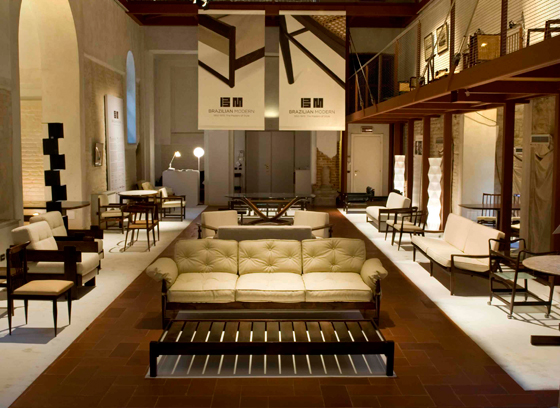
Let's delve into the history of Brazilian Modernism. Like many design styles, Brazilian modernism has complex political and cultural roots. After centuries of colonial rule by Western powers, Brazil declared its independence from Portugal in 1822. However, political turmoil, ranging from dictatorships to coups, persisted for more than a century. Despite the ongoing challenges during the midcentury period, Brazilians were determined to establish a national identity rooted in progress, aligning with the modern aesthetics and philosophies sweeping the globe.
Brazilian designers embarked on journeys across the world, returning with inspiration that not only resonated with this newfound nationalism but also fueled it. Ultimately, Brazilian modernism reached its pinnacle in the futuristic capital city of Brasília, a place embodying progressive ideals and designed by visionaries such as Lúcia Costo, Niemeyer, and Marx.
What distinguishes Brazilian Modernism from its counterparts? In terms of form, Brazilian modernism shares similarities with American and European styles, emphasizing functionality through simple silhouettes that blend geometric and organic shapes. However, the divergence lies in the materials used, which sets Brazilian modernism apart on a global scale.
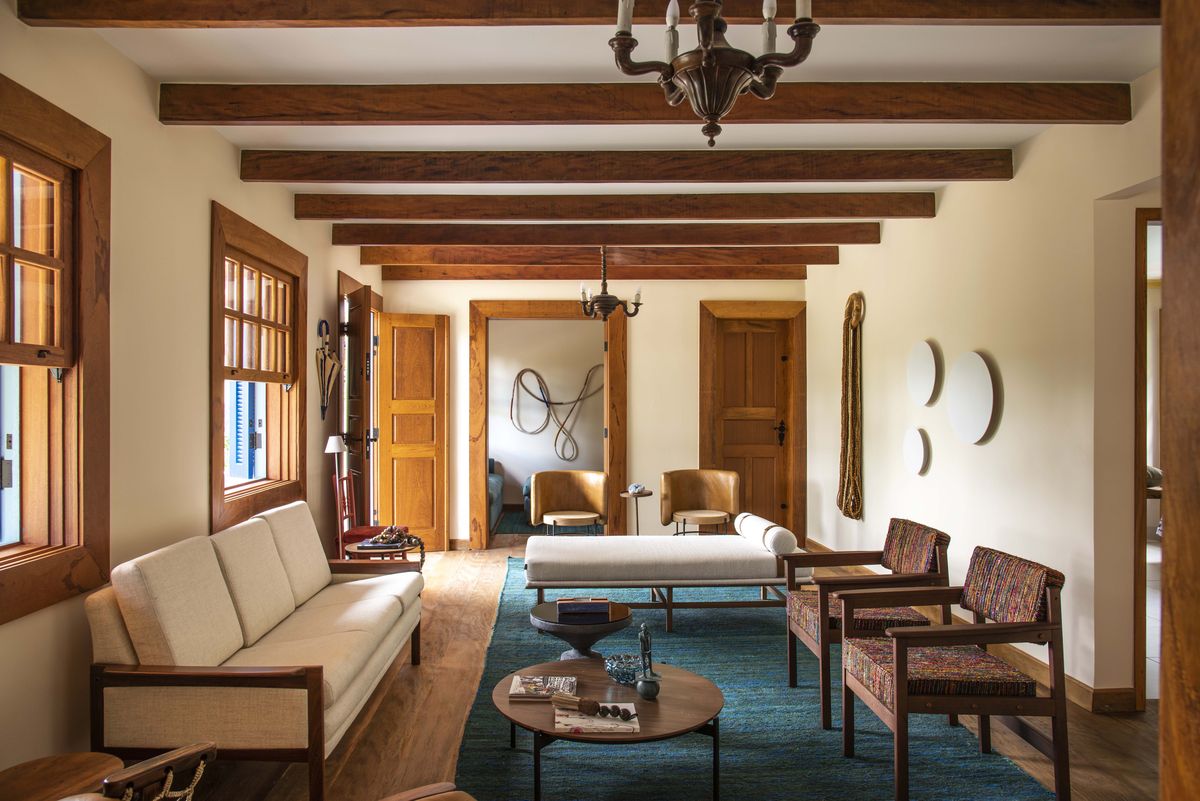
"In the '50s, materials such as plastic, stainless steel, and fiberglass were not readily available in Brazil. As a result, designers relied on wood and local materials like cane, leather, and wicker," explains Isabela Milagre, the founder and curator of Bossa Furniture gallery, specializing in midcentury and contemporary Brazilian pieces. These natural materials infuse Brazilian design with a more opulent and sensual essence compared to its Western counterparts, where designers often explored synthetic alternatives.
Another factor contributing to this unique vibe is the handcrafted quality prevalent in most Brazilian furniture from that era. "The absence of industrialization and manufacturing technology kept furniture production artisanal until around 1966 to 1968," Milagre adds. "Sculpted pieces and traditional joinery are delightful details that can be found in midcentury designs."
So, why hasn't Brazilian Modernism gained wider recognition? Just as the design movement's origins lay in politics, its decline also stemmed from them. During the military dictatorship from the 1960s through the 1980s, furniture exports were prohibited, preventing Brazilian modernism from gaining global exposure. Even today, certain Brazilian furniture faces export restrictions due to regulations on natural materials, including rosewood. Additionally, a lack of scholarly attention hindered the movement's integration into the academic world.
However, the tides are turning. "Around ten years ago, researchers began investigating and cataloging this movement," notes Milagre, highlighting the growing interest in midcentury design from Brazil among a broader international audience. "This increased appreciation can be attributed to recent books, exhibitions, and the prominent display of essential pieces at art design fairs."