UNILAG: Misplaced priorities killing education
-
 Loading...
 - Abdul Mohammed
- 10 Jan 2025
- 79 Views
- 0 Like
- 0 Comment
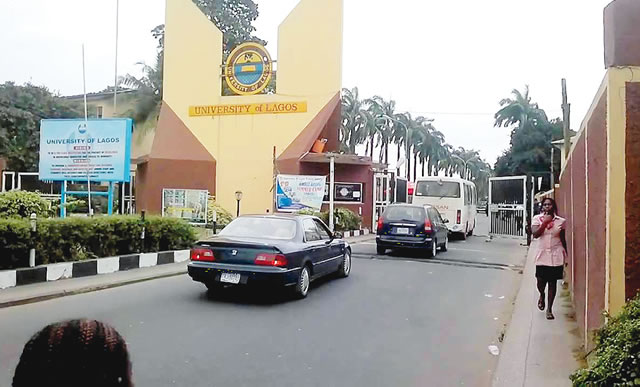
The plight of students at the University of Lagos (UNILAG), who find themselves stranded off-campus due to delayed hostel renovations, starkly highlights the Federal Government’s mismanagement of higher education in Nigeria. This situation is not merely an administrative hiccup; it is a glaring indictment of a systemic failure rooted in misplaced priorities. The government’s focus on establishing new universities has come at the expense of adequately funding and managing existing institutions, leaving students to grapple with the consequences of underfunded education.
The chaos at UNILAG is emblematic of a broader crisis affecting higher education across Nigeria. In 2024, the university management announced that students would remain off-campus for the first semester due to necessary renovations, a decision prompted by years of neglect that left hostels in deplorable conditions. While renovations have been completed in three hostels, the slow pace of progress—hampered by delayed disbursement of funds from the Federal Government—has left thousands of students scrambling for off-campus accommodations in a city notorious for its exorbitant rent.
Private hostels charge as much as N800,000 per annum for a single room, a cost that is prohibitive for many students, particularly those from low-income families. The university’s assurances of reduced hostel fees for the eventual semester of use do little to alleviate the financial and emotional burden on students and their families. This raises critical questions about the planning and execution of such ambitious renovation projects without a concrete timeline and guaranteed funding.
The decision to direct students off-campus exposes them to significant risks. While off-campus housing may be expensive, it often lacks basic security and amenities. Students living in remote or unregulated areas are vulnerable to theft, harassment, and other dangers. For female students, these risks are even more pronounced, with reports of assault and exploitation frequently surfacing. The government and university management must be held accountable for these lapses, particularly when prioritizing new universities while neglecting the welfare of students in existing ones.
As of 2024, Nigeria boasts 274 universities, including 63 federal, 62 state, and 149 private institutions. Despite the overwhelming challenges faced by these existing universities, the National Universities Commission continues to approve new public universities. This proliferation is perplexing, especially given the evident inadequacies in infrastructure, staffing, and funding across current institutions.
In 2023, the Federal Government allocated a mere 7.2% of its budget to education, a stark contrast to Ghana’s 23% allocation in 2022 and South Africa’s 20%. This lack of investment has dire consequences: dilapidated hostels, overcrowded classrooms, obsolete laboratories, and underpaid lecturers. How can the government justify opening more universities when it cannot effectively manage its current portfolio?
The rot in Nigeria’s tertiary education system is not a recent development. It has been decades in the making, with the Academic Staff Union of Universities (ASUU) consistently advocating for the implementation of agreements made with the Federal Government. The ASUU-FGN agreement, signed in 2009, outlined plans for revitalizing Nigerian universities, improving staff welfare, and addressing infrastructure deficits. Yet, 14 years later, most of these promises remain unfulfilled.
The government’s failure to honor this agreement has led to incessant strikes, with ASUU engaging in industrial actions for a cumulative period of over four years since 1999. These strikes disrupt academic calendars, delay graduations, and diminish the quality of education, leaving students to navigate a system in perpetual dysfunction.
While Nigeria struggles with its education system, other African countries provide examples of what is possible with focused leadership and strategic investment. Rwanda has transformed its education sector through targeted reforms, allocating about 17% of its national budget to education. South Africa, with its higher education funding pegged at 20%, boasts world-class institutions like the University of Cape Town, consistently ranking among the top globally. Ghana has made significant strides by ensuring stable academic calendars and improving university infrastructure.
These countries demonstrate that funding is not the sole issue; leadership, planning, and a genuine commitment to education are equally critical.
The neglect of Nigeria’s higher education system has broader implications for national development. An underfunded education sector produces graduates ill-equipped to compete in a globalized world. Employers frequently lament the skills gap among Nigerian graduates, a direct result of substandard facilities and teaching methods in many universities. The brain drain phenomenon, where talented Nigerian lecturers and researchers migrate for better opportunities, continues to deplete the intellectual capital needed for national growth.
The Federal Government must rethink its priorities. It should halt the establishment of new universities until existing ones are adequately funded and managed. This consolidation of resources will allow for improvements in infrastructure, staff welfare, and academic standards.
President Bola Tinubu’s government must commit to increasing the budgetary allocation to education, accompanied by transparent mechanisms to ensure effective use of funds. It must also honor the ASUU agreements and work collaboratively with the union to address the challenges in tertiary education. A harmonious relationship with lecturers is essential for stability and progress.
Furthermore, institutions must be held accountable for how funds are utilized. Regular audits and student engagement in decision-making processes can ensure transparency and efficiency. Education is the bedrock of any country’s development, and Nigeria’s neglect of its universities in favor of political expediency is a grave disservice to its youth and future.
The UNILAG hostel debacle is not just a local issue; it is a symptom of a national crisis that demands urgent attention. The Federal Government must recognize that the current trajectory is unsustainable. By prioritizing quality over quantity and putting the welfare of students and staff at the forefront, Nigeria can begin to rebuild its higher education system and secure a bright future for its citizens.