10 Best Polarizing Filters in 2022 (For Perfect Landscape Photos!)
-
 Loading...
 - Paul Wanyonyi
- 07 Jun 2022
- 285 Views
- 0 Like
- 0 Comment
Polarizing filters also cut down on glare and reflections on glass. This is valuable when shooting in a city. If you like vibrant colors, a polarizing filter gives you the deep colors you crave regardless of what you are shooting.
There is a mind-boggling array of polarizing filters that vary wildly in price. Major companies often have a line of polarizing filters with different features. If you have tried shopping for a polarizing filter, you are justified in throwing your hands up in despair.
We begin by exploring what a polarizing filter is and how they work. Then, we cover the best polarizing filters on the market at different price points. Finally, we will explore their features in a buying guide and tell you how to use them. This article will help you find the polarizing filter that is right for you. I am currently in the market for a polarizing filter to fit a new, larger lens. So let’s look at the options together!
What Are Polarizing Filters?
Before we jump in with the best polarizing filters, let us look at what these filters do and why so many landscape photographers use them.
A polarizer filter is a piece of specially coated glass that fits onto the front of your lens. It is designed to filter certain waves of light. You may not be familiar with polarizing filters in photography. But you might have encountered polarizing sunglasses.
Polarizing filters may screw onto the end or attach with magnets. Or you can buy polarizing filters that drop into a holder fixed to the front of the lens. You can even stack a polarizing filter with other filters.
How Do Polarizing Filters Work?
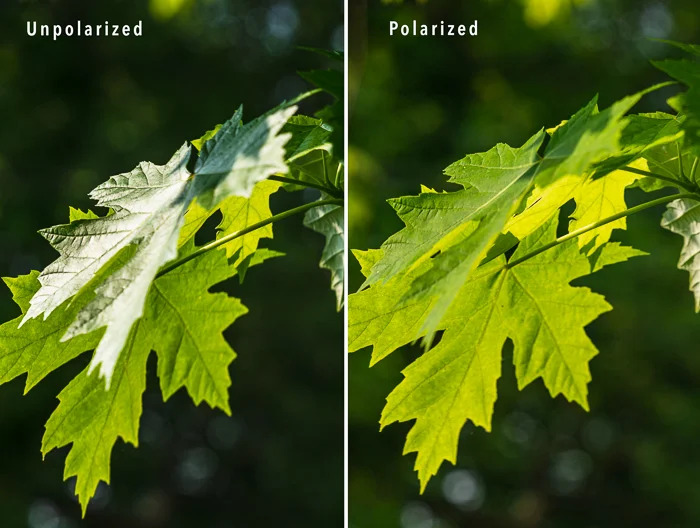
Polarization has to do with how light waves behave. Most natural light is unpolarized. But when it is reflected or bounced, the waves scatter. This makes it hard for your camera to capture a clean image. Polarizing filters reduce the randomness of the light waves. Filtering the scattered light results in reduced haze, glare, and reflections.
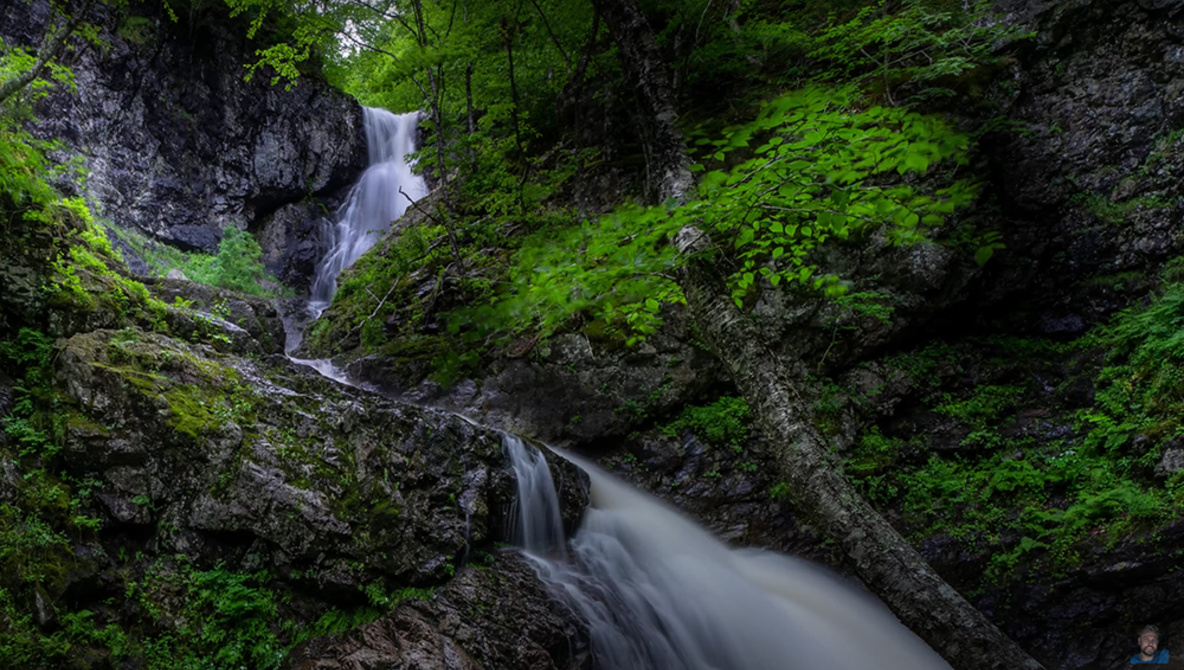
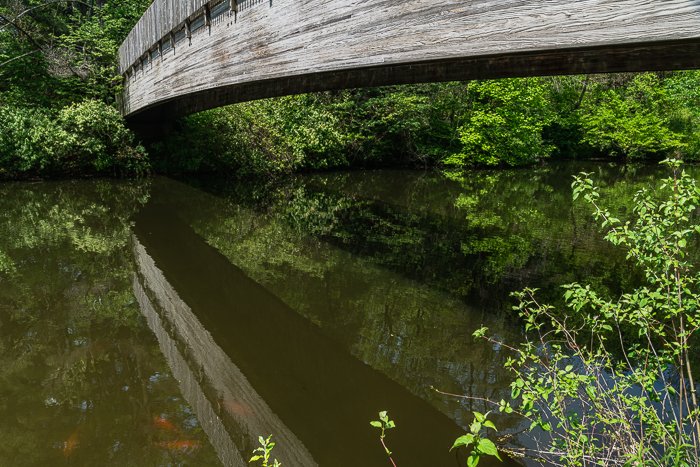
Polarizer filters let you see under the reflections and glare on water, snow, or glass. They also deepen the color and boost contrast in a way that is impossible to replicate in post-processing.
A polarizing filter improves the vibrancy of water and lets you see below the surface. Your sky becomes more vibrant and reduces atmospheric haze. Some vibrancy tools in photo editing programs may be able to simulate contrast and color. But you can’t edit out reflections and glare. Without a polarizing filter, you’ll never be able to see into a window or photograph the depths of the water.
10 Best Polarizing Filters
Here are our top 10 best polarizing filters. Many companies listed have a choice of polarizing filters. We have chosen a camera filter from each line that represents some of the brand’s best qualities.
10. Hoya Evo Antistatic CIR-PL / Hoya Fusion Antistatic CIR-PL
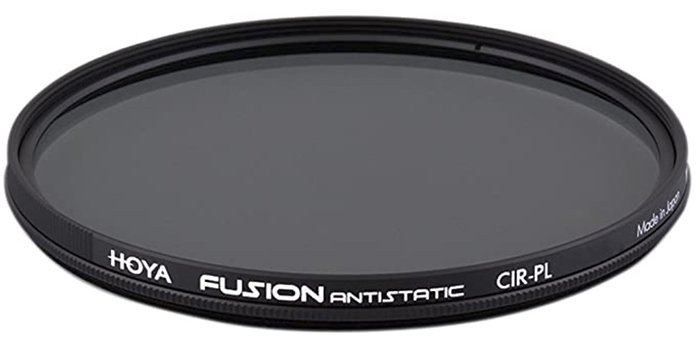
Diving into the world of Hoya filters can be confusing. The company has a wide range of circular polarizers. But they also market some filters under different names only in the USA. Similar filters can vary in features. Hoya has a wide range of filters from which to choose. Their mid-level anti-static circular polarizing filter goes under the name Evo in the United States. A similar anti-static filter is called Fusion elsewhere.
The filters have 16 or 18 layers of anti-reflective coatings. They are water and oil repellant and have a hardened top layer. Anti-static properties are particularly useful in situations where dust is a problem. All but the largest sized filters are thin, which reduces vignetting. All Hoya filters have an aluminum casing, and Hoya often adds an ultra-violet filter into their CPL to block UV light.
The price difference between the Evo and the Fusion is considerable. The Fusion is the better deal.
9. Tiffen Circular Polarizer
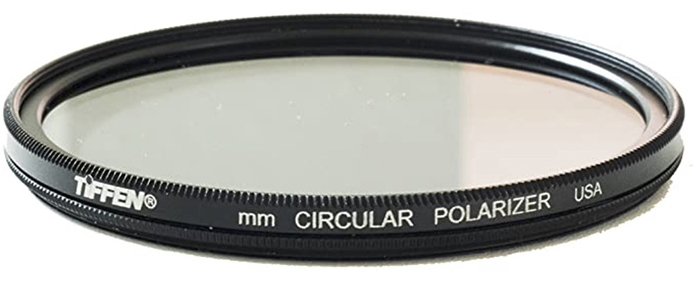
Tiffen makes a range of budget-friendly circular polarizers. Some have better light transmission for low-light situations. Others are designed for wide-angle lenses. They also offer a warming filter with a yellow tint. You can also choose between a circular and a linear polarizer.
This entry-level filter is made from aluminum and is one of the top-ranking filters on Amazon. It is a good filter to start with if you want to try a circular polarizer without spending much money. The filter has no anti-glare or protective coatings. This may make it more susceptible to breakage. But Tiffen’s 10-year warranty gives you some peace of mind.
If you like this filter, Tiffen makes a range of filters. Their top-quality HT filter has high-quality glass and anti-reflective coatings.
8. Nikon Circular Polarizer II
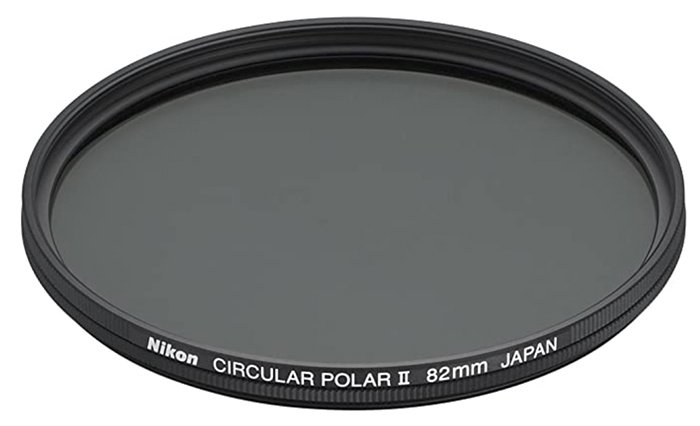
Nikon’s Circular Polarizer II is one of the top filters on Amazon. This screw-on filter is made by Nikon, but you can use it on any lens. The size offerings are limited, and the casing is made from aluminum. But the filter is multi-coated to reduce ghost images and flare. It is marketed as a much thinner and lighter option. This reduces vignetting on wide-angle lenses.
The filter is one of the more expensive offerings on this list. You are paying for a known brand name.
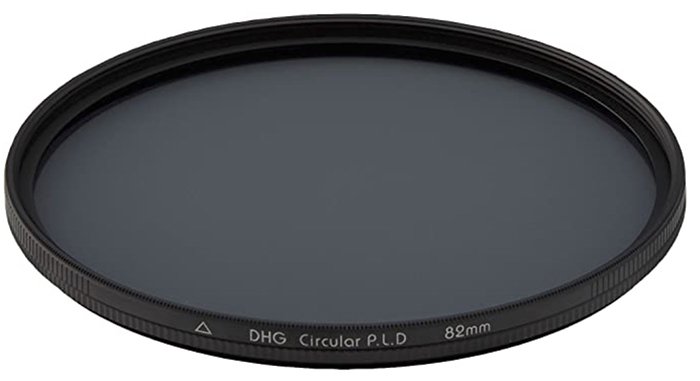
7. Marumi DHG Circular Polarizer
If you are looking for a lower-priced filter with many features, try the Marumi DHG Circular Polarizer. The filter has eight layers of anti-reflection coatings and is scratch resistant. It is made from low-profile aluminum to avoid vignetting. The filter will block more light than the more expensive models. But the company promises unsurpassed color neutrality.
If you like this filter and want an upgrade, try Marumi’s flagship filter, the EXUS. This filter has 18 layers of coatings for ultra-low reflection that are anti-static.