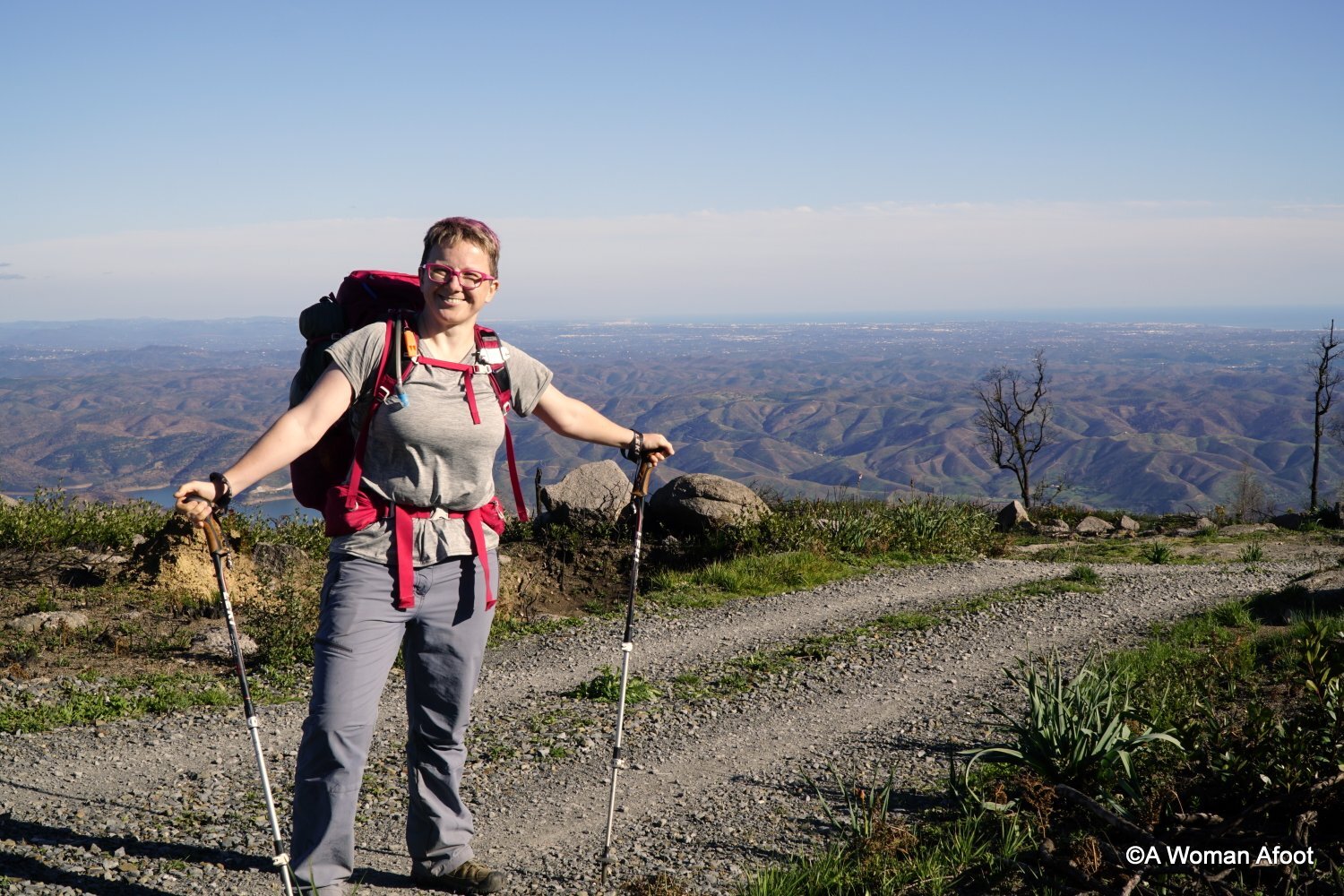
10 Excellent Tips For Women Who Want To Hike Solo
-
 Loading...
 - Bingwen Zhang
- 14 Jun 2022
- 251 Views
- 0 Like
- 0 Comment
Hello, ladies! Do you dream about getting out of your dusty office and out into the wild?
I am so with you!
Hiking, especially when done alone, can be a life-changing experience. It brings you serenity and peace of mind. It can give you a significant boost of self-confidence and pride. Hiking solo lets you think freely and to be tuned in to own needs. It makes you focus on yourself, which women rarely have the chance to experience. Quite often, we spend our lives providing for others, making sure our loved one’s needs are fulfilled, forgetting about our own. It’s a chance to do something just for ourselves, to be alone with our thoughts, and for once, not constantly care about the needs of the people around us. For some women, the only way to get some me-time is literally to escape alone into the wild.
BUT.
If you do it wrong, it can quickly become a dreadful and unpleasant experience.
We might not be able to control the weather or natural disasters. But we can manage quite some factors that influence our experience on the path.
Please remember, that the most critical organ during a hike is not our legs or lungs - but our brain.
Don’t be afraid to use it! Prepare well, think what you are doing and enjoy the ride (well, a hike)!
1. Plan well
Probably the most essential thing ensuring the success of your hike happens before you hit the trail: preparation.
There is a place of spontaneity in our lives, but better to leave it for things like crazy new spice in your coffee or a new color for your hiking socks.
So, what should you prepare ahead of time?

Gather information
Researching your hiking destination ahead of time can not only make everything smoother and more manageable but also safer. You do not want to find out the morning of your hike that the trail is closed for repair or calving season.
Knowing well in advance about any local issues – travel, currency, access to banks, or accommodation on the way is crucial. More than a few times, I’ve run to the silly issue like no ATM in villages and businesses not accepting card payment. All these small details can influence our trip.
Read not only a guidebook (you do that, right?) on your trail but also personal reports from hikers who completed it. This is crucial if you want to do a long-distance trek. Check out forums and discussion boards. They can be a fantastic source of useful information!
I don’t only read on them - I take everything with me. How? I get it all on my Kindle. I buy a guide e-book and then copy useful information into pdf documents and send them all to kindle as well. I can’t remember all the fantastic tips and advice, I prefer to have the chance to check it out again the night (or morning before I hike it.
Insurance
Another must – buy a hiker’s specific insurance. Make sure the insurance covers mountain rescue and activity-related accidents. For basic hiking a general travel insurance should be enough, but read the small print carefully to make sure you are covered.
There is just no excuse for “saving” on it.
Budget
When budgeting, you need to create a special emergency fund. The realities of the hike might not go in sync with your expectations. You might need to take a bus a few times, or campsites might prove more expensive than anticipated. It could be that you need to stay at B&Bs more times than planned. You need to resupply and sometimes replace a broken piece of gear. Prepare!
Don’t plan on an absolute minimum budget, cutting off any kind of pleasure spending like coffee or hot soup on the way. I know some people can create and stick to a very frugal spending system, with no extra expenditure. But I know myself – if there is a café, I want to step in, get the coffee and rest a bit. It’s also useful to use the wifi (to save on roaming costs) to catch up with family, friends, and share a pic or two. And what about these cute magnets or other souvenirs?

2. Know and care for your gear
Even the best piece of equipment is useless if you do not take good care of it or don’t know how to use it.
Get to know your gear
If you buy something new – make sure you check it out before you hit the trail. Pitch a tent in a park or at least in your room to figure out the layout. When you go hiking alone, you rely upon only your own things and your own skills. No one to lend you their stuff or help to fix something.
You can also prepare for pitching in the rain if the inner of your tent can be connected right away to the flysheet. Ensure that your backpack fits you well and that you know how to pack it and adjust it to your body.
Learn the differences between various materials to make informed choices - for example, about your sleeping bag or camping cookware. Read about the fabrics, materials, and tech of the gear and clothing you use. It helps to make choices but also to appreciate the steep price on them. Know what kind is suitable for different conditions – don’t take an overkill 4-season tent for a summer hike. That kind of knowledge helps you decide where you should splurge and when save and buy lower priced item.

Take care of your gear
When you come back from a hike – spend enough time to make sure all your equipment is cleaned, checked, and put away the way it should be.
Nothing spoils a hike like a moldy tent or a broken stove!
Make sure your sleeping bag is completely dry and stored loosely. During a hike, dry your sleeping bag every morning (just throw it over your tent if it’s dry) or if the weather is wet – whenever there is a dry and sunny moment. You can take it out during a lunch break, for example.
Being alone, you depend only on what you have in your own backpack. You can’t split carrying it with a friend, and sometimes you have to carry more. But it’s a good thing, too: you can take gear fitting your needs only. Hiking is a fantastic opportunity to learn new things about yourself. It’s time to figure out what you like and what you don’t. You notice if you are a warm or cold sleeper. You learn if you enjoy watching sunrises, waking up early with no alarm clock. Or it might be that suddenly you discover a fondness for sitting outside your tent and staring into the night.
Follow a packing list
Choose wisely, and don’t forget something essential – there is no one there to give you a hand! Make a list of gear you must pack and check each item off or take a look at my own packing list to help you.
If you are going just for a day hike - make sure to take a look at the list of 10 Essentials for a Day Hike. Adjust your list depending on weather, or many other factors like how much water you need to carry, are the streams on the way, how long without a chance to plug your electronics, if the trail is exposed, if there are supply opportunities – villages, mountain shelters, etc., and specifics of the destination.

3. Know thyself!
Listen to your body and put yourself first.
Only you know your body’s strengths and weaknesses, unique medical needs, or health issues. Trail itineraries are only suggestions – don’t feel like you have to push yourself to do a daily quota of miles. Sometimes you might discover new issues while on the way – embrace the discovery, no matter what it is. Hiking is a fantastic opportunity to learn more about your own body – it may surprise you with its strength, but also with potential health issues. Using your body in a different way than you are used to may cause discomfort or even injuries. Be gentle; give your body time to adjust to a new type of activity.
Be ready to change your plans
If the trail requires a minimum of distance (or you have no place to sleep), which is beyond your capabilities – choose a different route.
Don’t feel bad that other people run past you or do twice what you do in a day. When you need - quit, go back, turn around, cut the trek short - and be proud of it! I’m a Quitter and proud - because I celebrate my sensible sense to be a responsible solo hiker, and not some ridiculous ideas of “never quitting.” I’ve changed my planned hiking itineraries countless times, and somehow I still love hiking, I’m still proud of what I’ve done – it should be about you and your needs. That’s why we go alone – so we don’t push ourselves beyond our capabilities or healthy limits, because we wouldn’t want someone else to miss out or feel disappointment. Hiking solo is all about me, not other people’s dreams, plans, or “supposed tos.”
Do what you need, as you need
Take as much rest as you need, including an extra day rest if that’s what you need.
I know I’m not in the best shape, and I realize that being 40 + years old is not the same as a twenty-something in terms of strength and stamina. Completing my hike later or making it shorter doesn’t take away anything from my satisfaction or sense of accomplishment.
You also have the right to be proud of yourself – irrelevant of what others do.
Obviously, if you happen to be fit and athletic, do more than what the society expects from you! If you are the type that can walk forever, making easily 30 km a day - go for it :)
Additionally, for solo hikers, when you are on your own, it’s essential not to take any unnecessary risks.
There is no one to help or ease the load. Don’t do anything stupid; don’t push yourself beyond what your body can do. There are no taxis to call to pick you up because you wanted to complete a climb but have no strength to return safely. Mountain rescue should be called only when needed. Too often, it is called to completely preventable situations, like when a hiker felt exhausted and got lost when darkness came because they were unprepared and miscalculated the distance they could do. Don’t be that hiker.
Recognize and embrace your fears
It’s completely OK to be anxious (although I don’t advise to have it at such severe levels as I do), scared of the unknown, and fear going hiking alone. The problem starts when the fear paralyzes us and makes it impossible to discern between what real risk is, and what is just our imagination playing tricks with our mind. I will never tell you that hiking solo is free of danger. Any kind of endeavor in wild nature can be risky. People who go into the mountains without thinking about risks are a danger to themselves and those with them.
So how am I able to go hiking all by myself in the wild mountains?
Well, first of all, I very rarely go into true Wilderness. I stick to marked trails, mostly in areas with phone coverage (or at least emergency call options), mostly max few days away from a village or a town, but typically within a few miles. I know my limits, I know my skills - and I don’t look for survival kind of adventures. So that’s a first step: identifying your skills and comfort zone. I stretch it out a bit now and then, but it’s a calculated exercise. I learn as much as I can ahead of time (the planning stage), so I know what I can expect in terms of trail difficulty, terrain, water supply, camping options, food resupply options, electronics charging, etc. This strategy helps in knowing how much food I need to carry on me, what to do to ensure my phone is always charged, how much water I need to take, what kind of skills are necessary, if the navigation is difficult, and so on.
I also learn about the weather and if I am ready (or skilled) to face it. I know I do not want to camp or walk on deep snow, so I avoid such areas/seasons. I also read blogs, reports, articles to learn new skills, read tips on how to cross a river, get around a tricky section, find a walk around if a stream is in spate. This way, I know the real risks.
I am not particularly scared of Nature. I respect her; I learn how to be a good guest. My real fear is injury and evil humans. The first relates to the above precautions, plus taking trekking poles, not doing stupid stuff, not taking unnecessary risks, knowing first aid, and always caring necessary meds/supplies. Humans are one of the reasons why I like hiking solo away from touristy spots or busy seasons. I found the farther away I am from so-called civilization, less anxious I am. Read More...