Mountaineering Gear Essentials
-
 Loading...
 - Bojing Liu
- 14 Jun 2022
- 248 Views
- 0 Like
- 0 Comment
Having proper technical training and being in excellent physical shape are critical to a successful mountaineering experience. But, before you head out on your first mountaineering trip, you need to be sure you’re equipped with the right gear and clothing. This article will focus on the gear.
Here’s the essential gear you’ll need for most mountaineering trips:
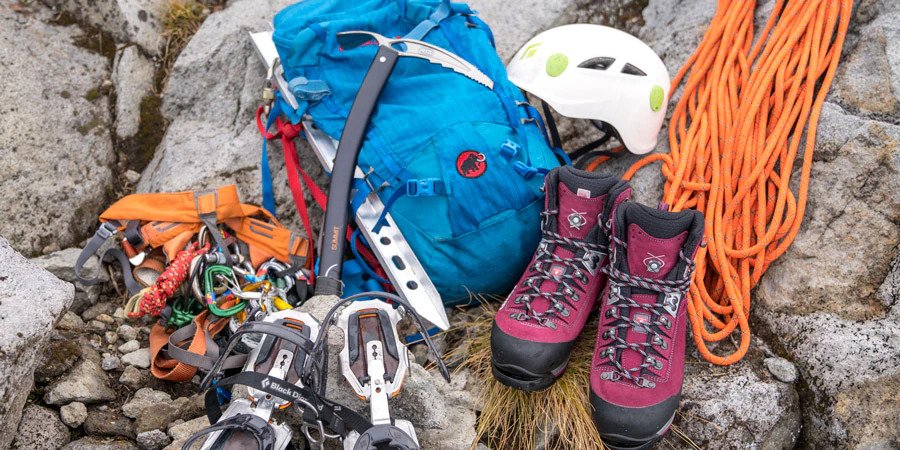
- Mountaineering gear: Items such as mountaineering boots, crampons, a climbing helmet and an ice axe are standard items for almost every mountaineering climb. For trips that take you onto glaciers, you’ll need a rope, harness and crevasse rescue equipment to protect against crevasse falls.
- Camping gear: For day trips, you’ll need basic items like a backpack, headlamp, hydration system and the Ten Essentials. But, many mountaineering trips require at least a night or two of camping, in which case you’ll need a tent, sleeping bag, sleeping pad and stove.
- Mountaineering accessories: Accessories like an altimeter watch and navigation tools can make travel in the mountains easier and more comfortable.
As you gain experience you’ll figure out exactly what you need and what you don’t, but for now, use the tips in this article and talk to other climbers about what they use.
And just because you see an item listed doesn’t mean you have to rush out and buy it. If you’re going on a guided trip, you’ll find that gear like ropes and tents are often provided. For those things that aren’t provided, you may be able to rent some of them from the guide service or a shop like REI.
Mountaineering Gear
The mountaineering gear that’s required for your trip depends a lot on the route you’re climbing. For instance, if you’ll be crossing glaciers, you’ll need a rope, harness and crevasse rescue equipment. But on unglaciated routes, you may be able to leave some or all these items behind. And if you’re hiring a guide, certain things may be provided or available to rent, so check with them before purchasing. REI also rents gear and sells some used items.
Here are many of the common mountaineering-specific gear items required for a climb:
Mountaineering Boots
Don’t underestimate the importance of a good pair of mountaineering boots. They’ll provide traction and stability for traveling on rocky terrain, and the ability to attach crampons for climbing snow and glaciers. Your more-flexible backpacking boots may seem like a good option, but not all backpacking boots are compatible with crampons. Also, the flexibility of the soles can actually cause your feet to tire quickly when walking on uneven terrain. Stiff mountaineering boots provide a stable platform.
You have two basic choices when looking at mountaineering boots: insulated and non-insulated.
Insulated mountaineering boots: For climbs in frigid temperatures or those that feature a significant amount of time spent on snow and/or glaciers, mountaineers wear insulated mountaineering boots. If conditions or personal preference call for them, they can be worn any time of year, but they’re commonly worn in winter, early season (May/June) and late season (September).
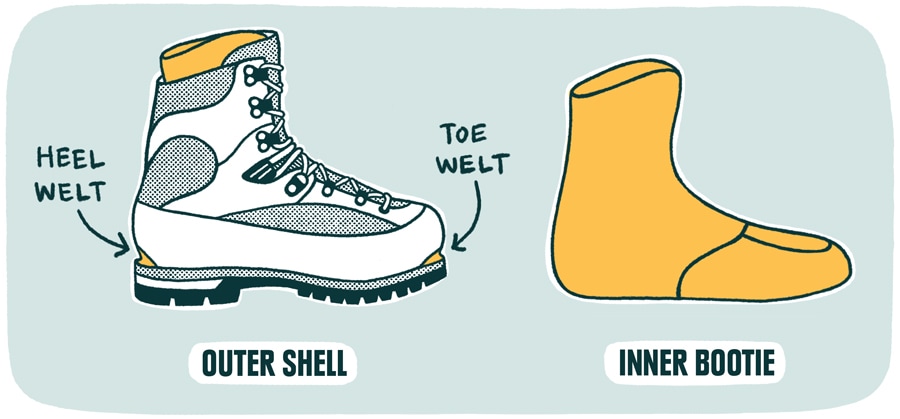
The warmest insulated mountaineering boots have a two-part design (which is why some people call them double boots): inner booties that provide insulation and outer waterproof shells with soles on them. Traditionally the outer shells have been made from plastic, but more and more options are available with flexible synthetic materials that are more comfortable. These tend to be the choice for winter ascents in the contiguous U.S. or climbs on bigger peaks, like Denali.
Insulated boots without removable booties typically don’t have as much insulation, but are often plenty warm enough for early-season and late-season climbs in the contiguous U.S.
Non-insulated mountaineering boots: For climbs in more mild temperatures or those that don’t require much time on snow or glaciers, non-insulated mountaineering boots are a common choice. They are typically less bulky and lighter than insulated boots, making them more comfortable and agile. It’s common for mountaineers to wear non-insulated boots during mid-season (July/August) climbs.
Crampons for Mountaineering
Steel crampons are strong and durable, making them a common choice for general mountaineering. Aluminum crampons are much lighter than steel but also less durable. If your climb will be mostly on moderate snow slopes, aluminum crampons will be sufficient. However, if your route takes you over rock and snow or the steepness requires front pointing, steel crampons are recommended.
Binding types: Crampons attach to boots using one of three binding types: strap-on, step-in or hybrid.
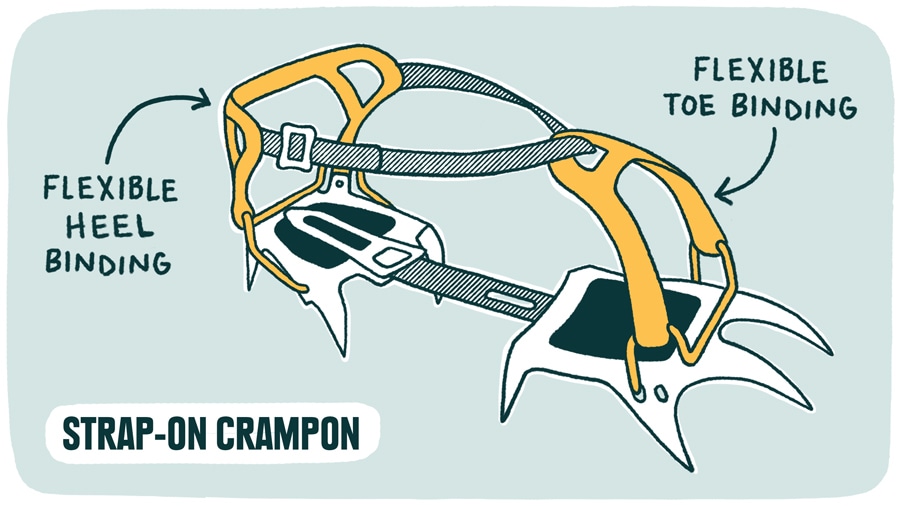
Strap-on crampons feature nylon webbing straps and flexible toe and heel bindings that attach to nearly any mountaineering boots.
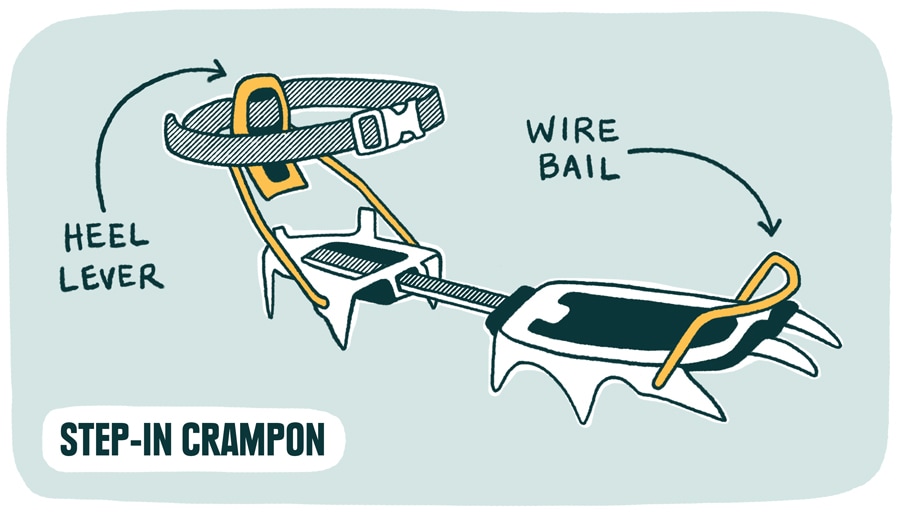
Step-in crampons have wire bails in the front and heel levers in back that attach to boots, creating a very secure system. To use step-in crampons, your boots need to have at least 3/8” welts or grooves on the toes and heels. Read More...