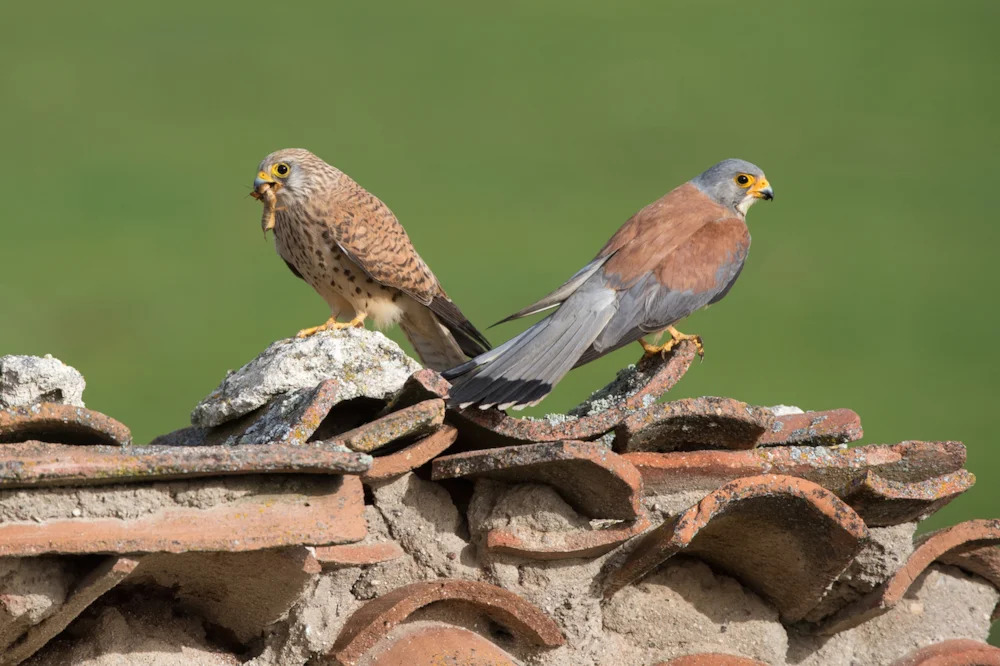
100 Lesser Kestrels Hatched and Reared at Stara Zagora Wildlife Rescue Centre in 2024
-
 Loading...
 - Hans Erwin
- 29 Jul 2024
- 49 Views
- 0 Like
- 0 Comment
Since the beginning of 2024, the Wildlife Rescue Centre of the Green Balkans environmental organization in Stara Zagora has successfully hatched and reared a total of 100 lesser kestrels. Dr. Hristina Klisurova, a veterinarian at the centre, discussed this achievement in an interview with BTA, highlighting the existence of three known colonies of this small bird of prey in Bulgaria.
Current Colonies in Bulgaria
- Levka in Sakar Mountain: The largest and original colony, where the reintroduction of the lesser kestrel to Bulgaria began.
- Near the Wildlife Rescue Centre in Stara Zagora: This colony has been stabilized through ongoing reintroduction efforts, including the release of young birds through adaptation aviaries.
- Near Burgas: The smallest colony, located on the Black Sea coast.
The lesser kestrel had disappeared as a nesting species in Bulgaria for over 20 years. In 2013, Green Balkans initiated the "Lesser Kestrel Recovery" project (LIFE11 NAT/BG/360) funded by the EU’s LIFE programme. That year, approximately 90 birds were imported from Spain and released directly into the wild. By 2014, some of these kestrels returned to Bulgaria and established a colony in Levka, where the last wild population had been observed.
Achievements and Future Plans
This year marks the 10th anniversary of the lesser kestrel’s reintroduction to Bulgaria. Currently, there are around 40 to 50 pairs in the wild. These birds have demonstrated the ability to rear their chicks independently, although some continue to receive controlled support from Green Balkans. All newly hatched chicks will be distributed among the existing colonies and a new site in the village of Kliment, Plovdiv Region, to further strengthen the species' presence in Bulgaria.
Dr. Klisurova emphasized the importance of these efforts, stating that the ongoing reintroduction and support activities have been crucial in establishing stable populations of the lesser kestrel in Bulgaria. The organization continues to monitor and support these colonies to ensure their growth and sustainability.


