In Bolivia, a 'Conservation Mosaic’ Gets Another (Big) Piece
-
 Loading...
 - Angelina Casa
- 30 Jul 2024
- 57 Views
- 0 Like
- 0 Comment
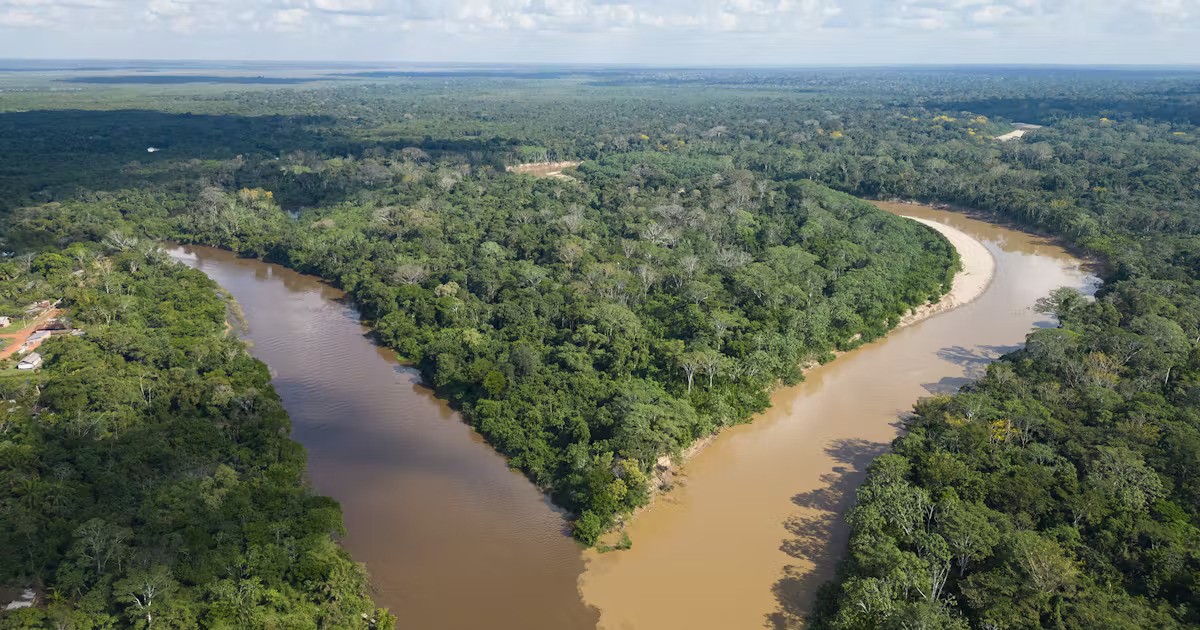
In the remote lowland forests of northwestern Bolivia, the small municipality of Sena has taken a significant step to protect one of the Amazon’s most biodiverse regions. With support from Conservation International, Sena has established a law to safeguard 452,639 hectares (1.1 million acres) of Amazon rainforest. This newly protected area, known as the Gran Manupare Integrated Management Natural Area, represents the latest addition to a massive, interconnected “conservation mosaic” created largely by local municipalities and Indigenous communities committed to forest protection.
Building a Conservation Mosaic
Over the past 25 years, Bolivian towns like Sena have protected 10 million contiguous hectares (25 million acres) of Bolivia’s Amazon — an area nearly the size of Iceland. This initiative not only secures livelihoods for local communities but also protects endangered wildlife and helps Bolivia progress toward its ambitious goal of protecting 30 percent of its land, achieving this milestone years ahead of schedule.
“Piece by piece, we are knitting together the fabric of conservation in the Amazon,” said Conservation International-Bolivia Vice President Eduardo Forno. “This is a huge achievement, a testament to the power of a consistent approach. Local communities have kept their eyes on the prize. They are having a big impact on the Amazon — for the benefit of us all.”
A Necessity-Driven Approach
This approach, spearheaded by Conservation International, emerged out of necessity. Bolivia’s last national protected areas were created in the early 2000s, and the country historically has had one of the highest per capita deforestation rates in the world.
However, in Pando, the department where Gran Manupare is located, the story is different. More than 90 percent of the land in Pando is covered by forest, compared with 44 percent nationally. This high forest cover is largely attributed to the Brazil nut industry.
The Role of Brazil Nuts
“It’s all about the Brazil nut,” said Juliana Ewert, a program manager at Conservation International-Bolivia who worked with the community to establish the protected area. Despite the name, Brazil nuts mostly come from Bolivia, where they are a major source of income for local communities.
Up to 70 percent of the forest in Pando Department is composed of sustainably managed Brazil nut trees. However, mining and encroachment by settlers who practice slash-and-burn agriculture pose constant threats. In response, Conservation International approached the Sena municipality about establishing a protected area that locals can manage sustainably, thereby ensuring their livelihoods.
Creating a Shield
“Protected areas act as a shield against these threats, allowing Indigenous communities and municipalities to preserve their main source of income,” Forno said. Over time, municipalities, Indigenous communities, conservation organizations, and other partners have managed to build a “conservation mosaic” that connects millions of hectares of neighboring protected areas.
Greater Impact Through Connectivity
“By connecting these protected areas, our impact can be much greater,” Ewert said. “It creates a network of communities who can share knowledge and forge partnerships. For example, how one community chooses to manage their forests can have dramatic impacts on another’s water supply — it can even impact rainfall in cities miles away.”
This connectivity also establishes corridors for wildlife to travel freely. Gran Manupare is home to a vast array of species, including the endangered giant otter (Pteronura brasiliensis), which can grow up to six feet long. In the 1950s and ‘60s, giant otters were poached to near extinction for their water-repellent pelts. Today, these “river wolves,” as they are known in South America, face threats from habitat loss in the Amazon, Orinoco, and La Plata river systems due to climate change, as well as roads and dams. The new protected area in Bolivia could provide this species with a bulwark against extinction.
Broader Benefits
Gran Manupare’s benefits extend far beyond the region — protected areas have enormous potential to stave off the worst consequences of climate change. A recent study co-developed with Conservation International scientists found that forests in protected areas keep an additional 10 billion metric tons of carbon out of the atmosphere. That’s the equivalent of one year’s worth of global fossil fuel emissions.
Future Plans
Gran Manupare may be the newest addition to the effort, but it’s far from the last. Conservation International has plans to work with three additional municipalities in the Pando Department. By 2030, Forno expects to help communities protect an additional 4 million hectares (10 million acres).
The establishment of the Gran Manupare Integrated Management Natural Area marks a significant milestone in Bolivia’s conservation efforts. Through a collaborative approach involving local municipalities, Indigenous communities, and conservation organizations, Bolivia is creating a robust network of protected areas that not only preserve biodiversity but also contribute to climate change mitigation. As Bolivia continues to expand its conservation mosaic, it sets a powerful example of how local action can drive global environmental change.