Japan Begins Process to Return Crested Ibis to Wild on Mainland
-
 Loading...
 - Mentari Salim
- 04 Apr 2023
- 68 Views
- 0 Like
- 0 Comment
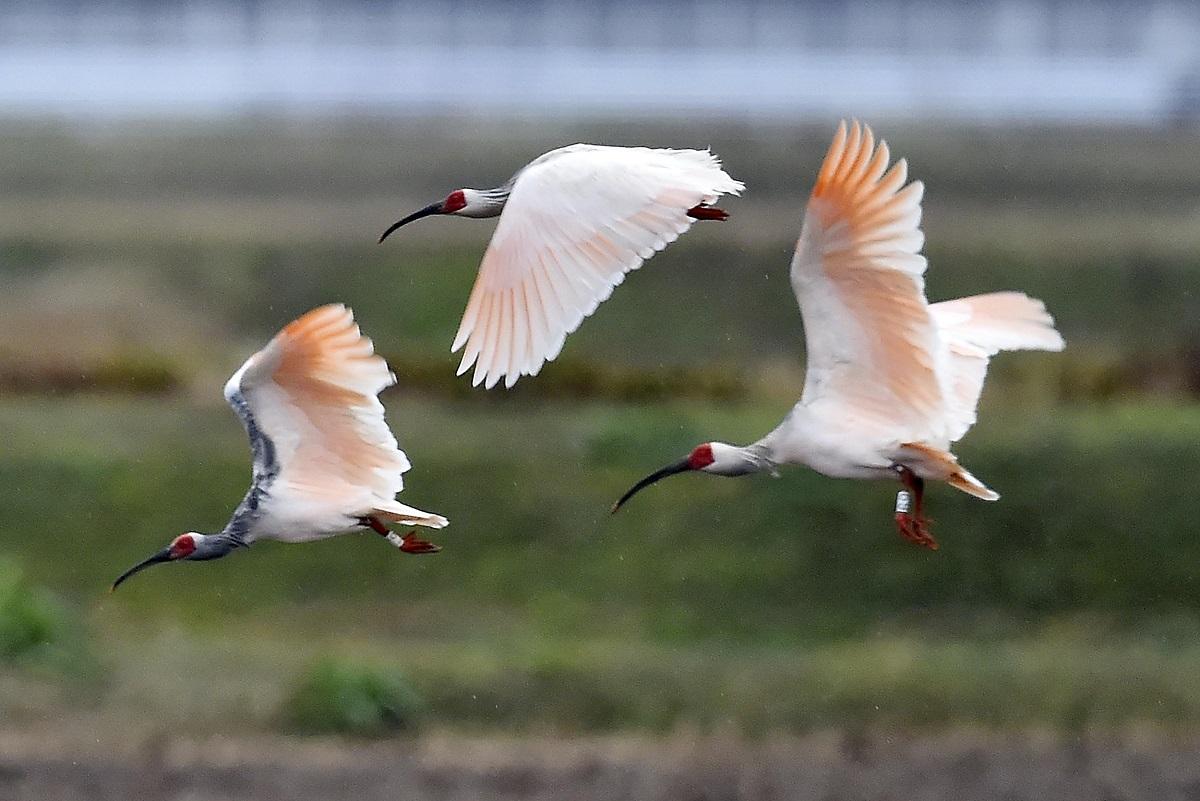
This year marks 20 years since the native-born Japanese crested ibis (see below) was declared extinct in Japan.
A program to artificially breed ibis from ones provided by China and release them into the wild on Niigata Prefecture’s Sado Island, the last natural habitat of the long-winged bird, has been successful, with their numbers now estimated to be over 500.
The Environment Ministry has a further goal of someday having the crested ibis survive in the wild on the mainland, but there are many challenges when it comes to coexisting with humans.
From May to June last year, the ministry publicly solicited local governments to host two types of designated areas. One would be a reserve where the crested ibis would be returned to the wild, while the other would be a place shared with humans that could provide a stress-free environment as a landing spot during migration.
Three regional coalitions applied for the area of return: Niigata Prefecture and five municipalities in the prefecture, including Nagaoka; Ishikawa Prefecture and nine municipalities on the Noto Peninsula in the prefecture; and Izumo, Shimane Prefecture.
At that time, the Niigata Prefecture group was considered the favorite. Nagaoka is the location of an ibis breeding center, and Sado Island is where ibis have been released since 2008. However, the group withdrew its application last December.
“Farmers in the proposed area voiced more opposition than we expected,” said Wataru Hoshino, head of the prefecture’s nature coexistence office. “They are already practicing environmentally friendly agriculture by reducing the use of pesticides and chemical fertilizers, and having to take further measures ahead of the release of the crested ibis made them uneasy.”
Others voiced concerns that the birds would trample on rice stalks in paddies, leaving the impression that restoring the crested ibis to the mainland won’t be an easy task.
Network established
In the end, the area in Ishikawa Prefecture and its nine municipalities and the one in Izumo were selected for the return, while three areas in the Tohoku and Kanto regions were chosen as areas for coexistence.
The five areas established a network last November which decided to begin establishing the necessary environmental conditions by fiscal 2025.
Said Michiharu Kono, head of the rare species conservation promotion office of the Environment Ministry: “We hope to determine the necessary conditions for the release of the crested ibis as soon as possible.”
At the Sado Japanese Crested Ibis Conservation Center on Sado Island, nine crested ibises were attacked and killed in 2010 when a marten got into a cage in which they were being acclimated to near-wild conditions. On the mainland, there are predators that do not live on the island. Read More…