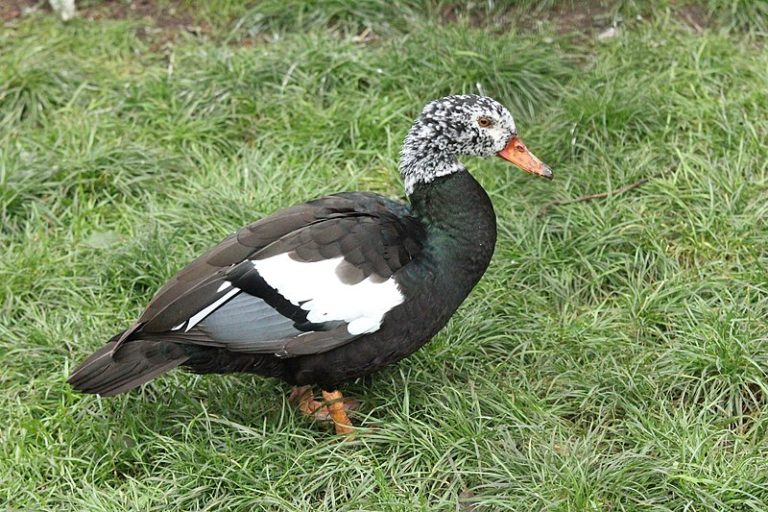
Climate change threatens the habitat of the endangered white-winged wood duck, finds study
-
 Loading...
 - Geetika Rai
- 19 Oct 2022
- 60 Views
- 0 Like
- 0 Comment
Alarm bells ring for​ the ​white-winged wood duck (WWWD). Declared the state bird of Assam in 2003, the on-ground conservation situation ​of the bird has not improved in recent years. On the contrary​, the bird​ could well go extinct.
The white-winged wood duck (Asarcornis scutulata) has been classified as endangered by​ the International Union for the Conservation of Nature (IUCN), since 1994. Only 800 individuals of this species are estimated to be left in the wild, out of which 450 individuals are known to be present in India. The bird is called Deo Hanh (the spirit duck) in Assamese, owing to its ghostly call. In India, this species can only be found in ​the northeast states.
“We have been conducting intensive surveys of the areas dominated by the white-winged wood ducks in Assam and Arunachal Pradesh, since 2018,” Rathin Barman of Wildlife Trust of India (WTI) told Mongabay-India. “​The situation is not as good as we thought. We could spot only a few birds in Nameri and the adjoining areas, Dehing Patkai and Namdapha. There ​have been no bird sightings in Dibru Saikhowa (a national park located in the Dibrugarh and Tinsukia districts, originally created with an objective of protecting the habitat of endangered species like the white-winged wood ducks), for more than 20 years. There are many areas in eastern Assam, where the birds were spotted in the first year of our survey in 2018 but have ​​completely disappeared by 2020.”

The white-winged wood duck is an inhabitant of the tropical evergreen forest, mostly confined to dense forests and wetlands and requires an average annual precipitation of about 1,000-1,200 millimetres. “Since climate change has already impacted many tropical forest areas, the white-winged wood duck habitats are now threatened by changes in temperature and precipitation,” explained Syed Ainul Hussain, a Senior Professor at the Wildlife Institute of India. Read More…