6 Still Life Photography Mistakes (And How to Fix Them)
-
 Loading...
 - Verah Akoth
- 04 Aug 2022
- 86 Views
- 0 Like
- 0 Comment
In this article, I share the six biggest still life photography mistakes – and I explain how to correct them, so that, no matter your level of experience, you can get outstanding results.
So if you’re ready to take your still life shots to the next level, then let’s get started!
1. Using improper lighting
What’s the very first rule of still life photography?
Your subject needs to be well-lit.

A poorly lit subject will look terrible, no matter the composition and camera settings you choose – while a well-lit subject will often look great, even if you struggle to get the framing and settings correct.
Start by ensuring you have enough light. Personally, I like natural lighting in still life photos; it’s bright, it’s strong, and it can be very, very soft. (For the most flattering natural lighting, try shooting during the golden hours or on days with heavy clouds.)
If you’re working indoors, it often pays to bring along some artificial lighting. Studio strobes are great for more serious setups, but if portability or price is a concern, several flashes plus a few light stands will do a great job.
You can also work with window light. On cloudy days, you’ll get a gorgeous soft effect near large windows. And if the sun is high in the sky, you can always drape a sheet over the window and get a beautiful light diffusion effect.
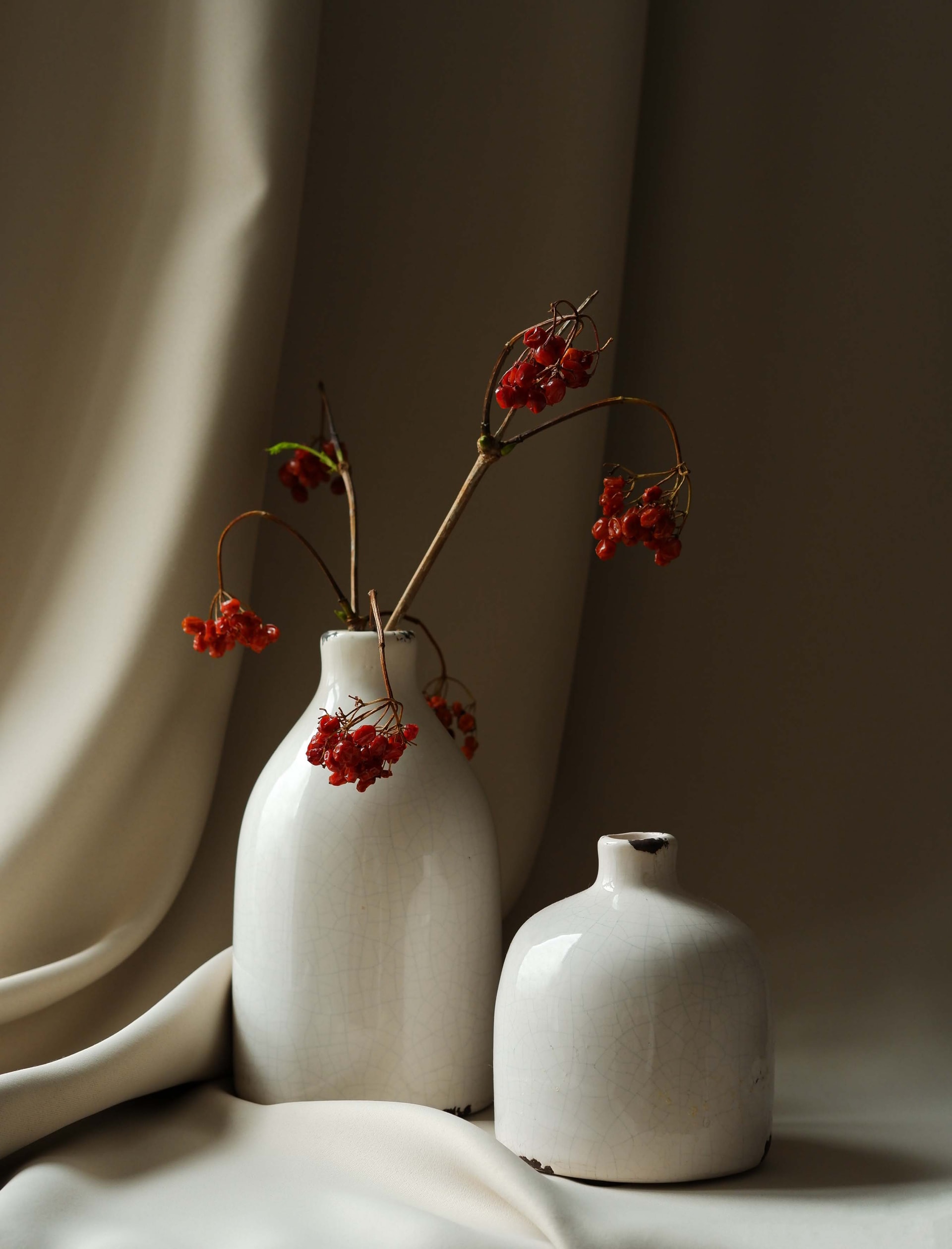
Pay careful attention to the direction of the light, too. Direct front light rarely looks good in still life photography; it’s too bold and too flat. Instead, I recommend sidelight, which will add plenty of depth and dimension to your subjects. Another option is partial backlighting (and you can always try this as part of a two-light setup, with one light providing sidelight and the other providing partial backlighting).
Here’s an image that I captured using partial backlighting:

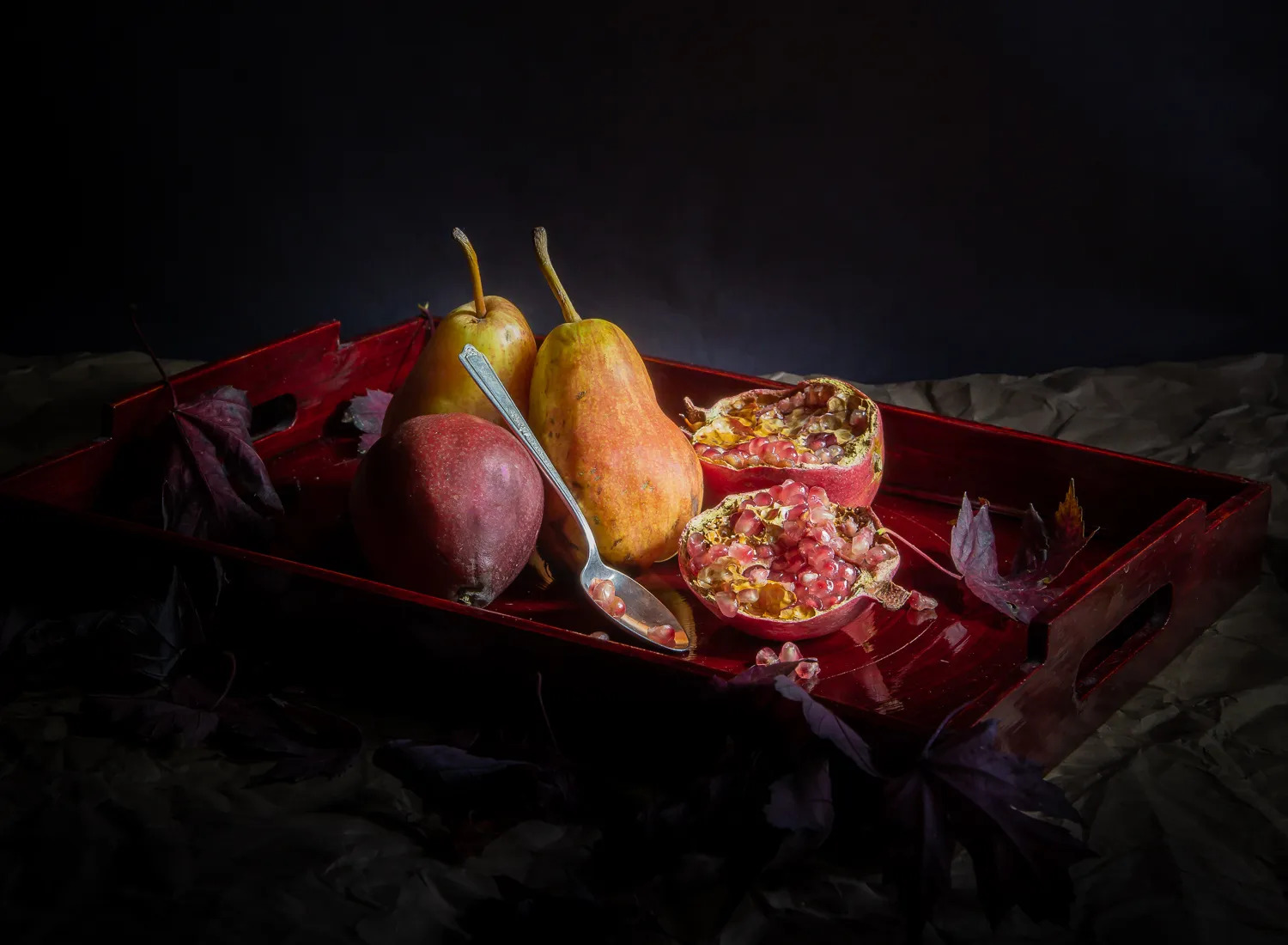
And here’s a second image, which features strong backlighting from the right-hand corner:

Really, I’d encourage you to experiment with many light sources and directions. If you’re not getting a great shot, try another angle or test a new light modifier. You never know what you’ll create! Read More…