7 Artists of German Expressionism You Should Know
-
 Loading...
 - Finn Meijer
- 02 Jan 2025
- 56 Views
- 0 Like
- 0 Comment
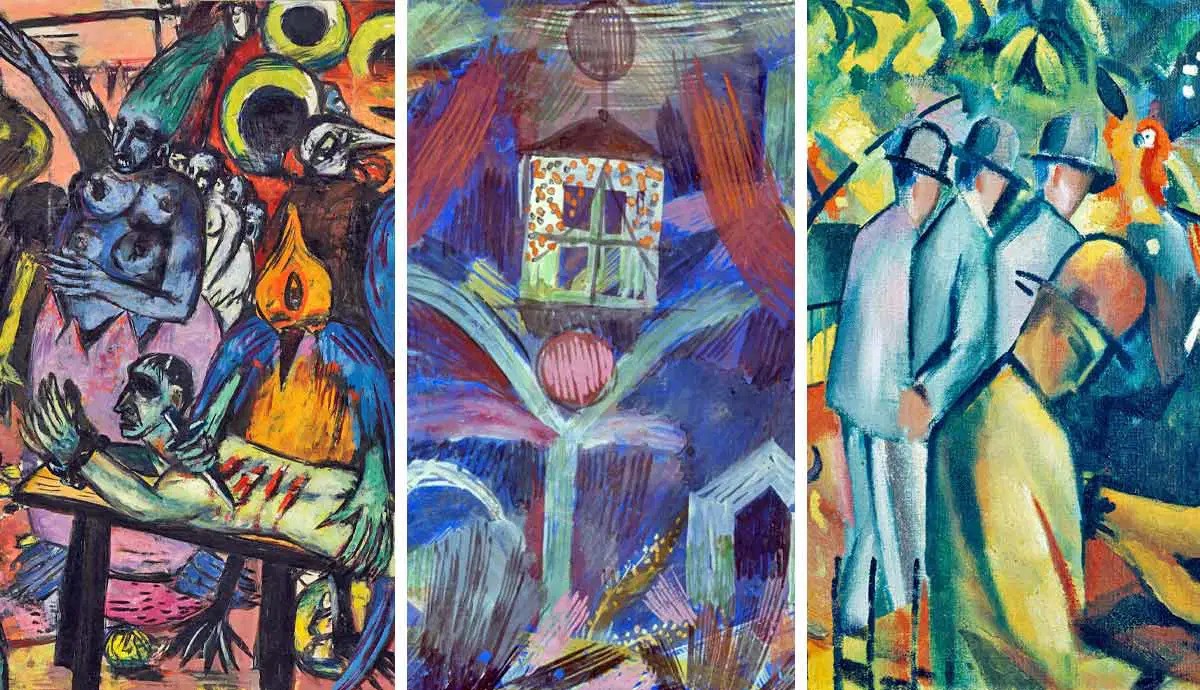
The artists of German Expressionism preferred subjective emotions to the strict academic tradition, depicting modern cities, faraway lands, and everyday scenes. This movement dominated the German artistic scene in the years leading up to the Nazis' rise to power, rejecting traditional standards of academic painting in favor of emotional expression. While the German Expressionists were not a cohesive group, their approach to art significantly influenced other creative domains, including silent film. Many faced the horrors of World War I, and others were persecuted by the Nazis. Here are seven key figures of this influential movement:
1. Ernst Ludwig Kirchner
Ernst Ludwig Kirchner is often regarded as the most iconic figure of German Expressionism, sometimes referred to as the "German Picasso." Initially trained in architecture, Kirchner shifted to fine arts, where his Expressionist paintings vividly depict the urban German metropolis. His style is characterized by distorted forms and perspectives, evoking feelings of unease and anxiety. Influenced by African sculpture, Kirchner's work was labeled "degenerate" by the Nazis, leading to the revocation of his memberships in art academies and the destruction of many of his works. Tragically, he took his own life in 1938.

2. Max Beckmann
Max Beckmann emerged as a prominent artist after World War I, often positioned at the intersection of Expressionism and the New Objectivity Movement. He rejected categorization, focusing instead on grotesque and distressing depictions of reality. His experiences as a hospital assistant during the war profoundly impacted his work, leading him to explore themes of violence, suffering, and decadence. Despite his modern techniques, Beckmann's art reflects a connection to German medieval traditions.

3. Franz Marc
Franz Marc, influenced by his father's artistic background and the works of Vincent van Gogh, is known for his vibrant depictions of animals, particularly horses. He was fascinated by color theories and the spiritual symbolism of tones. Drafted into the German army in 1914, Marc used his artistic skills for military camouflage. Unfortunately, he was killed in the Battle of Verdun in 1916, just days before he was to be removed from the battlefield for safety. His poignant painting, "Fate of the Animals," serves as a haunting premonition of war and suffering.

4. Paul Klee
Paul Klee was a prolific artist who worked at the crossroads of Expressionism, Cubism, and Surrealism. His innovative techniques included layering oil paint over watercolor and experimenting with color and form. Klee's philosophical approach to art set him apart from other Expressionists, as he meticulously balanced each element in his compositions. A pivotal moment in his career came during a trip to Tunisia in 1914, where he discovered the interplay between color and space. Klee also had a significant teaching career, becoming a notable mentor at the Bauhaus.

5. Emil Nolde
Emil Nolde was a celebrated German Expressionist known for his vibrant use of color and diverse subject matter. He traveled extensively, documenting his experiences in non-Western cultures, and criticized German colonialism in his writings. However, Nolde's political views were complex; he became a supporter of the Nazi party in the 1920s and sought to align his work with the regime's ideals. After falling out of favor with Hitler, he attempted to portray himself as a victim of the regime post-World War II, reestablishing his place in the European art scene.

6. August Macke
August Macke had a brief but impactful artistic career, creating joyful and colorful cityscapes that contrasted with the darker themes of his contemporaries. His works often featured his wife, Elisabeth, and reflected his emotional impressions of reality. Macke's travels to Tunisia with Paul Klee inspired many sketches, but he was drafted into the army shortly after the war began and was killed in combat in 1914. His wife played a crucial role in preserving his legacy after his untimely death.

7. Gabriele Münter
Gabriele Münter's contributions to German Expressionism are often overshadowed by her relationship with Wassily Kandinsky. A versatile artist, Münter experimented with various forms and techniques, drawing inspiration from sources as diverse as children's art and traditional Bavarian glass painting. She co-founded the Expressionist group Der Blaue Reiter (The Blue Rider) with Kandinsky and Franz Marc, focusing on the spiritual potential of color and composition. During World War II, Münter risked her life to hide the works of herself and her fellow artists from the Nazis.

These seven artists played pivotal roles in shaping the German Expressionist movement, each contributing unique perspectives and styles that continue to resonate in the art world today.