A Detailed Guide To 21+ Types Of Korean Noodles 2022
-
 Loading...
 - Akinari Sato
- 28 Apr 2022
- 308 Views
- 0 Like
- 0 Comment
In this informative article, I will show you all information about the most delicious varieties of Korean noodles, including the ingredients, flavors, ways of serving, and a lot more useful information. I bet that you will be fascinated by their distinctive features.
23 Amazingly Delicious Types Of Korean Noodles
Korean noodles are classified into several categories. Some are warm, some are cold, and some are served as side dishes. Let’s learn everything about them in the subsections below.
All Types Of Korean Noodles Explained
Before talking about noodle dishes, I want to provide more information about the type of Korean noodles used. Check them out! You may need some of them for your next Korean noodle recipe.
1. Dangmyeon
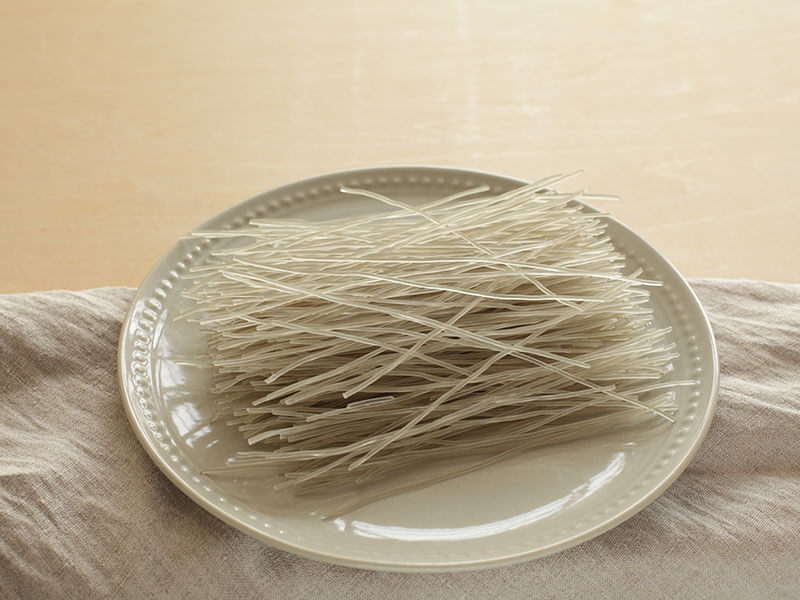
Dangmyeon is also called “cellophane noodles”, “dangmyun”, and “tang myun”. It consists of sweet potato starch. You can purchase it in the dried form, soak it, and add it to stir-fried dishes and soups.
This type of noodle has a brownish-gray color, thick shape, and is crunchy when uncooked. However, it becomes chewy and semi-transparent after cooking.
Korean people use it to make Japchae, a very famous noodle dish consisting of beef, vegetables, sesame oil, soy sauce, and sugar.
2. Cheonsachae
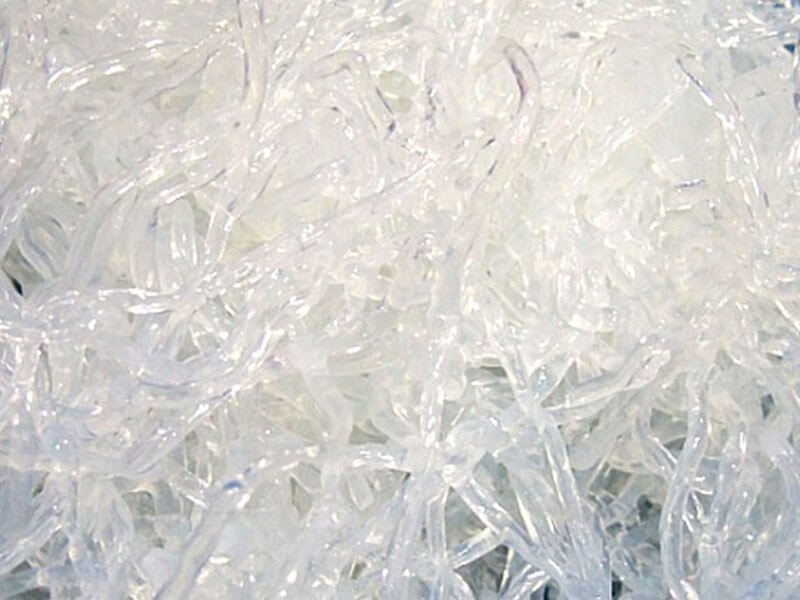
People make this crunchy noodle with the jelly-like extract of steamed kelp. No grain flour or starch is present.
It is particularly low in calories and carbohydrates and does not contain any gluten, cholesterol, or fat. Therefore, it is very popular among people concerned about their health.
People often use it to replace rice and pasta. They make soups and stir-fried dishes. You can use it to make salads or serve it with Saengseon Hoe (sliced raw fish). It can absorb the flavor of other ingredients.
You can eat Cheonsachae raw or cook it in water with spices. If you stir fry it, add it to the dish when you nearly finish cooking it. Make sure that you rinse it beforehand.
This Cheonsachae salad recipe is a healthy, refreshing, and tasty choice.
3. Dotori Guksu
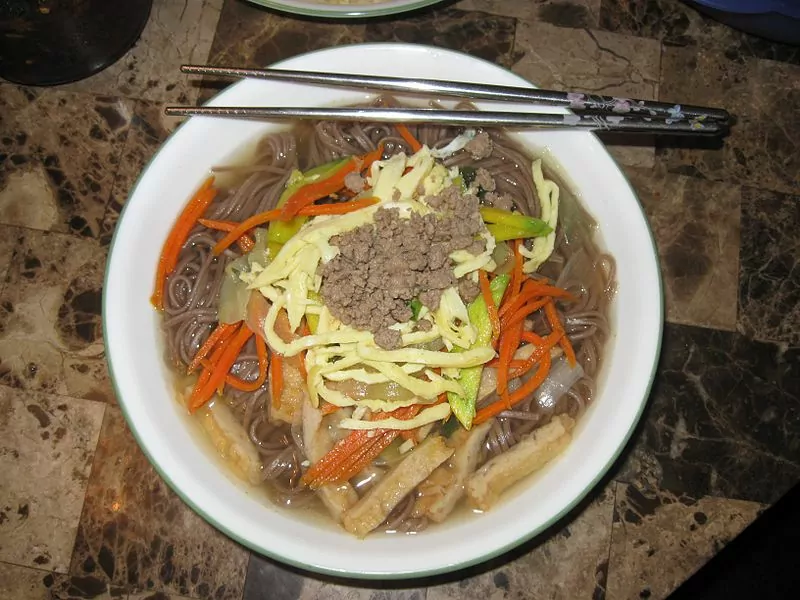
Dotori guksu comprise acorn starch or flour, grain-based flour, and salt. The acorn comes from red or white oak.
There are 2 varieties of Dotori Guksu, which are flour-based and starch-based. The flour-based version is also called “acorn soba noodles”. It has a thick shape, just like spaghetti. People use it to make warm and cold dishes.
The starch-based variety normally contains acorn starch, rice, potatoes, wheat flour, and arrowroot starch. They have a chewy and elastic texture when cooked. Uncooked Dotori Guksu’s thickness is about 1-1.2 mm in diameter. It looks just like brown plastic threads.
7 Warm Korean Noodle Dishes To Stay Cozy
If you are seeking a warm and hearty dish to enjoy on cold winter nights, check out these warm Korean noodles. Give them a try, and they will become your favorite dishes.
1. Janchi Guksu (Banquet Noodles)
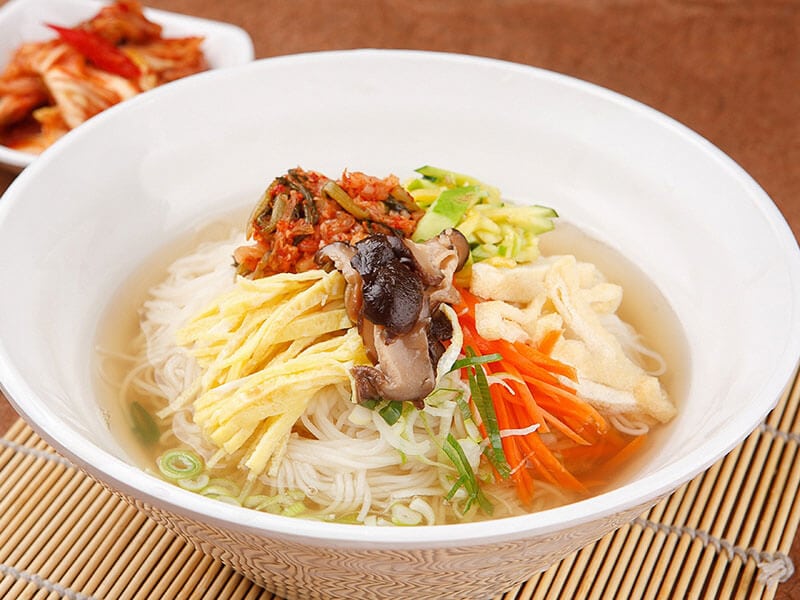
Korean people enjoy Janchi Guksu at special events such as weddings and birthdays. This noodle dish has an essential role in the cuisine of Korea. It represents longevity. in
Janchi means “banquet,” and Guksu means “noodles” in its name. It features Somyeon noodles in a beef and kelp broth. The broth is light and very clear.
The toppings for Janchi Guksu are often Yangnyeomjang, sliced zucchini, and fried eggs. It goes best with a mouth-watering salad for autumn.
Yangnyeomjang is a delicious dipping sauce consisting of sesame oil, chili pepper powder, Ganjang, and scallions.
2. Jjamppong (Spicy Mixed-Up Noodle Soup)
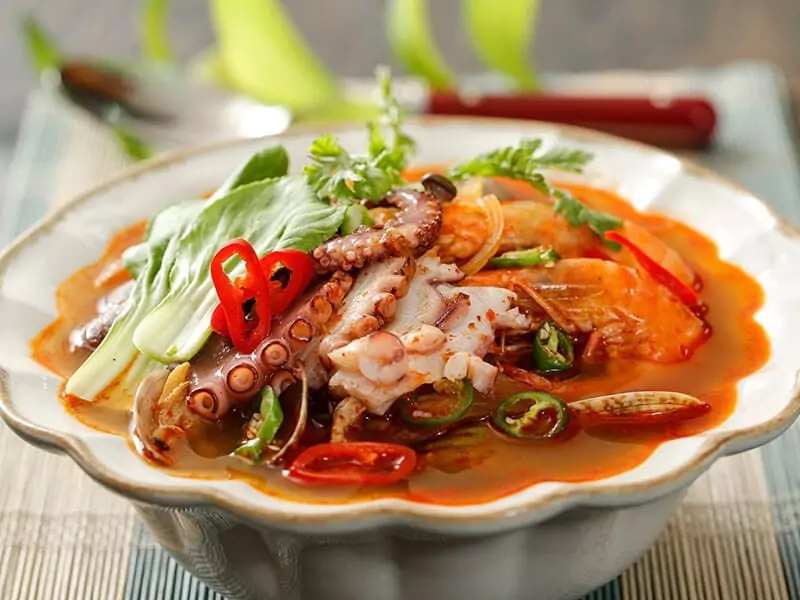
This noodle has an exciting history. Although it came from ChÇŽomÇŽmiàn, a Chinese dish, its name is derived from a Japanese noodle called Chanpon. Korean people adapted the recipe and changed it to “Jjamppong”.
Jjamppong is a spicy noodle consisting of seafood or pork. It has an attractive red color thanks to Gochugaru, a type of Korean chili powder. In addition, it also has vegetables, such as garlic, Korean zucchini, and cabbages.
Jjamppong also has the stir-fried version. People call it pork back-bone Jjampong. Gochu Jjampong is a spicier version that uses Cheongyang chili pepper. If you want more seafood, you can try Samsun Jjampong. It is more expensive than other varieties.
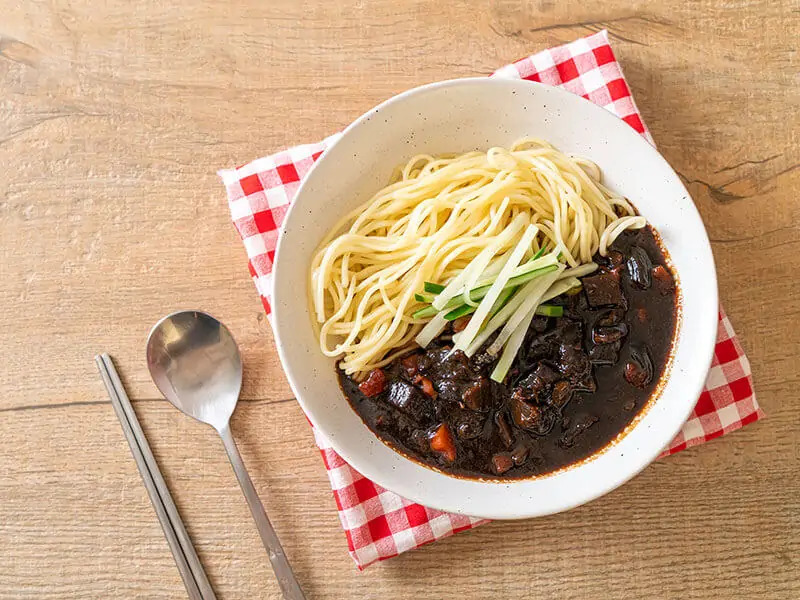
3. Jjajangmyeon (Black Bean Noodles)
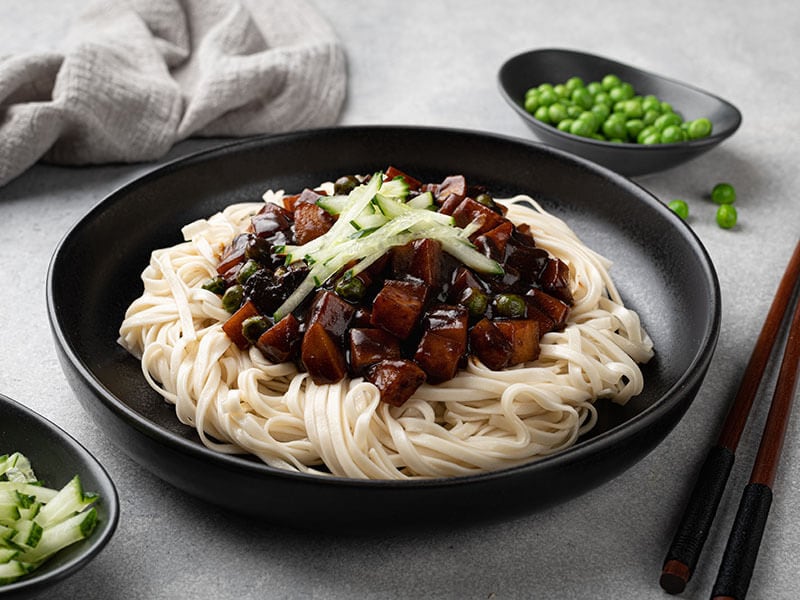
Perhaps Jjajangmyeon is one of the most famous and common Korean dishes. People love it so much that they made the instant noodle version.
Jjajangmyeon is derived from Zhájiàngmiàn, a variety of Chinese noodle originally coming from the North of China.
The noodles for it are wheat-based, similar to Japanese udon noodles. This noodle has a classic black color from black bean paste, oyster sauce, and soy sauce.
The typical toppings for Jjajangmyeon are chopped pork, boiled eggs, and Danmuji (pickled radish). Read More…