A Life in Sculpture Art: The Tragic Beauty of Vietnamese Artist Nguyen Nhu Y
-
 Loading...
 - Bulan Susilo
- 20 Jan 2025
- 53 Views
- 0 Like
- 0 Comment
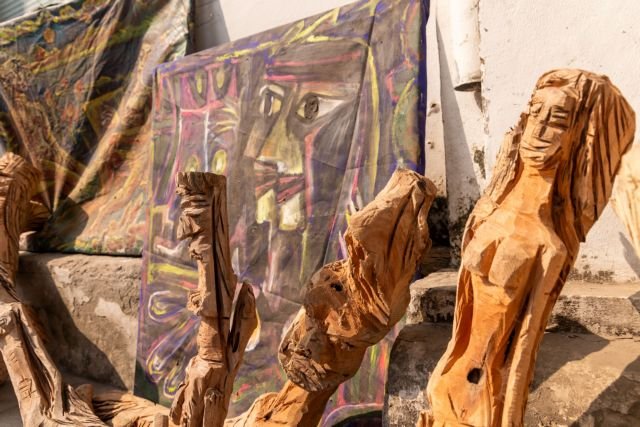
The art of Nguyen Nhu Y is a profound reflection of his life experiences, steeped in themes of love, loss, and deep grief. His works, displayed prominently at the Vietnam University of Fine Arts on Yết Kiêu Street in Hanoi, showcase a blend of large paintings and wooden sculptures that resonate with raw emotion and personal narrative.
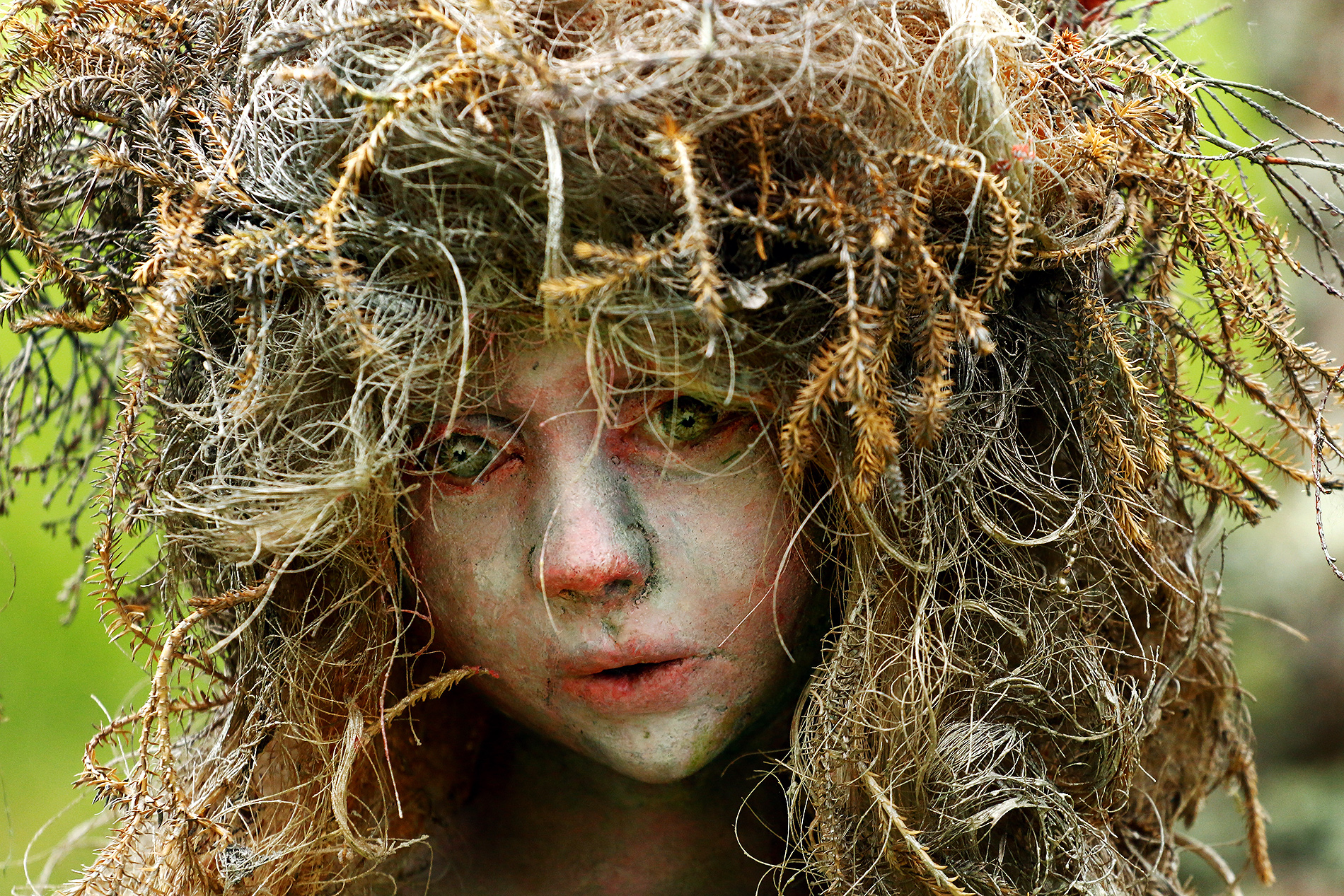
Nguyen Nhu Y’s sculptures, often made from chipped wood, symbolize both fragility and resilience, mirroring the artist's own journey through personal tragedy. His art captures the essence of human emotion, whether it’s the tender embrace of lovers or the solitude of a single figure. Amidst scenes of apparent happiness, ghostly figures often lurk, visually representing the underlying pain that shadows both his life and his creations. As Y himself reflects, “A picture is more appealing than reality,” suggesting that his art serves as a lens through which to explore deeper truths.
Y’s artistic expression is deeply rooted in his experiences of love and loss. Known for his instinctive and unrestrained character, he often centers his work around the themes of men and women, with children, animals, and supernatural elements appearing as secondary figures. He describes his focus on love as essential for the survival of humanity, portraying the joy of life while acknowledging the pain that often accompanies it.
His life has been marked by intense relationships, including a college romance that became an obsession. A friend, Hùng Cọ, recalls Y’s devotion to a woman he loved deeply, even running 36 kilometers to see her. However, the relationship ended bitterly, leading Y into a profound depression that caused him to take two years off from school.
After this heartbreak, Y found solace with another woman who suffered from the effects of Agent Orange, a toxic herbicide used during the Vietnam War. Despite societal judgment, he cared for her deeply, but their happiness was short-lived when she vanished, leaving him to wander the city in despair. A subsequent car accident resulted in the loss of his leg, compounding his grief and sense of loss.
Despite the hardships he has faced, Y remains dedicated to his art, prioritizing it over material wealth. Hùng Cọ describes him as carefree, spending his money freely and dealing with the consequences later. This attitude, combined with his artistic talent, has garnered him unwavering support from his community. His professor, renowned art critic Phan Cẩm Thượng, played a crucial role in encouraging Y to return to art after his first heartbreak, while friends and family have provided emotional and financial support.
In 2012, this support culminated in a solo exhibition featuring 70 of Y’s works, organized by devoted collector Phạm Đức Sĩ. This event marked a significant moment in Y’s artistic journey, showcasing his unique style and emotional depth.
Y’s art, characterized by its raw emotionality and unconventional style, has received both praise and misunderstanding. His depictions of Thánh Gióng (Saint Gióng), a legendary figure in Vietnamese folklore, have been particularly noted for their uniqueness. Critics have remarked on the captivating yet unsettling quality of his work, which conveys unfiltered emotion.
However, questions about long-term recognition linger. While some view the purchase of his art as an act of charity, others believe in its intrinsic value. An anonymous buyer’s unfinished remark, “Just buy it, someday, it will be worth…,” encapsulates the uncertainty surrounding Y’s recognition in the art world.
As Y’s health has declined, he has shifted his focus from sculpting to painting, spending most of his time creating works that still reflect a primal instinct for happiness. His later pieces often depict couples in passionate embraces, a testament to his enduring longing for connection and joy.
Nguyen Nhu Y’s life and art are intertwined, each reflecting the other’s complexities. The faded paintings on the cracked walls of the Fine Arts University serve as poignant reminders of the fleeting nature of time and the precariousness of artistic recognition. Yet, among those who know and love Y and his work, there remains a deep hope that his powerful and evocative art will endure, capturing the essence of human experience and emotion for generations to come. Through his sculptures and paintings, Y continues to tell a story of resilience, love, and the tragic beauty of life.