Air Canada Flight Skids Down Runway After Hard Landing, Passengers See Flames
-
 Loading...
 - Aharon Gamal
- 31 Dec 2024
- 132 Views
- 0 Like
- 0 Comment
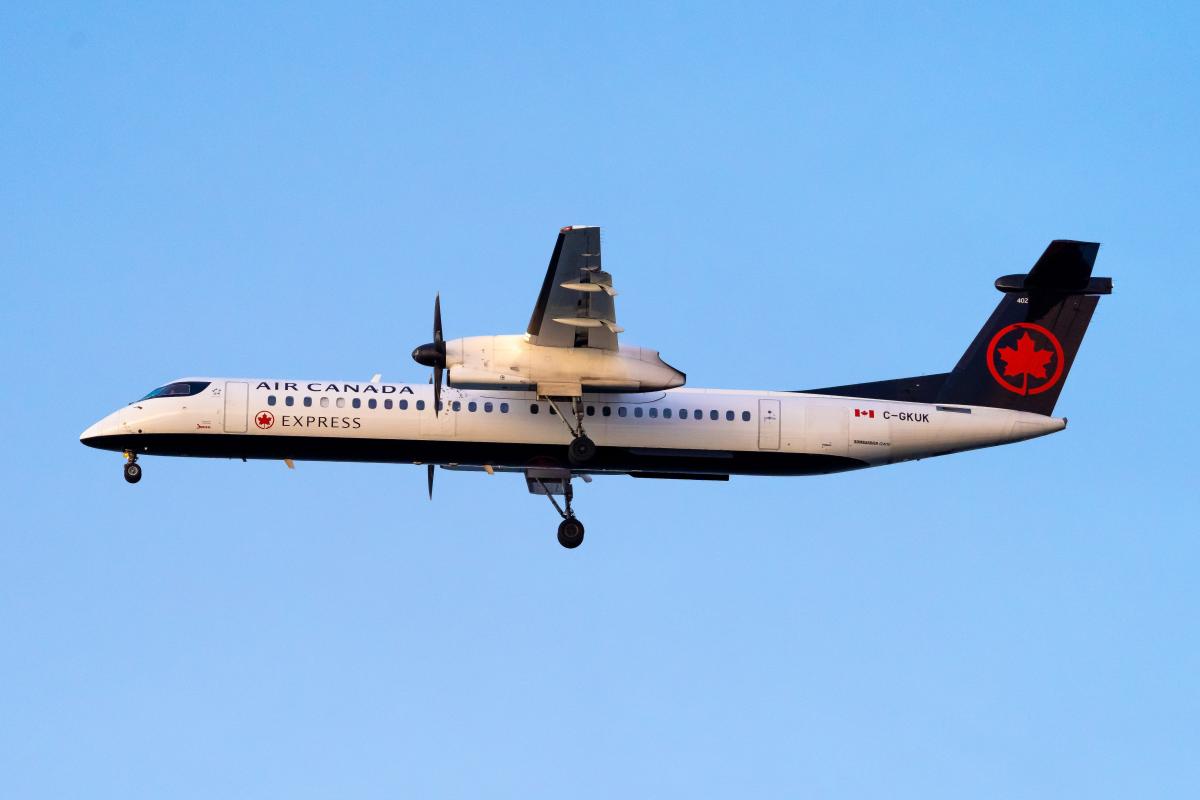
An Air Canada flight experienced a harrowing incident on Saturday night when it made a "hard landing," causing the aircraft to skid down the runway and partially catch fire, filling the cabin with smoke. The flight, designated as Flight 2259, was operated by regional partner PAL Airlines and had departed from St. John's International Airport in Newfoundland, bound for Halifax Stanfield International Airport in Nova Scotia. There were 73 passengers on board at the time of the incident.
Upon arrival, the De Havilland DHC-8-402 encountered what officials described as a "suspected landing gear issue." An Air Canada spokesperson stated that the exact cause of the issue is currently unknown, and an investigation will be conducted by the Transportation Safety Board of Canada (TSB), along with Air Canada and PAL Airlines.
One passenger, Nikki Valentine, recounted her experience to CBC News, describing how the plane landed at an angle to the left. She reported hearing a sound that resembled a crash as the left wing made contact with the pavement. "The plane shook quite a bit, and we started seeing fire on the left side of the plane, and smoke started coming in the windows," Valentine said.
Following the hard landing, passengers and crew were evacuated from the aircraft. Due to the situation, the plane was unable to reach the terminal, and passengers were offloaded using a bus. Fortunately, no injuries were reported, although Air Canada acknowledged that the incident was unsettling for those on board and expressed their commitment to assisting affected customers.
The incident resulted in the temporary closure of the airfield for approximately 90 minutes. Airline crew members worked to unload the cabin and check bags to reunite them with the passengers. TSB investigators arrived at the scene on Sunday to move the aircraft to a safe location for a technical examination, focusing particularly on the left landing gear. The investigation will also consider human factors, weather conditions, and the maintenance history of the aircraft and airline operators.
This incident occurred just a day before a separate aviation tragedy, where a Jeju Air flight crashed at Muan International Airport, resulting in the deaths of all but two of the 181 people on board. While the exact cause of that accident is still under investigation, aviation experts have emphasized that deadly airline incidents are "extremely rare."
"Commercial aviation statistically remains the safest form of transportation," stated airline industry analyst Henry Harteveldt. He added that the global airline industry cooperates extensively on best practices and safety-related matters, underscoring the commitment to maintaining high safety standards in air travel.