Amazon cloud forests need protection (commentary)
-
 Loading...
 - Venita Mitchell
- 26 Aug 2022
- 60 Views
- 0 Like
- 0 Comment
If there is an ecosystem that captures my imagination, it is the cloud forests, or perhaps better called, “the forests of the clouds.” Walking underneath their damp and dark canopy brimming with colorful orchids and bromeliads, you enter an enchanted world, as if at any minute a green dwarf could surprise you from behind a rock. Cloud forests’ extraordinary colors shine in shimmering shades of fluorescent hot pinks, dark blues, bright purples, and chilling reds. There, hummingbirds seem to be more abundant than bees, sometimes buzzing so close as if wanting to rest on your head. And best of all, there are no mosquitoes!
After 40 years working in tropical forests, I chose them as my favorite type. However, these forests are facing enormous challenges, and not many are aware of their importance, nor have experienced their magic. This is an account of what those cloud forests are, how I see them, and why they matter, in the face of our changing world.


The Cloud Catchers
For many the Amazon brings to mind a vast extension of a uniform forest, a green carpet interrupted by wide meandering rivers. But at a closer look, besides its typical tall rainforests, the Amazon is a mixture of many ecosystems, including mountain forests, savannas, dry forests, single-species forests, wetlands, and many other types of vegetation. Hence, it is a mistake to treat the Amazon as a single ecological unit.
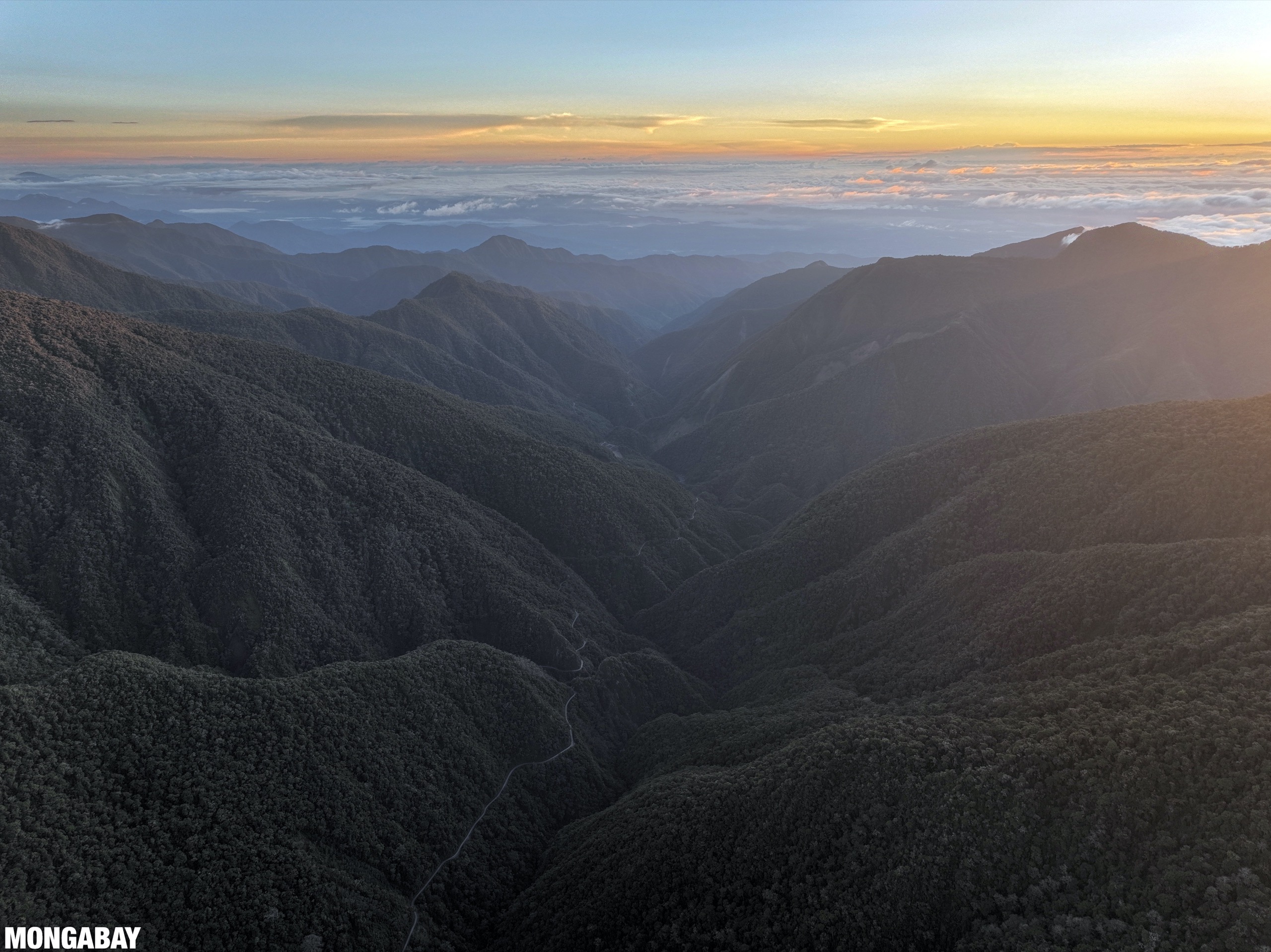
Among all, one of the most distinctive and perhaps most under-appreciated forest types are those that thrive in steep mountains, closer to the snowy peaks of the Andes, the Amazonian cloud forests. Running along eastern Colombia, Ecuador, Peru, and Bolivia, those forests are ecologically very different. Fragile, endangered, and extremely biodiverse, they are only recently becoming understood and appreciated. Our efforts to mitigate climate change and prevent further major losses of biodiversity require paying particular attention to them.

Starting at 4000 meters above sea level, cloud forest trees carry a heavy load of epiphytes that, besides giving them a peculiar look, “harvest” water from the clouds. Clouds that originated thousands of kilometers away, in the Atlantic Ocean, and after several iterations of evaporation, condensation and precipitation, finally hit the giant forested wall that is the eastern side of the Andes mountains. It is from there that the waters start their return to the ocean, flowing down the Andes through myriads of rivers converging in the mighty Amazon River. Read More…