Art exhibition celebrating the beauty of trans women threatened by violent ‘facist' protests
-
 Loading...
 - Szabo Dominik
- 16 Jun 2022
- 257 Views
- 0 Like
- 0 Comment
An art exhibition highlighting the beauty of Bulgarian trans women is under threat of violence from nationalist groups.
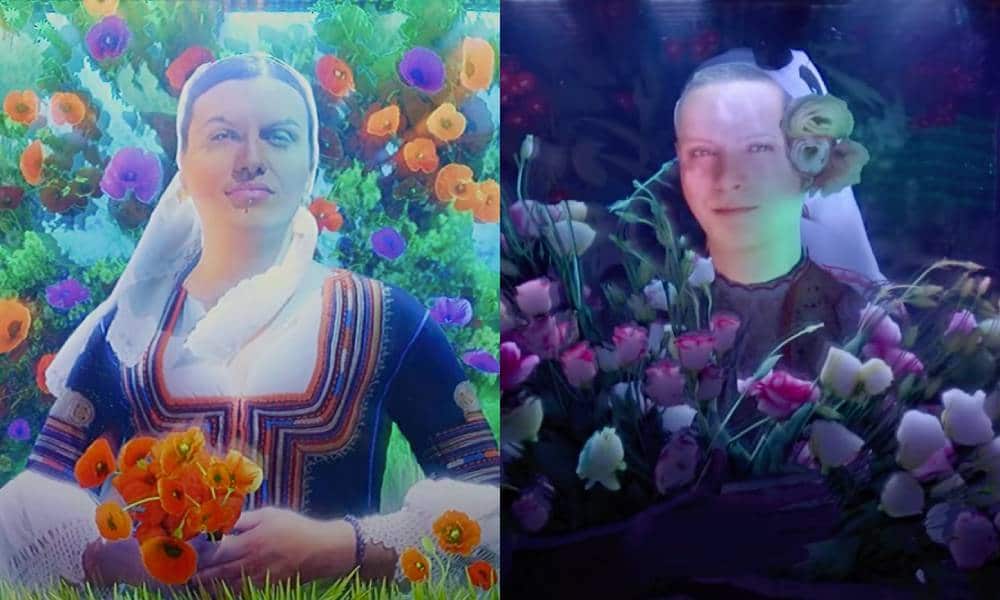
The Other Bulgarian Women features plexiglass portraits of trans women in Bulgarian national dress holding some of the country’s national flowers. The women’s faces are illuminated by kaleidoscopic lights, creating an elegant showcase of trans joy.
The show opens at The Steps gallery on Tuesday (8 March), International Women’s Day. But its opening will be marred by planned protests from nationalist groups.
Activists from the Bulgarian group Feminist Mobilisations will stage a counter-protest, standing against “facism” and for LGBT+ rights.
“Feminism means anti-fascism”, one of the organisers told PinkNews, adding that trans women in Bulgaria are “some of the most vulnerable” people in the country.
Mísho, the artist behind the exhibition, said that the inspiration for The Other Bulgarian Women came from a friend, a trans woman he and his ex-boyfriend once lived with.
“A huge part of her transition was in front of my eyes,” Mísho told PinkNews. “When you live with someone, you see them in the morning, how they feel, depression or happiness or joy – and I have experienced them from being so close to her.”
Mísho said his friend decided to “tell the world about herself” by leading the Sofia Pride Parade in 2010, which resulted in her image being published in media across the country. She was fired from her job shortly afterwards.
He reached out to the Sofia Pride Parade, which he says was the “only LGBT+ structure in Bulgaria” at the time, but was told the organisation couldn’t do anything. So Mísho decided to create a series of artworks showcasing “positive role models” for the trans community. He also looked to compare the experiences and discrimination of trans people in Bulgaria to the experiences of other minorities in the country.
Many of the women he approached were afraid to take part in the series. Ultimately, Mísho decided to do a “photographic reconstruction” of paintings by Vladimir Dimitrov, a famous Bulgarian artist who painted vivid portraits of peasant women.
Dimitrov’s work captured images of the “last images” of women living under “patriachal” rule, Misho said, “before the era of feminism” in Bulgaria. Through his research, he realised that the struggles of modern trans women not having access to society was similar to the lived reality of the women that Diminitrov painted.
“I realised that the women in Bulgaria before the era of feminism couldn’t work, she couldn’t take any part of our society and the only right she had was to stay at home – like the trans women right now in Bulgaria,” Mísho explained.
“Most of the time they’re at home because they want to prevent [themselves from becoming the victim of] violence – both physical and verbal.”
However, Mísho’s artwork has been met with outrage, with calls from far right-wing groups to ban the exhibition altogether and for the resignation of the minister for culture over a small government grant towards the artworks.
Mísho said that there is a “mantra in our society” that Bulgaria is a “very tolerant nation” because of the country’s history and geographical location, which has resulted in a “colourful” society. But there is a “majority” of people who believe the LGBT+ community – especially people in the trans community – “don’t have a right to our Bulgarian folklore”, and they “cannot touch the roses, the symbol of Bulgaria”. Read More...