Home Upload Photo Upload Videos Write a Blog Analytics Messaging Streaming Create Adverts Creators Program
Bebuzee Afghanistan Bebuzee Albania Bebuzee Algeria Bebuzee Andorra Bebuzee Angola Bebuzee Antigua and Barbuda Bebuzee Argentina Bebuzee Armenia Bebuzee Australia Bebuzee Austria Bebuzee Azerbaijan Bebuzee Bahamas Bebuzee Bahrain Bebuzee Bangladesh Bebuzee Barbados Bebuzee Belarus Bebuzee Belgium Bebuzee Belize Bebuzee Benin Bebuzee Bhutan Bebuzee Bolivia Bebuzee Bosnia and Herzegovina Bebuzee Botswana Bebuzee Brazil Bebuzee Brunei Bebuzee Bulgaria Bebuzee Burkina Faso Bebuzee Burundi Bebuzee Cabo Verde Bebuzee Cambodia Bebuzee Cameroon Bebuzee Canada Bebuzee Central African Republic Bebuzee Chad Bebuzee Chile Bebuzee China Bebuzee Colombia Bebuzee Comoros Bebuzee Costa Rica Bebuzee Côte d'Ivoire Bebuzee Croatia Bebuzee Cuba Bebuzee Cyprus Bebuzee Czech Republic Bebuzee Democratic Republic of the Congo Bebuzee Denmark Bebuzee Djibouti Bebuzee Dominica Bebuzee Dominican Republic Bebuzee Ecuador Bebuzee Egypt Bebuzee El Salvador Bebuzee Equatorial Guinea Bebuzee Eritrea Bebuzee Estonia Bebuzee Eswatini Bebuzee Ethiopia Bebuzee Fiji Bebuzee Finland Bebuzee France Bebuzee Gabon Bebuzee Gambia Bebuzee Georgia Bebuzee Germany Bebuzee Ghana Bebuzee Greece Bebuzee Grenada Bebuzee Guatemala Bebuzee Guinea Bebuzee Guinea-Bissau Bebuzee Guyana Bebuzee Haiti Bebuzee Honduras Bebuzee Hong Kong Bebuzee Hungary Bebuzee Iceland Bebuzee India Bebuzee Indonesia Bebuzee Iran Bebuzee Iraq Bebuzee Ireland Bebuzee Israel Bebuzee Italy Bebuzee Jamaica Bebuzee Japan Bebuzee Jordan Bebuzee Kazakhstan Bebuzee Kenya Bebuzee Kiribati Bebuzee Kuwait Bebuzee Kyrgyzstan Bebuzee Laos Bebuzee Latvia Bebuzee Lebanon Bebuzee Lesotho Bebuzee Liberia Bebuzee Libya Bebuzee Liechtenstein Bebuzee Lithuania Bebuzee Luxembourg Bebuzee Madagascar Bebuzee Malawi Bebuzee Malaysia Bebuzee Maldives Bebuzee Mali Bebuzee Malta Bebuzee Marshall Islands Bebuzee Mauritania Bebuzee Mauritius Bebuzee Mexico Bebuzee Micronesia Bebuzee Moldova Bebuzee Monaco Bebuzee Mongolia Bebuzee Montenegro Bebuzee Morocco Bebuzee Mozambique Bebuzee Myanmar Bebuzee Namibia Bebuzee Nauru Bebuzee Nepal Bebuzee Netherlands Bebuzee New Zealand Bebuzee Nicaragua Bebuzee Niger Bebuzee Nigeria Bebuzee North Korea Bebuzee North Macedonia Bebuzee Norway Bebuzee Oman Bebuzee Pakistan Bebuzee Palau Bebuzee Panama Bebuzee Papua New Guinea Bebuzee Paraguay Bebuzee Peru Bebuzee Philippines Bebuzee Poland Bebuzee Portugal Bebuzee Qatar Bebuzee Republic of the Congo Bebuzee Romania Bebuzee Russia Bebuzee Rwanda Bebuzee Saint Kitts and Nevis Bebuzee Saint Lucia Bebuzee Saint Vincent and the Grenadines Bebuzee Samoa Bebuzee San Marino Bebuzee São Tomé and Príncipe Bebuzee Saudi Arabia Bebuzee Senegal Bebuzee Serbia Bebuzee Seychelles Bebuzee Sierra Leone Bebuzee Singapore Bebuzee Slovakia Bebuzee Slovenia Bebuzee Solomon Islands Bebuzee Somalia Bebuzee South Africa Bebuzee South Korea Bebuzee South Sudan Bebuzee Spain Bebuzee Sri Lanka Bebuzee Sudan Bebuzee Suriname Bebuzee Sweden Bebuzee Switzerland Bebuzee Syria Bebuzee Taiwan Bebuzee Tajikistan Bebuzee Tanzania Bebuzee Thailand Bebuzee Timor-Leste Bebuzee Togo Bebuzee Tonga Bebuzee Trinidad and Tobago Bebuzee Tunisia Bebuzee Turkey Bebuzee Turkmenistan Bebuzee Tuvalu Bebuzee Uganda Bebuzee Ukraine Bebuzee United Arab Emirates Bebuzee United Kingdom Bebuzee Uruguay Bebuzee Uzbekistan Bebuzee Vanuatu Bebuzee Venezuela Bebuzee Vietnam Bebuzee World Wide Bebuzee Yemen Bebuzee Zambia Bebuzee Zimbabwe
Blog Image

‘I don't feel safe': Guatemalans denounce anti-abortion law

Women’s rights advocates and LGBTQ community members say contentious legislation puts them at ‘high risk’.

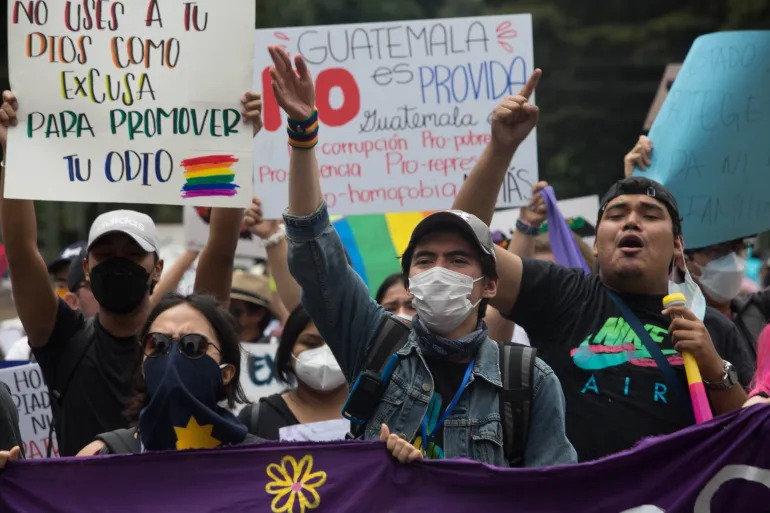
With chants of “this pro-life government doesn’t value our lives”, hundreds of people during the weekend converged on the Guatemalan Congress to show their indignation at a new law they say threatens the rights of women and members of the LGBTQ community.

On March 8, while hundreds were commemorating International Women’s Day, Guatemala’s conservative-controlled Congress approved the “Protection of Life and Family” law in a 101-8 vote. There are 160 seats in Congress.

The legislation labels LGBTQ people “abnormal” and prohibits the prosecution of anyone who carries out a hate crime against the community. It declares a family as one involving a married man and woman, outlaws same-sex marriage, and restricts the ability of schools or other educational institutions to provide inclusive sexual education outside of the nuclear family.

Abortion is already illegal in Guatemala – with the only exception being if a pregnancy threatens the mother’s life – but the law also increases the penalty for women who undergo the procedure, whether induced by a doctor or due to a miscarriage.

“With the increase in these restrictive policies and legal initiatives, they put the LGBT+ population and women in a situation of high risk,” Homero Fuentes, a 33-year-old activist with LGBTQ rights group Visibles, told Al Jazeera.

“These [initiatives and laws] allow hate speech to continue to be promoted,” he said. “This materialises in a scenario of discrimination, of violence, and to the point of [violent] crimes.” 

Conservative nation
A day after the law was approved, Guatemala’s conservative President Alejandro Giammattei held a ceremony to declare the Central American nation “the pro-life capital of Iberoamerica”. Congress had already declared March 9 “the day to celebrate family and life”.

Guatemala is a religiously conservative country that has largely resisted or undermined efforts to adopt progressive legislation.

The law was originally proposed in 2017 by Congressman Anibal Rojas Espino of the conservative VIVA Party. His proposal received a great deal of support from Evangelical Christians and was accompanied by 29,000 signatures from backers of the initiative.

Yet many elements of the current legislation – including elements that potentially threaten constitutional rights in Guatemala – led its previous supporters, including the conservative Family Matters Association, to raise concerns this time around.

Amid that widespread condemnation, including from international human rights groups, Giammattei on March 10 threatened to veto the law, urging Congress to shelve it instead of forcing him to exert that presidential power.

Ahead of Giammattei’s announcement, the opposition issued an official objection to block the legislation from reaching the presidency, arguing that it violated the country’s constitution and international conventions. The law will come under review Tuesday.

“It is a regressive law in every sense,” Ligia Hernandez, a congresswoman with the opposition Movimiento Semilla (Seed Movement), told Al Jazeera. “It affects many people in this country. They are going to use this law to criminalise women, and to incite hatred.” Read More...

Previous Post

Femicide detectives: 'Counting bodies is the best place to start'

Next Post

No Coffee, No Revolution?

Comments