Artificial intelligence uncovers lost work by titan of Spain’s ‘Golden Age’
-
 Loading...
 - Aurelia Perez
- 28 Feb 2023
- 48 Views
- 0 Like
- 0 Comment
Discovery of Lope de Vega play could lead to other important finds, researchers say
Lost or misattributed works by some of the finest writers of Spain’s Golden Age could be discovered thanks to pioneering AI technology that has been used to identify a previously unknown play by the wildly prolific dramatist, poet, sailor and priest Lope de Vega.
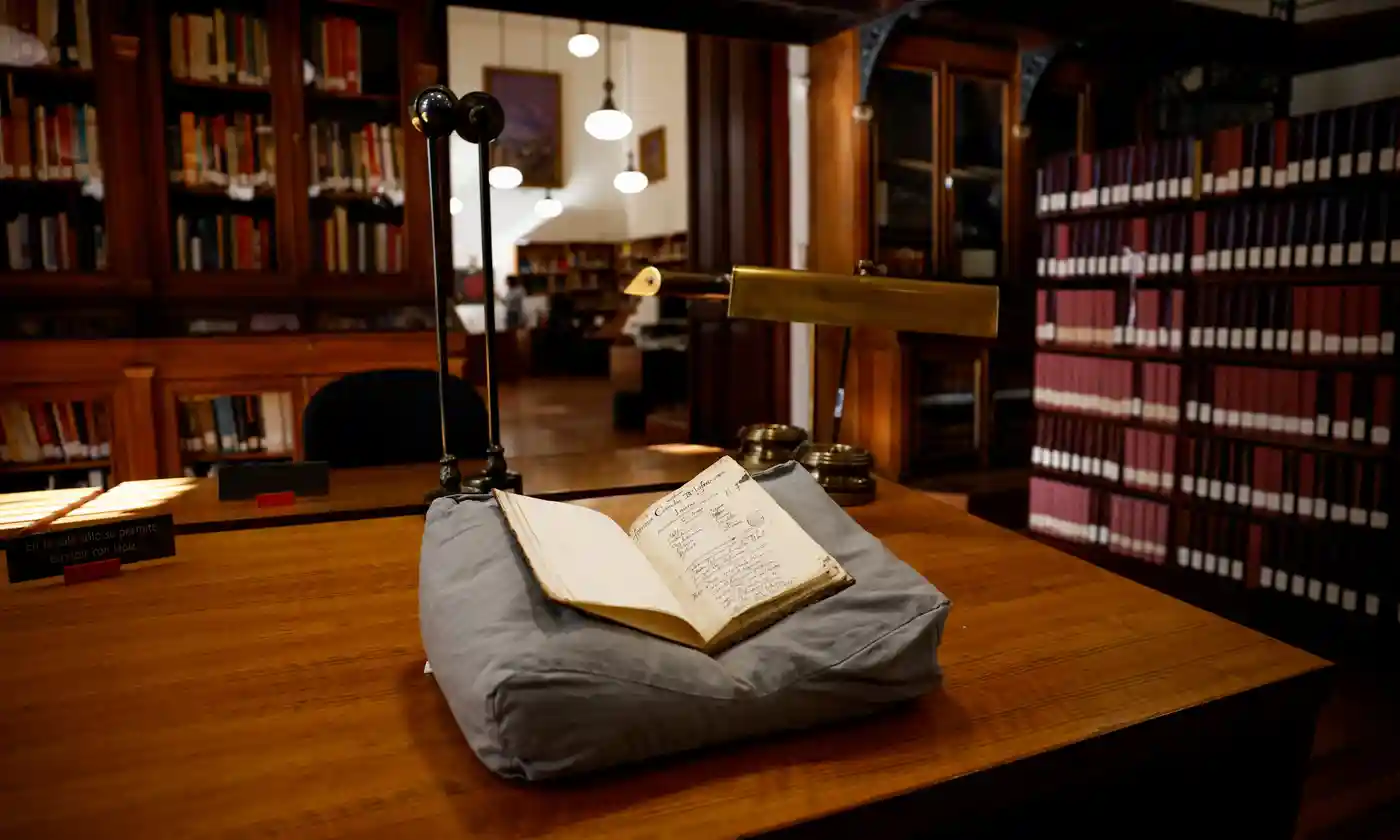
This week Spain’s National Library announced that researchers trawling its massive archive had stumbled upon and verified a play that Lope is believed to have written a few years before his death in 1635.
Like many plays of the Spanish Golden Age – the 16th- and 17th-century cultural boom that accompanied Spain’s imperial growth and which birthed masterpieces by Lope, Cervantes, Calderón and Velázquez, among many others – La francesa Laura (The Frenchwoman Laura) is a tale of love, jealousy and social hierarchy in which suspicion demands an innocent woman be sacrificed on the altar of her husband’s honour. But, unlike many similar plays of the period, Laura survives and the third act ends happily.
Equally unusual was the manner of the play’s discovery. In 2017, Germán Vega, a Golden Age literature expert at the University of Valladolid, and Álvaro Cuéllar, now at the department of Romance studies at the University of Vienna, embarked on Etso, a project that uses AI analysis to determine the authorship of Golden Age plays, many of which are anonymous or believed misattributed.
As part of the project, 1,300 plays – most of them from Spain’s National Library – were digitally transcribed using a platform, Transkribus, trained to identify and understand 3m words.
Once transcription was complete, another program, Stylo, compared their language and style with the 2,800 digitised works by 350 authors in the Etso database.
Held by the library as an 18th-century manuscript copied from earlier texts, La francesa Laura had long been catalogued as an anonymous work, but Etso’s computer quickly came to its own conclusions.
“After it had transcribed the 1,300 texts, the computer noticed that one of them was similar to 100 or so works – almost all of which were by Lope,” says Vega.
“That really grabbed our attention – we didn’t think we’d find a Lope … [But] we then found a lot of expressions in La francesa Laura that fitted with those in other Lope plays. There were things in La francesa Laura that people in other Lope plays had said or would later say.”
More traditional analysis of the play – focusing on everything from plots and character names to metre, elisions and the pronunciation of diphthongs – corroborated the computer’s theory.
Its style fits with that of Lope’s later period, while its flattering treatment of France has led the researchers to believe that it was written at a particular moment in the thirty years’ war – probably between 1628 and 1630 – when Spain and France shelved their mutual distrust in the face of a common enemy in England.
“It had never attracted much interest at the National Library,” says Vega. “If it hadn’t been for this new technology, we wouldn’t have known about it unless someone had come across it and thought ‘this reminds me of Lope’.
“Plus the title – La francesa Laura – isn’t that attractive and even though I’ve pored over lots of bibliographies, I’d never come across any reference to this play except in the National Library’s catalogue.”
This was not the first time Etso had proved its worth. Almost four years ago, Vega used the database and Stylo to conclude that The Nun Lieutenant – a 17th-century play based on the staggering true story of Catalina de Erauso, who escaped a convent to become a cross-dressing soldier in the Americas – was written by a Mexican dramatist called Juan Ruiz de Alarcón.
Vega believes AI will turn up more lost treasures as it continues to revolutionise research in his field. When he was preparing his doctoral thesis back in the mid-1980s, “any attempt to try to justify an attribution was a massive amount of work that involved reading a thousand texts, taking notes and hitting various libraries and ordering up old manuscripts”. But today, he says, programs exist that can tell you that a play is written in a style closer to a particular playwright’s than to those of hundreds of his peers.
“That’s amazing. Given there’s such an attribution problem with Golden Age theatre – so many anonymous pieces or misattributed pieces, I think this new technology means we’ll see more of this. There are still things that need to be clarified.”
While Vega concedes that La francesa Laura is hardly the pinnacle of Lope’s achievements – the so-called Phoenix of Wits is thought to have written more than 1,000 plays – the academic would still be delighted to see it performed on stage one day under the name of its true author.
“It’s very entertaining and lively and I think it could do very well in the hands of the right theatre company,” he says. “It’s not a bad play but the thing is that Lope has four or five magnificent plays – and this one just can’t compare.” Read More…