Bolivia Takes World Cup Qualifiers to New Heights: The High-Altitude Advantage
-
 Loading...
 - Eva Reilly
- 05 Sep 2024
- 64 Views
- 0 Like
- 0 Comment
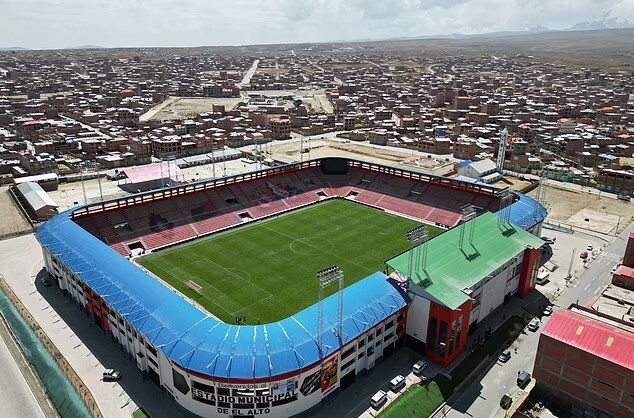
In a bold move, Bolivia has shifted its World Cup qualifiers to El Alto, a city situated at an astonishing 13,615 feet above sea level. This unprecedented decision aims to capitalize on the country's unique geography to gain an edge over opponents, particularly Venezuela, in the South American standings.
Bolivia's national team has traditionally played in La Paz, the capital city, which is already at an altitude of 11,940 feet. However, by moving to El Alto, the team hopes to exploit the even thinner air to their advantage. Coach Oscar Villegas, making his debut, has selected a squad comprising 80% of players accustomed to the high altitude, aiming to outmaneuver their opponents.
Not everyone is convinced that top-tier football should be played at such extreme elevations. In 2007, FIFA criticized matches held in La Paz, citing concerns about player safety and fairness. Although FIFA later reversed its decision, the debate continues. Research on playing football above 4,000 meters is scarce, and experts like Jesus Jimenez from the Bolivian Institute of High-Altitude Biology caution that athletes require prior evaluation and adaptation periods to perform optimally.
Despite the controversy, Bolivia is banking on the psychological impact of playing at such an extreme altitude. The phrase "You play where you live" emblazoned on the El Alto Municipal Stadium's grass serves as a reminder of the team's determination to harness their home advantage. Will this gamble pay off, or will the Venezuelan team adapt quickly to the challenging conditions? Only time will tell.
As the teams take to the field on Thursday, the world will be watching to see if Bolivia's high-altitude strategy pays dividends. Will the home team's familiarity with the thin air give them the upper hand, or will Venezuela find a way to overcome the odds? One thing is certain – this match will be a true test of endurance and skill.