Home Upload Photo Upload Videos Write a Blog Analytics Messaging Streaming Create Adverts Creators Program
Bebuzee Afghanistan Bebuzee Albania Bebuzee Algeria Bebuzee Andorra Bebuzee Angola Bebuzee Antigua and Barbuda Bebuzee Argentina Bebuzee Armenia Bebuzee Australia Bebuzee Austria Bebuzee Azerbaijan Bebuzee Bahamas Bebuzee Bahrain Bebuzee Bangladesh Bebuzee Barbados Bebuzee Belarus Bebuzee Belgium Bebuzee Belize Bebuzee Benin Bebuzee Bhutan Bebuzee Bolivia Bebuzee Bosnia and Herzegovina Bebuzee Botswana Bebuzee Brazil Bebuzee Brunei Bebuzee Bulgaria Bebuzee Burkina Faso Bebuzee Burundi Bebuzee Cabo Verde Bebuzee Cambodia Bebuzee Cameroon Bebuzee Canada Bebuzee Central African Republic Bebuzee Chad Bebuzee Chile Bebuzee China Bebuzee Colombia Bebuzee Comoros Bebuzee Costa Rica Bebuzee Côte d'Ivoire Bebuzee Croatia Bebuzee Cuba Bebuzee Cyprus Bebuzee Czech Republic Bebuzee Democratic Republic of the Congo Bebuzee Denmark Bebuzee Djibouti Bebuzee Dominica Bebuzee Dominican Republic Bebuzee Ecuador Bebuzee Egypt Bebuzee El Salvador Bebuzee Equatorial Guinea Bebuzee Eritrea Bebuzee Estonia Bebuzee Eswatini Bebuzee Ethiopia Bebuzee Fiji Bebuzee Finland Bebuzee France Bebuzee Gabon Bebuzee Gambia Bebuzee Georgia Bebuzee Germany Bebuzee Ghana Bebuzee Greece Bebuzee Grenada Bebuzee Guatemala Bebuzee Guinea Bebuzee Guinea-Bissau Bebuzee Guyana Bebuzee Haiti Bebuzee Honduras Bebuzee Hong Kong Bebuzee Hungary Bebuzee Iceland Bebuzee India Bebuzee Indonesia Bebuzee Iran Bebuzee Iraq Bebuzee Ireland Bebuzee Israel Bebuzee Italy Bebuzee Jamaica Bebuzee Japan Bebuzee Jordan Bebuzee Kazakhstan Bebuzee Kenya Bebuzee Kiribati Bebuzee Kuwait Bebuzee Kyrgyzstan Bebuzee Laos Bebuzee Latvia Bebuzee Lebanon Bebuzee Lesotho Bebuzee Liberia Bebuzee Libya Bebuzee Liechtenstein Bebuzee Lithuania Bebuzee Luxembourg Bebuzee Madagascar Bebuzee Malawi Bebuzee Malaysia Bebuzee Maldives Bebuzee Mali Bebuzee Malta Bebuzee Marshall Islands Bebuzee Mauritania Bebuzee Mauritius Bebuzee Mexico Bebuzee Micronesia Bebuzee Moldova Bebuzee Monaco Bebuzee Mongolia Bebuzee Montenegro Bebuzee Morocco Bebuzee Mozambique Bebuzee Myanmar Bebuzee Namibia Bebuzee Nauru Bebuzee Nepal Bebuzee Netherlands Bebuzee New Zealand Bebuzee Nicaragua Bebuzee Niger Bebuzee Nigeria Bebuzee North Korea Bebuzee North Macedonia Bebuzee Norway Bebuzee Oman Bebuzee Pakistan Bebuzee Palau Bebuzee Panama Bebuzee Papua New Guinea Bebuzee Paraguay Bebuzee Peru Bebuzee Philippines Bebuzee Poland Bebuzee Portugal Bebuzee Qatar Bebuzee Republic of the Congo Bebuzee Romania Bebuzee Russia Bebuzee Rwanda Bebuzee Saint Kitts and Nevis Bebuzee Saint Lucia Bebuzee Saint Vincent and the Grenadines Bebuzee Samoa Bebuzee San Marino Bebuzee São Tomé and Príncipe Bebuzee Saudi Arabia Bebuzee Senegal Bebuzee Serbia Bebuzee Seychelles Bebuzee Sierra Leone Bebuzee Singapore Bebuzee Slovakia Bebuzee Slovenia Bebuzee Solomon Islands Bebuzee Somalia Bebuzee South Africa Bebuzee South Korea Bebuzee South Sudan Bebuzee Spain Bebuzee Sri Lanka Bebuzee Sudan Bebuzee Suriname Bebuzee Sweden Bebuzee Switzerland Bebuzee Syria Bebuzee Taiwan Bebuzee Tajikistan Bebuzee Tanzania Bebuzee Thailand Bebuzee Timor-Leste Bebuzee Togo Bebuzee Tonga Bebuzee Trinidad and Tobago Bebuzee Tunisia Bebuzee Turkey Bebuzee Turkmenistan Bebuzee Tuvalu Bebuzee Uganda Bebuzee Ukraine Bebuzee United Arab Emirates Bebuzee United Kingdom Bebuzee Uruguay Bebuzee Uzbekistan Bebuzee Vanuatu Bebuzee Venezuela Bebuzee Vietnam Bebuzee World Wide Bebuzee Yemen Bebuzee Zambia Bebuzee Zimbabwe
Blog Image

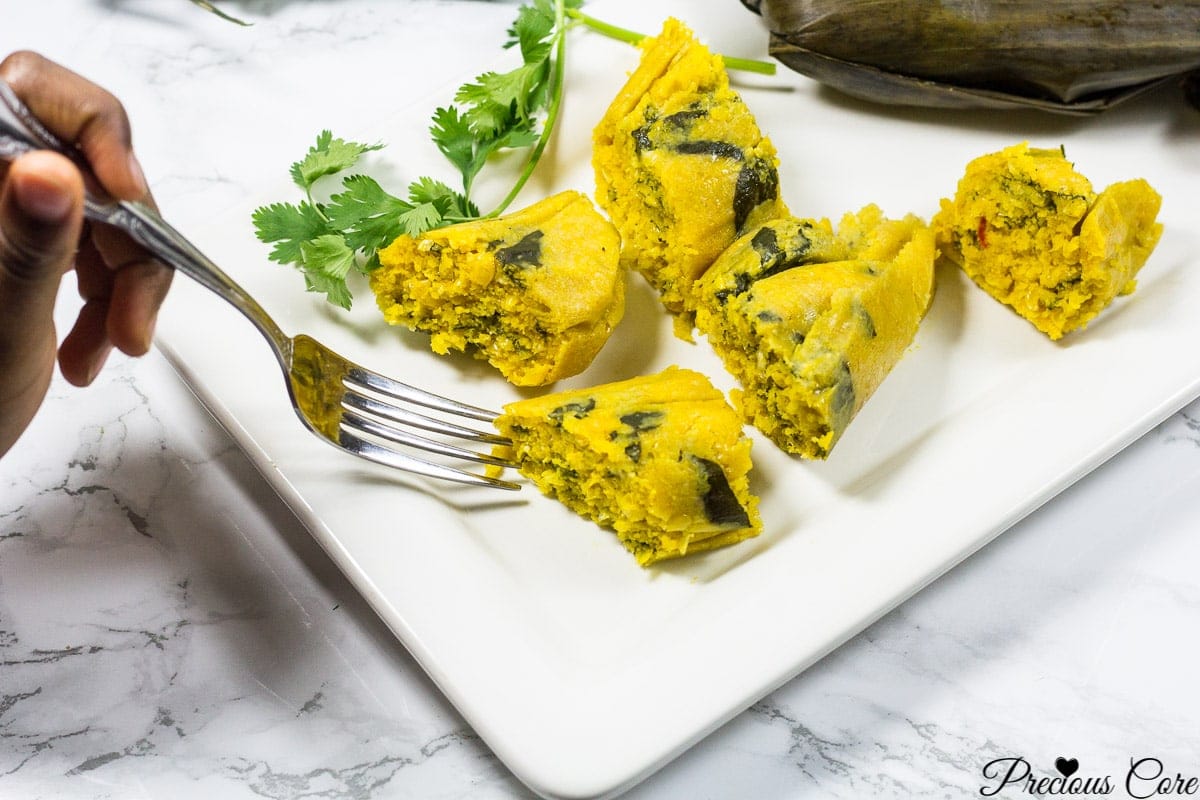
Cameroon Koki Corn

What is Koki Corn?

Koki Corn is a traditional Cameroonian meal. It is characterized by its yellow colour which comes from red palm oil and its sweet taste which comes from fresh corn.

This dish is cooked in  West Africa, predominantly in Cameroon during the rainy season because of the abundance of fresh corn.

Corn is a staple food in the West African region, and steamed corn recipes are commonly eaten.

Corn moimoi, ekoki, and okpo oka are Nigerian examples which are similar to this Cameroon recipe.

The differences between koki corn and these Nigerian dishes are that it is very simple and uses only a few ingredients.

The sweetness of the corn and the savory flavours of the added ingredients work well together to create an amazing tasting dish, which is suitable for vegetarians

Koki Corn Recipe

There are so many ways to make koki corn, but I like to keep it short, simple, and sweet. I say it is short, simple, and sweet because you can make it with only four ingredients – fresh corn, cornmeal, spinach, and palm oil.

A few notes about the ingredients…

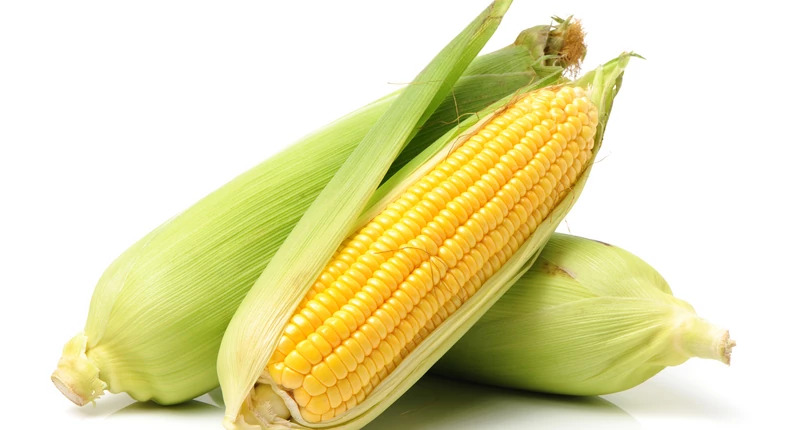
1. Fresh or frozen corn – Fresh corn on the cob is the key ingredient for koki corn. You can substitute fresh corn with frozen corn. 1 ear of medium size corn roughly equals ¾ cup of frozen corn.
2. Wrap: Corn husk or banana wraps are traditionally used for this recipe and are preferred if you can find them. If not, aluminum foil works well. If the mixture is loose, you may need to wrap it in cling film before wrapping in the foil.
The recipe is quite easy though it might be a little labor of love. All you need to do is cut some corn off the cob.

Then you coarsely grind the corn mix with some ingredients, wrap, steam and enjoy your life! Who wants to eat some Koki Corn?

You can serve this dish as a meal on its own or with a protein of your choice: chicken, meat.

KOKI CORN
Engochan Che
It is the ultimate corn dish which is sweet, savory, corny, so tasty and vegan. Koki corn is corn that is ground, mixed with ingredients then wrapped in banana leaves and cooked.
COURSE
Main Course
CUISINE
African, Cameroonian
SERVINGS
4

INGREDIENTS

4 Cups fresh corn
1 cup yellow corn meal
¾ Cup palm oil
1 cup teaspoon salt
¾ cup teaspoon salt
1 maggi
½ Onion
1 pepper
4 – 6 bananas leaves – warmed over a flame

INSTRUCTIONS

1. Pour palm oil into a skillet to warm for a few minutes (about 2-3 minutes). Do NOT bleach it.
2. Pour the corn, onion and hot pepper into a blender or food processor. Add 1/4 cup of water and blend or process into a coarsely ground paste. Note that you do not want to blend this into a fine paste. You should still be able to see bits and pieces of corn when done.
3. Pour the ground corn into a bowl, add cornmeal, the heated oil and mix well. Add salt, Maggi then mix.
4. Add in the chopped leaves and mix until well incorporated.
5. To prepare pot. Line the bottom of a pot with empty cobs of corn. This creates a base that helps prevent water from getting into the Koki Corn. Now pour about half a cup of water into the pot and bring to a gentle boil while you proceed to wrap the Koki Corn. Read More...

Previous Post

Eru Soup

Next Post

Ndomba

Comments