China’s record unemployment has some young people seeking simpler life

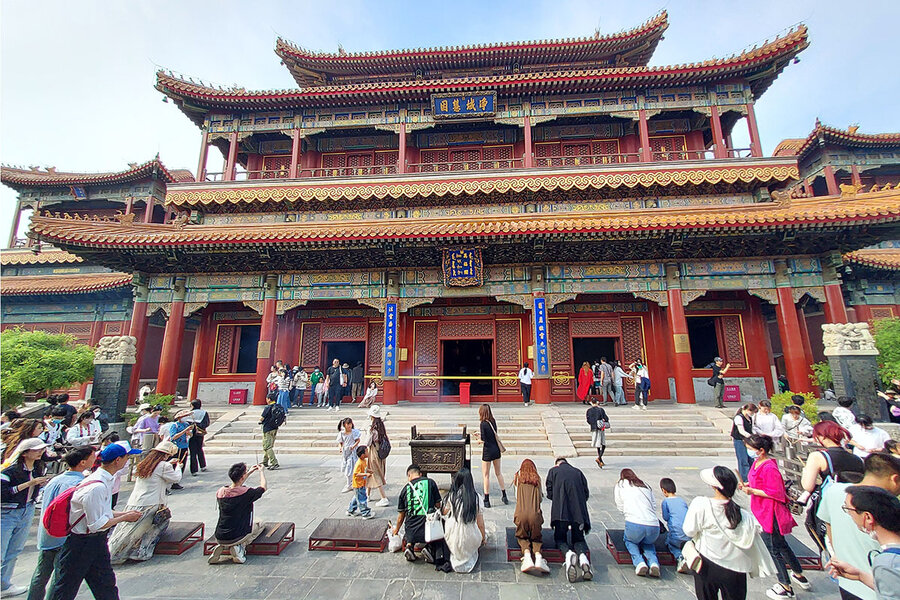
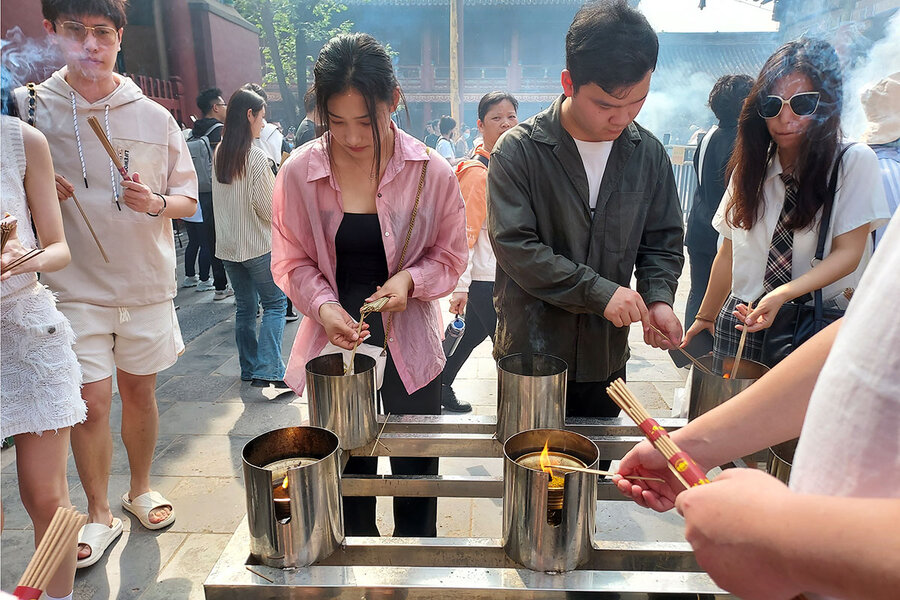
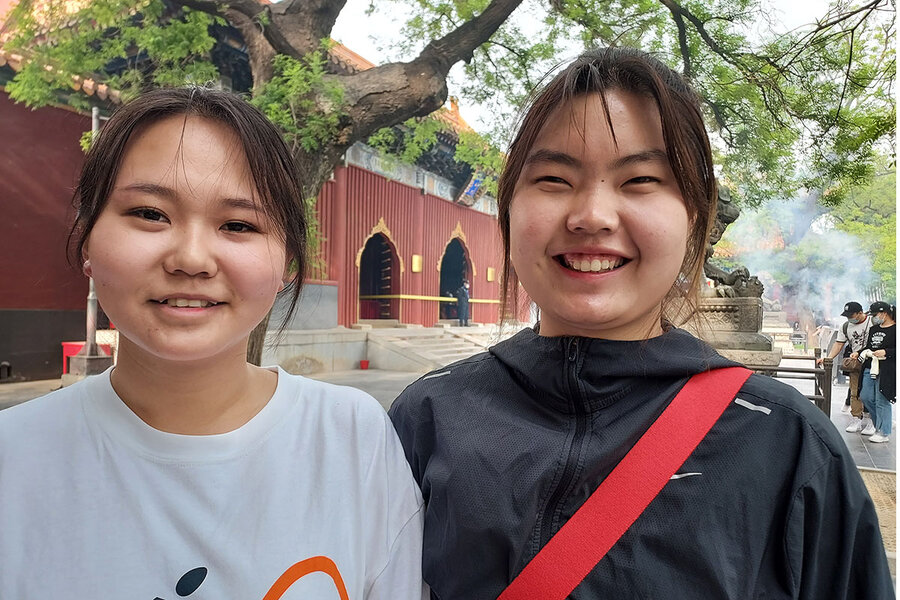
As Chinese youths raise smoldering incense sticks in their clasped hands, they gaze up at the gently smiling Buddha, silently making their wishes. With deep bows, they express their hopes for good fortune, particularly in finding employment. Yonghe Temple, an expansive Tibetan Buddhist monastery in Beijing, has become a destination for thousands of young individuals from all over the country, seeking to pray for a prosperous future.
Qian Ninan, a college student from Inner Mongolia, shares that many young people visit the temple to seek the Buddha's assistance in securing jobs. As a student of Chinese-Mongolian translation, she worries about the challenges she might face in finding employment. Thus, she made the journey to the temple during the May 1 Labor Day holiday, hoping that the blessings from the temple's numerous Buddhas would guide her career path.
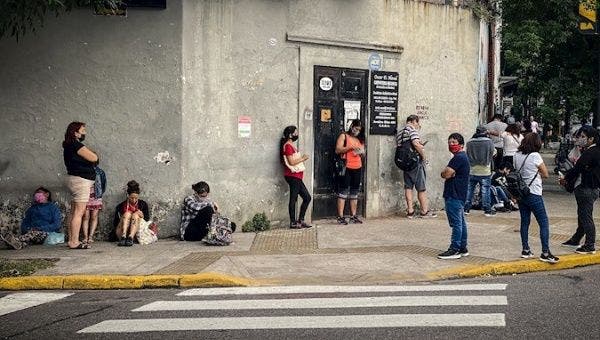
China is currently striving to revive its economy after a three-year period of strict lockdowns imposed under the "zero-COVID" policy, which concluded in December. However, the unemployment rate among Chinese youth aged 16 to 24 has soared to a record high of 20.4% last month. Simultaneously, young Chinese individuals are reevaluating the work-life balance and increasingly opting for less demanding occupations. With an additional influx of 11.6 million college graduates entering the job market this year, experts predict that the pressure will only intensify. Consequently, job seekers are actively searching for careers that align with their values, seeking both comfort and hope.
Andrew Batson, the China research director for Gavekal Dragonomics, an organization that analyzes macroeconomic and market trends in China, explains that the significant expansion of university education in China over the past few decades has resulted in an excess of young individuals competing for limited white-collar positions. However, the economy is predominantly generating blue-collar jobs, creating a mismatch between people's expectations and available opportunities.
In response to the rising unemployment and shifting attitudes among the youth, China's leadership is urging young people to redouble their efforts. They are encouraged to work harder and shoulder the "heavy responsibility of national rejuvenation," as stated in a recent commentary in People's Daily, the Communist Party's official newspaper. Top leader Xi Jinping calls upon young individuals to engage in labor in rural areas and toughen themselves through hardship, drawing from his own experience during Mao Zedong's "down-to-the-countryside" campaign in 1969. Mr. Xi was quoted on May 4 in a front-page article in People's Daily, sharing his views on the qualities of a "good youth" and emphasizing the value of struggle in their preparation for the future.
However, the atmosphere at the temple reflects a different sentiment among the youth. Seeking respite from the intense pressures of China's job market, many express a desire for a more balanced life. After offering their prayers and departing from the temple, a senior college student from Wuhan, a central city in China, shares his lack of confidence in securing a position at a major tech company, even with a computer science degree. Protecting his privacy, he refrains from revealing his name and states that he simply seeks a job that allows him more free time—a rare luxury in China's "9-9-6" work culture, which entails a grueling schedule of working from 9 a.m. to 9 p.m., six days a week. He adds that having weekends off would bring him great satisfaction.
Data from official sources indicates that Chinese youth, overall, are lowering their career aspirations. They display a greater willingness to accept lower salaries and live outside the expensive "first-tier" cities like Beijing, Shanghai, Guangzhou, and Shenzhen. A survey on employment trends among Chinese college students conducted in 2022 by the State Council, China's cabinet, reveals an increased focus on stability and the pursuit of a comfortable life. This is evident in the growing preference for positions in state-run enterprises and the public sector. The report highlights the stabilizing effect of these sectors, with over a third of state-owned enterprises and state agencies creating more job opportunities.
While economic growth and increased consumer spending will eventually generate more employment opportunities for young individuals, Mr. Batson from Gavekal Dragonomics acknowledges the uncertainty surrounding the impact on shifting youth attitudes. Zak Dychtwald, founder and CEO of the Young China Group based in Shanghai, states that people are making lifestyle choices. Older generations were willing to work 60 to 80 hours per week to improve their family's circumstances, but this younger generation prioritizes living in the present moment. Mr. Dychtwald cautions that the gravitation toward secure government jobs may result in a decline in innovation, a risk that China cannot afford.
Xie Taoyao, a freshman in college who recently visited Yonghe Temple in Beijing with her boyfriend, exemplifies these trends. She recently decided that obtaining a job after completing her engineering management degree would prove challenging. Instead, she plans to return to her hometown in Hebei Province after graduation and become a teacher. Xie believes that being closer to her parents and the convenience of her hometown will be beneficial. Her boyfriend, who hails from the same town, shares the same intention. She explains that the pressure is considerably less in smaller towns compared to the first-tier cities, a sentiment echoed by many young people she knows.
As Xie kneels before one Buddha after another at the temple, she experiences a sense of determination and hope. She describes it as a way to motivate herself, finding solace in the spiritual atmosphere of the temple.