Colombia's 'Plant Hunters' Revitalize Country's Biodiversity
-
 Loading...
 - Shane Higgins
- 12 Dec 2024
- 37 Views
- 0 Like
- 0 Comment
Colombia is one of several global biodiversity ‘darkspots,’ but local scientists are now discovering plant species on newly accessible land.
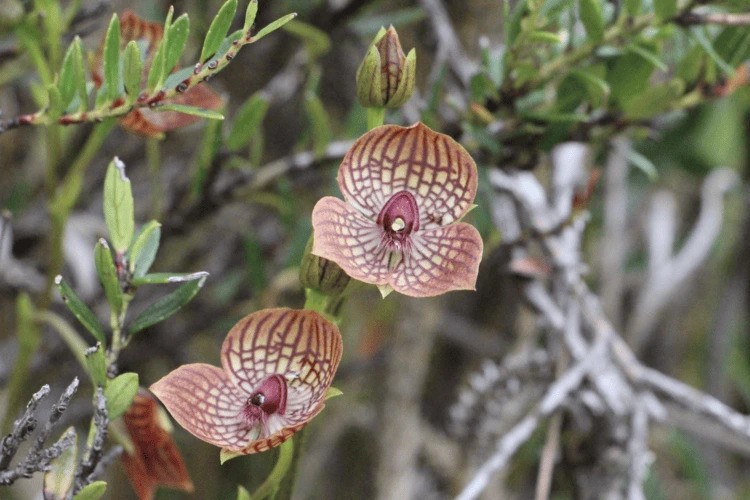
Looking at the tiny, yellow petals of the flower in front of them, Heidy Caro and Susana Arango immediately suspected they had found something special. Standing among the remnants of a Colombian oak forest in the Eastern Cordillera mountain range, they snapped photos of the plant to send to their colleague Eugenio Restrepo, a botanist at the University of Caldas. His response confirmed their suspicions: a newly discovered orchid.
Covering nearly 1.15 million square kilometres (4.3 times the size of the UK), Colombia is home to a wide variety of ecosystems that support some of the greatest biological diversity on the planet. Mangroves, beaches, and river estuaries line its Caribbean coast, while rainforests, wetlands, and savannahs stretch toward Brazil. However, it was the relatively recent rise of the Andean mountains, some 15 to 20 million years ago, that triggered the mass evolution of Colombia’s orchids.
Today, Colombia holds the greatest diversity of orchids in the world, with nearly 4,270 species identified by science. Experts believe many more remain undiscovered. New research from scientists at the Royal Botanic Gardens, Kew identifies Colombia as one of 33 global plant biodiversity ‘darkspots’ — regions that teem with plant life, thousands of which are still unknown.
This lack of knowledge poses a significant problem since an estimated three in four plants are threatened with extinction. As Kew scientist and orchid expert Oscar Pérez-Escobar explains, “If you don’t know what’s out there, you don’t know how best to preserve it.”
Identifying the number of undiscovered plant species is challenging. “In all honesty, it’s a very difficult process,” says Kiran Dhanjal-Adams, a conservationist and expert in ecological modelling. To estimate the number, Dhanjal-Adams and her colleagues at Kew analyzed known species, considering how long it took to describe them and how long until they were found elsewhere. Factors such as a plant’s range size and life form also played a role.
“Think about a tree,” she explains. “They’re big, always there, and easy to spot. Compare that to a species that appears briefly, like a daffodil, or one that grows high up in the canopy, like an orchid. If we’ve already described many orchids and trees in a region, we’re probably further along the discovery curve.”
Her research highlights six key regions for focused plant collection: New Guinea, the Philippines, Myanmar, Türkiye, Peru, and Colombia.
Knowing where to look is just the beginning. Pérez-Escobar, currently identifying a new Colombian orchid species first spotted in 2021, laughs when asked why it has taken him three years. On average, he explains, it takes 70 to 100 years to fully describe a new species. Some species remain unidentified even when they’re hiding in plain sight. “There was a case study at Kew, the Victoria boliviana, a giant waterlily species. It had been at Kew for years before it was described,” says Dhanjal-Adams.
In Colombia, a lack of funding and challenging landscapes further complicate plant discovery. Arango, a biologist from the University of Antioquia, traveled nearly 20 hours on bumpy roads to reach her study site. Once there, she and Caro navigated steep, rugged terrain that protected the old oak forest from encroaching pastures. “We faced a lot of challenges — we’re students with very limited resources,” Arango shares.
Colombian researchers have only recently gained access to many parts of the country. “We were at war until 2016,” says Pérez-Escobar, recalling his field trips to Boyacá in 2017, which required army escorts. Since the FARC peace agreement, the annual number of plant species discoveries has tripled. “There really is a before and after the agreement.”
In September, Caro and Arango published a paper on their newly discovered orchid species, Lepanthes garciarovirensis, found in the Eastern Cordillera. They are now working on describing two more species discovered nearby. “It’s a very exciting time for us,” says Arango, reflecting on the hard work and perseverance that led to these findings.
As scientists like Caro, Arango, and Pérez-Escobar continue their work, they are helping to fill the gaps in our understanding of Colombia’s rich plant life. These discoveries not only expand scientific knowledge but also play a crucial role in conserving Colombia’s ecosystems. By identifying and cataloguing new species, researchers can help protect these plants and the diverse habitats they call home.
Colombia’s ‘plant hunters’ are at the forefront of revitalising the country’s biodiversity, ensuring that its natural heritage is preserved for generations to come.