Egypt's coral reefs endangered due to climate change
-
 Loading...
 - Oliver Johnston
- 20 Dec 2021
- 430 Views
- 0 Like
- 0 Comment
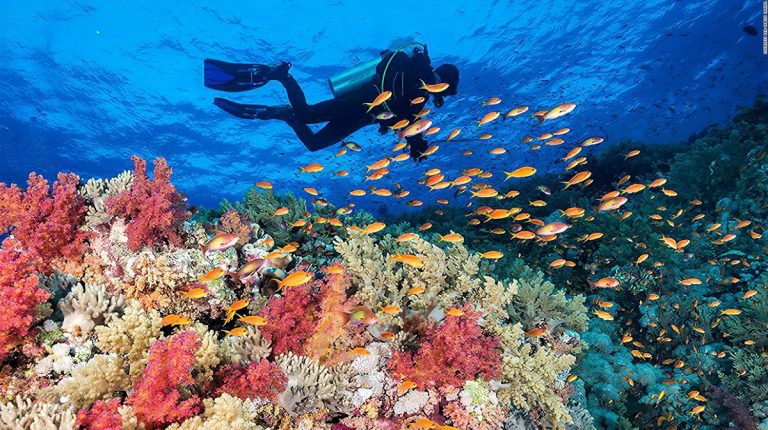
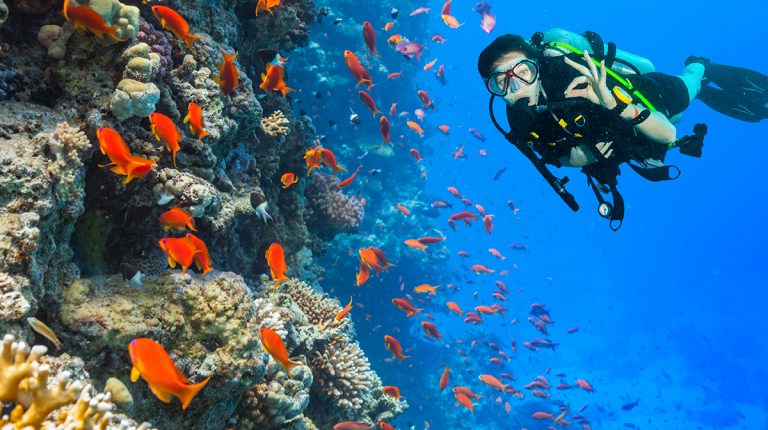
For many years the rich and diverse ecosystem of the Red Sea in Egypt, which boasts more than 1,000 species of fish, has been a major destination for lovers of water activities, such as diving, snorkelling, and glass-bottom boat trips. These activities provide Egypt with about $7bn annual revenues, of which 86% comes from coral reef tourism alone. However, scientists have expressed concern about the health of the marine environment in the Red Sea, especially coral reefs, as a report published on the sidelines of the United Nations climate negotiations, suggests they are vulnerable to the risks of climate change and rising temperatures above normal in the region. If they survive local pollution, Red Sea corals “may one day be used to re-seed parts of the world where reefs are dying,” scientists say.
Khaled Allam, an expert in the project to strengthen the organisation and management of Egypt’s natural reserves, and the former director of the Biodiversity Department of the Egyptian Ministry of Environment, explains that rising temperatures have a significant impact on the marine environment, especially coral reefs.
He told Daily News Egypt that coral reefs live and thrive in temperatures ranging between 25 °C and 40 °C, and in case the temperature exceeds this limit, the reefs are exposed to bleaching and death.
Environmental and Economic Damage
Both unsustainable human activities and climate change contribute to coral reef deterioration. Examples of unsustainable human activities include illegal and destructive fishing methods, unsustainable coastal and terrestrial developments that cause siltation and pollution in coral reef areas, and overcapacity in tourism (i.e. too many tourists), says Steve Gaines, Professor at Bren School of Environmental Science and Management, at UCSB and lead author of the study.
He told Daily News Egypt that climate change affects coral reefs as high temperatures may cause coral bleaching and mortality. Climate change also alters ocean chemistry, with ocean acidification impeding coral growth. Climate change additionally elevates coral disease risk and algal and jellyfish blooms that negatively impacts visitors’ perceptions.
Researchers warn that Egypt – among a number of other coastal countries, such as Mexico, Indonesia, Maldives, Malaysia, Australia and Thailand – faces the risks of losing more than 90% of its income from coral reef tourism if countries do not take serious measures to stem the rise in global warming emissions.
Climate change is expected to cause the elimination of 74% of coral reef habitats in Egypt by 2100, according to the most pessimistic projections, and thus the country will lose an important source of income from tourism.
Although the situation of coral reefs in Egypt is not the worst among the list of countries affected by rising temperatures in the world, it is believed that it will be severely affected in terms of the economy, as Egypt ranks first in the world in terms of countries with the highest values ​​of coral reef tourism. The value of Egypt’s income from this type of tourism is estimated at $6.9bn annually.
This value could suffer a sharp decline of up to 94% of this revenue by 2100 in the worst-case scenario that predicts Egypt will lose 74% of its coral reef habitat by this date. If it loses only 12.9% of its habitat, the economic losses will reach only 39.4%. The extent of the loss depends on the level of temperature rise.
Although other countries in the Arab region and around the world may suffer higher rates of economic losses, the study focused on Egypt because it is the highest country in the world in terms of income based on coral reef tourism.
Slow Kill Scenario
The study relied on the greenhouse gas concentration pathway set by the Intergovernmental Panel on Climate Change (IPCC), which can be summarised as a scenario of slow killing of marine life over the next 80 years. It is estimated that by 2100, average sea levels will rise between 0.61 and 1 metre in a worst-case scenario if countries do not adhere to the terms of the Paris climate agreement.
“We developed a new model that takes into account the known effects of warming and acidification to corals and uses these predictions to inform our future projections. Our results are consistent with other global findings. What is new with our analysis is that we derived country-level effects of climate change… the unit for which decisions are made. In this way, the projections are more likely to motivate action,” says the study’s lead author.
Regarding the criticism that the study may be too pessimistic, Gaines added: “Our initial model may be simple but the results of the model are consistent with global-level predictions of climate change impacts to coral reefs. The journal Nature invited us to submit a review paper. We have improved our model for this upcoming publication by explicitly modelling key processes such as bleaching probabilities and the potential thermal adaptation of coral reefs. Even with these added parameters, our general conclusions were similar.” Read More…